Chase the Happiness: Meaningful Freelancing - Filmmaker Zoe East
About this podcast episode…
Filmmaker Zoe EAST
Zoe East has never had a ‘proper job’. A work experience placement at a big TV channel that felt old-fashioned and sexist put her off the traditional route before she'd even graduated, so she went freelance instead and never really looked back. That was over ten years ago.
She started with whatever work came along. The niche found her gradually: charities doing meaningful work, heritage and culture projects, things that will matter just as much when someone watches them in ten years' time.
This episode of the Being Freelance podcast with Steve Folland covers:
- Getting started by networking and taking whatever came along
- Winning six months of free studio space in a creative co-working community, and why staying there for ten years shaped the career around it
-Building a niche in charity and heritage filmmaking - and why charity budgets are often better than people assume
- Putting "win an award" on a vision board in January, and winning by April
- The adventure filmmaking strand: films about running adventures across Iceland, Tajikistan and Patagonia, and getting into Kendal Mountain Festival and the London Mountain Film Festival
- Why cold outreach has never worked for her, but word of mouth has - and how sharing only the work she wants more of has quietly shaped her client list
- Dropping Instagram and going all-in on LinkedIn as the one social platform where her clients actually are
- Monthly goal-setting sessions with a freelancer friend: yearly goals, monthly focus, and the accountability that comes from having to report back
- The rate spreadsheet that makes quoting consistent and takes the stress out of pricing decisions
- Buying almost everything secondhand, having all her kit stolen as her biggest low point, and using a post-COVID grant to buy her first ever brand new camera
- Moving into the She Who Dares Wins studio with Michelle, and the documentary series and production company they're building together
This episode is available to watch in video here on the site, on Apple Podcasts, YouTube and Spotify.
Read a full transcript & get Links in the tabs.
More from ZOE EAST
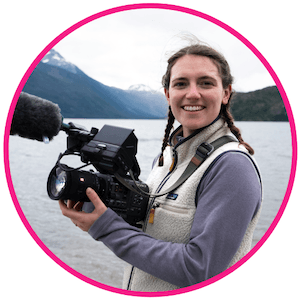
Opal Video
Zoe on LinkedIn
She Who Dares Wins
More from Steve Folland

Transcript of the Being Freelance podcast with Steve Folland and Filmmaker Zoe East
Zoe East:
[upbeat music] Hi, I'm Zoe East, and I'm a freelance filmmaker based in Leeds. This is what it's like for me being freelance.
Zoe East:
I'm quite happy to do anything if it's with nice people. Filming and hanging out with nice people, that's a great day.
Zoe East:
Talking to people and telling people what you're doing, anybody and everybody who will listen. [chuckles] Tell them about what you're doing. Things come from the most unlikeliest of places, so I think people always say like, "Oh, I know somebody who does this."
Zoe East:
It gives you the ability to do what you want to do and what you really love doing, and have the freedom to live the life in the way that you want to. Yeah, I think that's pretty awesome. I think that's amazing.
Steve Folland:
Hey, how you doing? Welcome to another one. Yes, so looking forward to hearing Zoe's story, especially because my full-time freelancing experience kind of runs in tandem with Zoe's. Right at the beginning of our full-time freelancing, we both entered the same awards. I was in the old gits category, and she was in the new inspire type category. [chuckles] After the awards ceremony, Zoe and I ended up chatting. Anyway, about a year later, I get invited to work on a project, and I need a videographer, and I think Zoe would be amazing for this. So I pitch myself and Zoe as a team [chuckles] to do this work. And they went for it. So we ended up working together remotely, as in she would go off by herself and film for this company, and then she would literally post me a hard drive with footage on it that I would then edit. And we did that for quite a few years. This work that we did together won awards. Another time we actually went to an awards do together. They didn't win that award. They won other ones. Everybody else from the company left because they hadn't won, and they needed to be up for work the next day. But as freelancers, Zoe and I didn't, so we ended up dancing all night [chuckles] to the band in this fancy London hotel. Funny. God, this was years ago. Anyway, it's been amazing watching her work appear on my social media streams ever since. So yes, we are off to Leeds to chat to freelance filmmaker, Zoe East. Hey, Zoe.
Zoe East:
Hey, Steve. How you doing?
Steve Folland:
Very good. Can't wait to hear your story. How about we get started hearing how you got started being freelance?
Zoe East:
Well, I've never had a proper job. [both laughing] "Proper" in inverted commas. I went freelance straight out of uni, and kind of never looked back, which is over 10 years ago now.
Steve Folland:
So there wasn't even a point where you thought about getting a job?
Zoe East:
So I did do a work experience placement at a big TV channel, which I was really super excited about, but in reality, found it very, very old-fashioned and quite sexist. So it sort of jaded me from the traditional industry a little bit, and I just thought I'd carve my own path instead and do it my own way.
Steve Folland:
Crikey. So how did you go about getting your first client? So what, you were 21, if you were out of uni?
Zoe East:
Yeah, I think so. Yeah, must've been. Before uni, I was very interested in photography and kind of grew up in the middle of nowhere where everybody worked for themselves. So I think there's a lot of influence from where I grew up as well. And yeah, was doing all kinds of different photo shoots, roping my friends into all kinds of fun things. Doing photography and a bit of graphic design for local businesses, local farmers, and stuff like that. During uni, took any opportunity that I could. Sometimes somebody would email the uni and be like, "I need some photos taking of this thing," and I'd be like, "Yeah, I'm going to go and do that."
Zoe East:
So I think I had a lot of, already had experience of doing stuff for people. And the course as well that I did was really geared you up for working for real people in the real world. So yeah, just from there, it kind of gradually snowballed. Initially, it was doing a lot of photography, even though I knew that wasn't what I wanted to do. It was easier to get the work in that initially. So I was like, great, it means doing some work and some money and doing what I want to do, so I'll do that. And quite quickly, I was able to kind of drop the photography and move over to video, and just yeah, just slowly, slowly snowballed, basically.
Steve Folland:
Now you have a company name, Opal Video.
Zoe East:
Yeah.
Steve Folland:
Did you have that from the start?
Zoe East:
Yeah, I did actually, because before, back in the pre-uni days, I had a Facebook page, I was actually looking back at this the other day, called Opal Desires, and it's where I would put all the photography that I was doing of all the fun photo shoots and stuff. Opal Video just kind of morphed from that, basically.
Steve Folland:
Oh, okay. And what kind of work was this? Was it anything that would come your way?
Zoe East:
Initially, yeah, it was kind of a whole mix of stuff. So I remember once, I went to a tax seminar thing. [chuckles] Very riveting.
Steve Folland:
It's a good-
Zoe East:
But important
Steve Folland:
... it's a good night out, yeah?
Zoe East:
Yeah, it's important. And I met a chartered surveyor, so a guy that values houses and sells houses, and also an artificial grass company [chuckles] guy at this same event. And then ended up doing some photography and some video work for both of them. So it was just networking basically, from the very beginning, yeah.
Steve Folland:
And then what? Word of mouth from there?
Zoe East:
Yeah, so I did, at that time as well, I was doing a lot of video work for events in Leeds, so like food festival events or things like that. And then being at those events was also a good opportunity to meet other people, and people see you with a camera, and then they're like, "Oh, I want a video of this thing," or, "I want some photos of this thing," which worked really well. And I also got a six-month studio space at the co-working space that I then went on to be at for 10 years. So that was like a, my university did an alumni place, so you could apply, and I won the studio space and mentoring for six months. So I was plonked in this amazing co-working space that was purely for creatives. So it was full of graphic designers and photographers, and people doing creative stuff in the city. So that was a really, really good starting point for meeting people, and also the timing of just doing video at that time. Now we see video everywhere, but it hasn't been like that for that long, really, and kind of 10 years ago was when that was taking off. So it's also an element of being in the right place at the right time.
Steve Folland:
Wow. So you got six months for free at that co-work space?
Zoe East:
Yeah. In an actual studio as well. So good for meeting people and getting advice from people and the creative community. I'm sure it's like this everywhere, but it was so friendly and supportive. People want you to do well and want to work with you, and yeah, want to see you making great stuff.
Steve Folland:
It must've been good because you stayed there for 10 years.
Zoe East:
Yeah.
Steve Folland:
[chuckles] So what was that like? So, like a lockable office type space when you call it a studio?
Zoe East:
It actually wasn't lockable. So the whole thing was open. So it didn't have a door. It had walls, but no roof and no doors.
Steve Folland:
[laughs] Okay.
Zoe East:
If that makes sense. It originally was a belt factory, so a big, long building, and then inside they'd split it up into different, yeah, little offices or studios, which all had windows between and didn't have doors. So that it was built for collaboration, basically.
Steve Folland:
Ah, clever. Nice.
Zoe East:
Yeah.
Steve Folland:
And so did lots of work come... It sounds like work or maybe learning from others came from that experience.
Zoe East:
Yeah, both. Both in equal measure, I'd say. Yeah.
Steve Folland:
So would you say today, in 2026, that you have a niche?
Zoe East:
Yeah. I would say currently that's working with charities and working on heritage and culture-based projects. So I kind of, from that starting point 11 years ago, when it was do anything that crosses your path to get experience and get money. Which I think I would do that again if I started again. I think that's a great way to start, and a great way to learn what you do like and what you don't like and what you do want to do. And yeah, then slowly, I didn't want to do the event stuff anymore, so I was trying to not really do events. And for me, the main thread through my work is doing projects that are meaningful. Things that matter now, and that also are going to matter in 10 years' time when somebody might watch that video again in the future. So yeah, I'd say the past five years has been more charity focused. I work with a lot of different charities. Also museums, art galleries, that kind of thing for the heritage and culture side.
Steve Folland:
I think in some people's heads they think, "Oh, it's a charity, so I can't charge that much," for example. What's your experience of that been?
Zoe East:
This is something that people ask me a lot, actually. And I think my experience has always been that charity budgets have been okay. For example, I work a lot with a drug and alcohol charity, and they're doing amazing work, and they're always getting lots of funding to continue to do that work. And sometimes they might get funding for something specific marketing related. So they might come to me and say, "Right, we've got this money, and we need to make a film about this." So I think it's that they have money for specific things.
Steve Folland:
Right. Yeah. So you and I first met, was it 2015?
Zoe East:
I have the award over there. 2016.
Steve Folland:
2016. Subtly, you won the award.
Zoe East:
[laughs] Well, I was runner-up.
Steve Folland:
Oh, were you?
Zoe East:
[laughs]
Steve Folland:
Okay.
Steve Folland:
So, 2016. So you'd been freelancing maybe a year?
Zoe East:
Yeah, must have. Yeah.
Steve Folland:
Nice.
Zoe East:
Yeah.
Steve Folland:
Was that the last award you ever entered, or have awards played a role?
Zoe East:
So earlier this year, I think maybe the 4th of January, with some friends, we did a vision boarding session, and we made a vision board for the year. And on my vision board, there's a red curtain and then this hand that peeks out, and it's holding an award.
Steve Folland:
[laughs]
Zoe East:
And I was like, "I want to win an award." And then in April, we won an award.
Steve Folland:
No way.
Zoe East:
[laughs] Yeah.
Steve Folland:
This sounds like a setup.
Zoe East:
[laughs] Yeah.
Steve Folland:
What was the award?
Zoe East:
So it was with the drug and alcohol charity that I work for. The award was the Esther Rantzen Campaigning for Change Award.
Steve Folland:
Wow. Now hang on, before I go back to the vision board, though, have you entered other awards?
Zoe East:
Not many, no. But I have entered film festivals, and one of my films did get into its first film festival a couple of years ago, which was also really exciting.
Steve Folland:
Cool. What does that mean? Does that mean it gets shown in a particular place at a certain time or shown in lots of places, or?
Zoe East:
So it got into Kendal Mountain Festival and the London Mountain Film Festival. And at Kendal Mountain Festival, they had two screenings, and both of the screenings sold out, which was really cool. And we did Q&A after both of them. And then with the London Film Festival, they go onto an online platform, and people can apply to do their own mini community film festival and use those films. And so a guy actually in a small suburb of Leeds was setting up a mini adventure film festival with his son, because his son is still in school, and he wants to go to Borneo and do an adventure there. So he's fundraising for it. So he set up this mini film festival, and he selected my film to go into it. And he had no idea I was based in Leeds. And it was only when he put it on social media, and he found me, and he's like, "Oh, you're based in Leeds. Will you come and do a Q&A?" So we went there as well, which was really cool.
Steve Folland:
That's so cool. So this is adventure films. So this is something else you do?
Zoe East:
Yeah. This is all another little strand. Yeah, adventure filmmaking. So I've made a few films now about running adventures. And that film that got into the festivals was about a running adventure across Tajikistan.
Steve Folland:
Tajikistan.
Zoe East:
Yeah. [laughs]
Steve Folland:
So what did that involve for you? You weren't running.
Zoe East:
No. [laughs] I got to be in one of the support vehicles, which was very nice. Great fun, in fact, being in the support vehicle. The route goes literally all the way across Tajikistan, so it starts at the border with Afghanistan and goes up to the border with China and Kyrgyzstan, kind of top east right corner. And it's roughly seven marathons in seven days. So, on that one, there was 14 runners and they basically set off running. Forrest Gump style, just kept on running. [laughs]
Steve Folland:
Okay, how do you end up doing that?
Zoe East:
That was actually a funny one. The same kind of company doing a run across Iceland, and I filmed that back in 2021, and I filmed that because one of my good friends happened to be running it, physically running. [chuckles] She was helping the organizers with some stuff, and they asked her if she knew anyone who did video, and she said yes, and it was me.
Steve Folland:
Oh my God.
Zoe East:
That was as easy as that on that one. [chuckles]
Steve Folland:
And so then they bring you back for another adventure.
Zoe East:
Yeah.
Steve Folland:
Are you also sharing that kind of stuff behind the scenes? What's your online presence like? Because stuff like that sounds like it's screaming to be on social media.
Zoe East:
Yeah, I probably should do a little bit better at that.
Steve Folland:
[laughs]
Zoe East:
[laughs]
Zoe East:
I have loads of photos, and I actually went back to Tajikistan recently in May. Yeah, I posted some stuff about that. I've kind of shifted my focus just to LinkedIn now. I used to do Instagram as well, but I found that actually, I don't get work from Instagram. I don't know if I've ever got any work directly from Instagram, not that I'm aware of. But LinkedIn is definitely, I think, for me, where it's at, and that's where my clients are, and that's where, yeah, where work comes from. So I've shifted to focusing only on LinkedIn. But yeah, I've got a bit lazy with it recently. [chuckles] I find it hard. I don't enjoy that side of it, so I do have to work quite hard and, yeah, get back into the habit of it.
Steve Folland:
Let's go back to vision boards. Let's start there. Are you somebody who sets goals?
Zoe East:
Well, I'd say generally, I'm not much of a forward planner. I don't look too far into the future. And I certainly didn't when I started. But now I've found that, yeah, setting goals kind of on a yearly and a quarterly basis I find really, really helpful. And a friend, another freelancer and I, we try and meet up once a month and do a goals session. And so we'll start with our yearly goals, which I guess are the big ones that kind of drive the direction of the year, and then break that down into monthly or quarterly or however often we manage to actually kind of sit down and look at them. And yeah, I found that really, really useful. Once I started doing it, I was like, "Oh, this is-- Yeah, it's kind of a game changer because it allows you to have a focus and to keep a focus, and not just kind of feel like you're floating through." Which I think I've done a lot in the past, and I'm quite comfortable with floating through. And there's not necessarily anything wrong with that, but I've found that, yeah, having goals really helps to get things done, basically.
Steve Folland:
And that co-mentor-ish relationship holds you accountable as well?
Zoe East:
Yeah, definitely. I think the accountability is, yeah, a really big part of it.
Steve Folland:
So what does that look like when you get together, what, like once a month, did you say?
Zoe East:
Yeah. We used to be in the same co-working space, so it was easier then.
Steve Folland:
[laughs]
Zoe East:
But yeah, we're trying. We have this... This is what it looks like physically. We have an actual planner... which has the goals in.
Steve Folland:
Just set aside for that?
Zoe East:
Um-
Steve Folland:
This is a luxuriously looking-
Zoe East:
[laughs]
Steve Folland:
... notebook.
Zoe East:
No, that's like, that has like day to day in it as well. People find it crazy that I still do it on pen and paper. [chuckles]
Steve Folland:
What, all of your calendar is pen and paper?
Zoe East:
No, I have Google Calendar as well.
Steve Folland:
Okay.
Zoe East:
Yeah. So we'll try and do, definitely at the start of the year, try and do a big kind of goal-planning session, look at the past year, what went well, what didn't get achieved. Did something not get achieved because you don't want to do it anymore, or it's just worth dropping completely? I think sometimes you can get stuck thinking, "Oh, that was my goal and I have to stick to it." But actually, things change all the time, so a goal that you had even a month ago might not be relevant anymore. So you can waste energy kind of being stuck on that. Whereas actually sometimes it's good to just let it go.
Steve Folland:
I'm just wondering how big these goals are.
Zoe East:
So the yearly ones, it's bigger because the idea is there for the entire year. So for me, that might be, I was looking to kind of work with some more specific charities or charities doing sort of specific type of work. So that's kind of something that's a bit of a longer running, slow burning type of thing to work on that throughout the year. Whereas then the monthly goals are like, those are things that you think are achievable in that month or to give you focus in the next four weeks.
Steve Folland:
When you have those sort of dream client thoughts, are you doing cold outreach? Are you sidling up on LinkedIn and doing some warming up? What are you doing?
Zoe East:
So I've never really had any luck with cold outreach. Most of my work comes through word of mouth, which I'm very grateful for and fortunate with. But yeah, when I've tried to reach out to people, I don't think it's ever worked. So if anybody, yeah, has a secret recipe for how that does work, that'd be great.
Zoe East:
So I've always found that you attract the work that you do or the work that people see you do. So again, coming back to sharing on social media, I'll only share the things that I want to get more of. Which used to be-- so previously, I would do more of the kind of bread and butter work, which I didn't find as rewarding, but I was quite happy to do. I'm quite happy to do anything if it's with nice people. Filming and hanging out with nice people, great. That's a great day. But yeah, trying to work with more charities or people who are working on a specific cause or something that I'm really interested with and aligns with my values, I'll, yeah, try and share more of that kind of thing that I am doing. And I do find as well with the kind of charity sector work, is that lots of charities work together. And so this is where word of mouth is great. It's like, I'll do work with one charity, and then I'll get an email from a different charity who's like, "Oh, we know that you've done this video for these guys. We work with them a lot. We really love that video. We want to do this." Which also works quite well.
Steve Folland:
How have you found the business side of it all?
Zoe East:
When I was kind of setting everything up, I did really enjoy that. Now everything's been running for, yeah, just over 10 years. There's not quite as much of that stuff to do, or maybe I've just got used to it. But yeah, I don't mind. I'm quite happy to do a mileage log, for example, but I know some other freelancers who hate doing that and find it really tedious. But, and yeah, I use FreeAgent for my online accountancy stuff. I think I've put systems in place that make it relatively easy, and therefore enjoyable.
Steve Folland:
Yeah. You must have, as a filmmaker, a lot of overheads in terms of equipment or insurance maybe, things like that?
Zoe East:
Yeah. My insurance is crazy with us because all my equipment got stolen a couple of years ago.
Steve Folland:
Oh my God, yes.
Zoe East:
[chuckles] That was probably the biggest low point that I've had. [chuckles] But, yeah, all the equipment. I am a big advocate of buying secondhand stuff. The camera I have now is actually the only camera I've ever bought new, which was kind of exciting and a bit strange at the same time when I bought that. When I did buy that, in fact, it was just after COVID, so I was able to get a grant, which paid for half, which was amazing. So yeah, finding things like that is super useful, especially when your equipment is so expensive. But also, you might find this as well, storing footage is crazy because it's terabytes and terabytes.
Steve Folland:
Mm.
Zoe East:
You kind of have to keep hold of it for quite a while as well. Or, I'm a bit of a hoarder with footage. I don't like to delete it. So yeah, all the hard drives and the computers and the computer that needs to be good enough to keep up with the big footage that comes from the expensive camera. It's kind of all knock on. But yeah, I'm also not a person who needs the newest of everything, so I don't tend to upgrade my kit that often, only when I need to, really. And I like to be quite minimal, so I don't like to have loads and loads of stuff.
Steve Folland:
Oh my God, it's so true about storage of video stuff. But what I did find was, was it last year? I decided, right, this is getting ridiculous. I'm going to have to start deleting some of this off my Dropbox and things. And I used that as an opportunity to get back in touch with all of these clients, reminding them that I existed, reminding them of this project that we'd worked on and saying, "Are you fine with me deleting this stuff?" And some of it was literally 10, 12 years ago. And of course, they're all saying, "Oh, great to hear from you," blah, blah, blah. And off of that massive cull, I got a couple of projects come in as well. So it's a weird way to-
Zoe East:
That's so cool. That's a good idea.
Steve Folland:
Yeah.
Zoe East:
Yeah.
Steve Folland:
It's sort of like clearing out your attic and saying, "Does anybody want this stuff?"
Zoe East:
Yeah.
Steve Folland:
And in doing so, the relatives remember that you exist.
Zoe East:
Yeah. Somebody said to me once, getting new clients is the hardest thing, so using your existing clients is easier than that. So I think that goes back to that. And I think it works both ways. You know that those people are good to work with, so you're happy to work with them again, and they know that you're great to work with, so they want to work with you again.
Steve Folland:
How have you found sort of pricing your work?
Zoe East:
I think pricing is a touchy subject, right? Isn't it? Some people find it really difficult. I think it's something that you get used to, and you also need to get used to putting your prices up, I think, definitely annually, at least. I made a spreadsheet a long time ago, which has kind of all the rates. So like filming, editing, music, travel, literally anything that can go into a project, and then kind of the rates for that by the side. So I just put in the number of days of those things, and it kind of adds the total up for me at the bottom, which makes it really easy and also really consistent, which I think is important. And that's always been really useful. I actually have a blank version of that, that I made when I did a talk at uni last year, which I can share as well if anybody is-
Steve Folland:
Oh, cool
Zoe East:
... would be interested in that. Because yeah, I think it's really good for taking the stress out of being like, "Oh, how much should I charge for this?" Because you have all your rates there, so it just does it for you. It eliminates that stress, basically, I find.
Steve Folland:
And that works for you because on your kind of projects, you will have a certain amount of hours or days assigned to filming, to pre-planning, to editing.
Zoe East:
Yeah. I mostly do it based on days, so yeah, days of filming, days of editing, and yeah.
Steve Folland:
Part of what I was wondering is if when you're so busy filming, as most of the time as a company of one, how you juggle perhaps stuff that is leads that are coming in, but you're busy doing the do. Like, how you manage that kind of process.
Zoe East:
Yeah, that is a tricky one, because also I try not to look at emails all the time and then respond to them all the time, because I think that can distract you from doing the work. So I don't really have a proper kind of managed way of doing that. I think it's just remembering, basically, and starring email. I just star emails. That's about- [chuckles]
Steve Folland:
That's the system.
Zoe East:
That's the system, really.
Steve Folland:
No, but I do like the idea as well of not permanently looking at your emails. See, I fall into a trap often of having it open. And yet when I, let's say I have a podcast to edit, if I close everything down, I chuck my phone over the other side of the room, it's amazing how much more work I get done.
Zoe East:
Right? But it's so hard to do that.
Steve Folland:
Yeah.
Steve Folland:
So you were in your office for 10 years, pretty much all the time you were freelancing, but you've changed office now, and I saw when you were speaking about things you post on LinkedIn, that actually you have made a big shift, not just like moving offices, right?
Zoe East:
Yeah, I'm in a shiny new office. This is the She Who Dares Wins office. So I'm now sharing with Michelle. We met actually back in the co-working space pre-lockdown. She moved into the office next to me, and she put a desk in there, and that was it, [chuckles] basically. Then lockdown happened. So yeah, she was basically never in, and then she was pregnant and she had a baby, so she had to leave the office anyway. But so we met there, and at the time she was working in construction. But then she set up this brand called She Who Dares Wins, which is predominantly a podcast where she interviews women who are doing amazing, daring things.
Zoe East:
Since then, she's kind of been building the podcast, which has done amazingly well. And yeah, she's been asking me to move into the studio with her for about two years now. So she finally cracked me. [both laughing] And over the past few years, we've made a couple of films about some of the women who she has interviewed on the podcast. And now basically, yeah, we want to take that forward and start making documentaries about some of these incredible women.
Steve Folland:
So what's the deal there? Are you running a company together or are you content creators together? What's the-
Zoe East:
So it's kind of early days now, so I'm still doing all the stuff that I was doing. It will be, yeah, a joint venture, basically. We'll be making the films together. Trying to maximize YouTube. I feel like YouTube's having a big resurgence right now. I mean, it never went away, but I think, yeah, it's definitely big right now, particularly with short films and documentaries, because the traditional commissioning route is quite dry. There isn't a lot of funding available, but what there is a lot of is brand partnerships, and basically, brands want to know that you have an audience existing. We have the beginnings of that already via the podcast and the podcast audience. So we're kind of like going to transfer that to YouTube. And yeah, we've been putting ourselves in front of the camera a little bit, like behind-the-scenes videos. So we have a film that's coming out on the 1st of July. So yeah, we're exploring kind of documentary series on YouTube and also branded storytelling and yeah, we'll see if we can get some funding.
Steve Folland:
Exciting.
Zoe East:
Yeah.
Steve Folland:
And that's running alongside Opal Video.
Zoe East:
Yeah.
Steve Folland:
How have you two gone about that relationship and that sort of partnership?
Zoe East:
I think it's kind of proven in that we've done a couple of short films before, over the years. So I think we kind of know how we work together and we're both really inspired by and interested in making films about women and giving them a voice and doing that with predominantly female teams and female crews as well.
Steve Folland:
After so long, working by yourself, is that feeling different?
Zoe East:
Yeah, it's definitely like a shift. It was a shift moving in here as well because this is an office with a closed door. And it's like that in the whole mill, so you see less people day to day. So that was a kind of shift in terms of daily working. It was way more quiet. But to counter that, we can do things like play music out loud here, which you could never do in the co-working space.
Zoe East:
Yeah, in terms of working with somebody else, I think I still love doing the kind of topical, meaningful charity and heritage and culture-related work. But also I think there's an opportunity here for us to make longer-form documentaries, which is something that I also love doing and goes really well with the kind of shorter turnaround, more maybe campaign-led stuff. I think the combination together works really well. Being able to do the more documentary stuff on my own would be pretty big and really time-consuming and really difficult and take a lot longer. So I think we have Michelle's existing... She has over 150 women that she's interviewed on her podcast. So we have this incredible database of women that we already have a relationship with to go and potentially film with. And Michelle's awesome interviewing, and then me on the filmmaking side, so it feels like a really good combo. So yeah.
Steve Folland:
Nice. Do you feel like that feeds back into your other work?
Zoe East:
Yeah, I think so. I've always been a fan of doing a variety of work. It all feeds into each other and raises the level of everything. I think if you just do the same, I find if I just do the same kind of thing, I'm kind of less inspired and find it more difficult to make it different or make it engaging for me personally. Whereas, yeah, doing some stuff that might take a year or even longer, and then some stuff that's like, "Okay, we need to film tomorrow, and we need the videos by next week" sort of thing, like that balance. I find when I'm busier, I'm more motivated. So doing lots of things is more motivating for me and more exciting. And I think I've always found this just talking to people and telling people what you're doing or literally anybody and everybody who will listen, [chuckles] tell them about what you're doing. Things come from the most unlikely of places, so I think people will always be like, "Oh, I know somebody who does this," or, "I heard about this thing that's happening that's relevant to that." Always getting little bits from lots of different places really boosts it.
Steve Folland:
Love it. When you mentioned about getting the grant when you were buying some new equipment, how do you know about that kind of stuff?
Zoe East:
In Leeds, that was with the Adventure Program, which is like a... What is it? How do you describe it? It's kind of like a business support program. It's probably where I found that tax seminar from, for example. They do different workshops on different things that are useful when you're setting up a business, but you also get assigned a mentor, and it was him who was telling me about funding opportunities. And I have found that those kind of communities were really helpful, definitely, in those early days.
Steve Folland:
I bet those sort of things are all around us. This is why I think it helps being in a co-work space with, for example, lots of creative businesses, is that maybe word spreads, or maybe the people offering the grants come looking for it. So I remember when I was in a council-run co-work space, that was the only time I've got any form of grant because the council were like, "We've kind of got this money kicking around."
Zoe East:
Oh, wow.
Steve Folland:
"Anybody know anybody who might need it?" And obviously, it wasn't just the co-work space who benefited. It went to lots of people. But I always think if I'd have just been stuck at home like I am now, [chuckles] I would never have heard of that opportunity. So yeah, it does pay.
Zoe East:
Yeah.
Steve Folland:
What would you say you found the most challenging thing about being freelance?
Zoe East:
I find this one a hard question. I think some people perceive freelancing as like this really big and scary thing. I don't think that's the case. It kind of makes me a bit sad when people think like that. But I know that everybody doesn't have a great experience. I understand that. I think one of the things I find the most challenging is that perception when some people, people who maybe work in completely different industries think that we're not making any money or we're not making a living, and it's just kind of a bit of a hobby to do something creative.
Zoe East:
Whereas actually, it's so much more than that, and it gives you the ability to do what you want to do and what you really love doing and make a living from that. And also then have the freedom that you want to live the life and in the way that you want to. Yeah, I think that's pretty awesome. For me, that's amazing. I get quite worried if I ever had to have go and get a proper job because I'm not sure that I'd be able to work for anybody now. [both laughing]
Steve Folland:
All right. Now, I always do this thing where I ask for three facts about yourself to make two true, one a lie, and let me figure out the lie. What do you have for me?
Zoe East:
I filmed King Charles and spotted snipers on the building opposite.
Steve Folland:
[chuckles] Okay.
Zoe East:
My films have saved lives. And I had my passport confiscated by border control in Patagonia while filming there.
Steve Folland:
[gasps] You filmed King Charles? When was that?
Zoe East:
That was, oh, when was that? Maybe three years ago, I think. He came to Leeds. I was working with the Jamaica Society in Leeds, and they had put on an exhibition. So that project kind of originated from... it was inspired by Windrush, and there's a big Caribbean community in Leeds, and it was all about people who came on Windrush and subsequently lived here, and then the generations on from there, basically. And yeah, there was an exhibition in Leeds, and King Charles came to visit it, which was pretty cool.
Steve Folland:
And the snipers were his snipers?
Zoe East:
Yeah. So we were filming in a building, and then the building on the other side of the street, we could see too, but that was probably more on the buildings opposite. Because it was the king, so loads of people came and were on the streets and stuff. But that was kind of eerie, like, wow, it made it really serious and a bit dark in a way.
Steve Folland:
Okay. Your films have saved lives.
Zoe East:
So this was a film for New Vision Bradford, which is a drug and alcohol charity, about a drug called naloxone, which temporarily reverses the effects of an opioid overdose. So it can bring somebody back from an overdose, basically. And so we did a film all about people getting trained in it and carry it, because anybody can be trained in it and carry it. And then the campaign went out, and loads of people have been trained in it now, like even water companies and security company, like bouncers on the streets and stuff have all been trained. And yeah, since that has happened, have saved lives as a result.
Steve Folland:
Oh, okay, that's got to be true, surely. Because it would be awful if you now turned around and go, "No, not really."
Zoe East:
[laughs] Yeah. It would, wouldn't it?
Steve Folland:
Passport. Alright. What was it? You had your passport taken off you in Patagonia.
Zoe East:
So I was filming another running adventure, and this one was going through Patagonia. And yeah, we were filming at the border. We had a lot of problems at borders on that trip. And we were crossing from Chile into Argentina.
Zoe East:
And we were doing some filming by the lakeside. The classic view that you'll ever see in Patagonia is these mountains called Fitz Roy. It's like classic peaks, and they're at the end of this lake. So we were filming there. It was perfect filming location. And also, we were stuck there because we'd missed a boat, so there was nothing else to do. So I was filming some people, just doing some interviews. And then the border guys come over and they're like, "You can't film here. If you keep going, we're going to take your passports off you," kind of thing. Because they were really bothered about us filming this boat. I don't know why, but they really didn't want us to film this boat. And I was like, "But the boat's not even in shot." So we moved further down, facing away from the boat and everything. And yeah, they came over and they took us off into this room and were like, "Yeah, you're done."
Steve Folland:
Mm-mm. It's possible. It seems weird that one of these isn't true. [both laughing] King Charles, it's highly possible he came to Leds. So maybe this is it. Maybe he did come to Leeds, but you were, I don't know, you were in Patagonia at the time and missed him.
Zoe East:
[laughs]
Steve Folland:
This had better not be that they came up to you, but they didn't take your passport. I'm going to say, weirdly, King Charles is the lie.
Zoe East:
No, it's the passport.
Steve Folland:
Oh.
Zoe East:
That's the lie.
Zoe East:
[laughs]
Steve Folland:
Don't do it to me. Don't say they came up and they didn't take it.
Zoe East:
[laughs] Yeah.
Steve Folland:
Okay, I'm not having this. [laughs] Do you know what? You can go away as a victor, but it will feel hollow inside.
Steve Folland:
And how about work-life balance for you? [laughs] How's that been?
Zoe East:
Yeah, I do travel a lot, and my way of doing that is I'll manage projects around that. I'm quite fortunate in that a lot of the stuff I do doesn't tend to be super date-focused. It's rare that it's like, right, this thing's happening on this day, and that's when we have to film it, and that's it, kind of thing. Usually, there's a lot more flexibility than that. So yeah, try and work it around finishing stuff off before and having stuff planned in for afterwards. And I do also work with other freelancers as well, particularly editors, so I can film stuff, send it to them, they can edit it while I'm not able to, for example.
Steve Folland:
Ah, there's another strand to this conversation then. So collaborating with others or hiring others to help you on stuff.
Zoe East:
Yeah. Basically, yeah. Particularly editing, because I find that editing is what backs up a lot more than filming.
Steve Folland:
But then that's something that you have to factor into your pricing as well.
Zoe East:
Yeah, it's tricky to get the balance right on that because you're paying somebody else to do something that you would've got paid for. So it's like figuring out what the rate should be when you're hiring somebody else to do something. Yeah, that's something I've not quite 100% cracked yet.
Steve Folland:
Yeah. I've always kind of thought that with everything that you do within your business, in theory, we should kind of say, "Okay, well, what if I was paying someone else to do that? How much more do I need to add on top so that my business is still making a profit?" And then when we're doing all the stuff like filming and editing or scriptwriting, voiceovers, and all of that, then quid's in. [laughs] We're laughing. But yeah, but equally, you don't have to worry about it when you're suddenly hiring someone else because you know that that buffer is in place.
Zoe East:
Yeah. That's a good way of looking at it, I think.
Steve Folland:
But You also need to have a good gauge on what other people's rates are and who those people are.
Zoe East:
Yeah.
Steve Folland:
Um-
Zoe East:
And things are constantly changing, right? I think we worked through COVID, and I don't know about you, but that changed everything. There was so much less work available, and then subsequently less money. And then since then, there's always been an element of uncertainty, which I think has impacted my work, and I know it's impacted other freelancers that I know's work a lot. And that feels like that uncertainty just seems to come back so much more now. But, and it's reflected massively in budgets.
Steve Folland:
So it makes it harder to know whether to stay fixed on what your price was going to be?
Zoe East:
Yeah, because I think there seems to be less budget available quite often. So yeah, maybe it does make you reduce your price, and then it's like, "Oh, but so I had to do that for that person. Do I need to do that again when I'm quoting for this next thing?" It makes it much harder to judge, I think, when it's fluctuating so much.
Steve Folland:
Yeah. And when I come to doing that, I think, well, okay, well, the obvious thing is to think, well, what's the scope of the project and what can we reduce to fit your budget?
Zoe East:
Yeah.
Steve Folland:
But sometimes you don't even have that conversation because they're like, "Oh, okay, we can't afford you," and they go. [laughs]
Zoe East:
Yeah.
Steve Folland:
And they're off, and you're like, "Oh, did I do the right thing?"
Zoe East:
Yeah. I find it's much more cutthroat more recently as well. Rather than inviting conversation of, "Oh, we can't do that, but we could do this reduced option," they're just sometimes people are just like, "Yeah, no, we can't do that," or, "No, we've just gone with somebody else." Or just ghosting. I feel like ghosting happens way more now than it ever used to.
Steve Folland:
Hmm. But on those real relationships where you've built up over time, or you've been recommended because of a strong relationship,
Steve Folland:
I find those things happen less in those situations.
Zoe East:
Yeah, I agree.
Steve Folland:
Yeah.
Zoe East:
I agree. Yeah. Building relationships is one of the most important things you can do when you're a freelancer.
Steve Folland:
Yeah. How do you keep those strong?
Zoe East:
I think doing good work to start with. [laughs] And just, I think a lot of it is on shoot days that happens, like in person, when you're actually with the client. I think that's when that kind of naturally happens in its strongest way.
Steve Folland:
Now, Zoe, if you could tell your younger self one thing about being freelance, what would that be?
Zoe East:
I think I would say don't worry about not following the traditional path. I think I've always believed in happiness first, so doing things that make you happy. Because I think if you're not happy, then there's literally no point in doing that thing that's not making you happy. So I'd say chase the happiness and ignore the naysayers.
Steve Folland:
[laughs] Brilliant. Zoe, thank you so much. Go to beingfreelance.com. As I offer all of our guests, you'll find links through so that you can find Zoe online, check out her work, check out She Who Dares Wins as well. Zoe, thank you so much, and all the best being freelance.
Zoe East:
Thanks, Steve.
EPISODE SPONSORED BY ECAMM
For years people have asked how Being Freelance live shows look so good. Well, this is the secret.
Ecamm is a video studio for your Mac.
Give anything you do with video, a pro look in real time.
Presentations, screen shares, webinars, video calls, demos. Plus livestream/record in landscape & vertical at the same time, perfectly designed for both formats.
Try Ecamm for free.
Use code BEINGFREELANCE to save 15% on your first payment.