Instructional Designer Lisa Emmington
About this podcast episode…
INSTRUCTIONAL DESIGNER LISA EMMINGTON
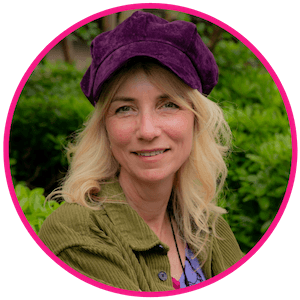
Lisa is a freelance instructional designer (or as her newly SEO'd website puts it, a training course designer) based near Milton Keynes.
She's been freelance almost her entire career, starting out as an IT trainer back when Apple Macs were a mystery box on people's desks, and has reinvented her business every time the market has shifted underneath her - from face to face training, to early e-learning software, to mentoring individual course creators in the face of AI.
In this episode of the Being Freelance podcast we talk about:
How the desire to be freelance came before Lisa knew what she wanted to be freelancing in
Spotting the shift from face to face training to e-learning, and moving with it
What happened when she and her husband became a limited company for three years, and why it made her invisible in the market
Rebuilding visibility from scratch with a social media VA and an SEO overhaul
Why "instructional designer" doesn't bring in enquiries, but "training course designer" does
Filtering and pacing leads using nothing more high tech than a paper diary
The balance between promoting decades of expertise and the very real ageism facing freelancers in their 50s and 60s
Her three income streams: templates, done with you mentoring, and done for you course creation
Pensions, retirement planning, and why she's planning to keep freelancing well past 67
What 60 actually looks like now, versus what she expected it to look like
So much great advice and things to think about in here around change in our careers - brought about by the inevitability of developing tech and age. What does retirement look like for freelancers?
This episode is available to watch in video here on the site, on Apple Podcasts, YouTube and Spotify.
Lisa is a member of the Being Freelance Community, as are VA Erin Buck and SEO expert Nikki Pilkington who are mentioned as helping her in her business. See how lovely it must be? Come join us!
Read a full transcript & get Links in the tabs.
More from LISA EMMINGTON
Lisas’ website
Lisa on LinkedIn
Erin Buck episode of the Being Freelance podcast
More from Steve Folland

Transcript of the Being Freelance podcast with Steve Folland and Instructional Designer Lisa Emmington
Lisa Emmington:
Hi, I'm Lisa Emmington. I'm an instructional designer, and I'm based in Milton Keynes.
Lisa Emmington:
I'm that old that we had typewriters, and one day they came around and they put these little boxes on our desk and we had no idea what they were, but they were Apple Macs. And I worked out how to use them and became the person that everybody asked.
Lisa Emmington:
Keeping an eye on your market and seeing what's coming and what's changing, and making sure you're ready to move with that.
Lisa Emmington:
Change is scary. It's hard, but the more you do it, the more you know you can do it. It's just another change.
Steve Folland:
Yes, so there's Lisa. Really looking forward to this one. There was a conversation in the Being Freelance community recently. Some of us who are thinking about retirement, not necessarily because we're about to retire, but suddenly we realise it's on the horizon. Like, how are we planning for it? Not just financially, but also what are we going to do? How will we keep working? Will we keep working? Will we keep doing the same thing? So on and so forth. And, yes, Lisa isn't retired, but she is now 60, and we end up talking about that in this episode. So, yes. Thank you very much for the inspiration from the community for this conversation, and also for Lisa for chatting to me.
Steve Folland:
The community, if you want to come join us, by the way, is at beingfreelance.com. Remember, you're not alone being freelance. Surround yourself with others that are doing it. I'm in there every day, and it would be lovely to see you in there too. Right now, though, let's head to Milton Keynes, which is very close... funnily enough, today is the day of the British Grand Prix, which is at Silverstone, which is maybe a 30-minute drive, if you're not driving a Formula 1 car, outside of Milton Keynes, to chat to this week's guest, and that is freelance instructional designer, Lisa Emmington. Hey, Lisa!
Lisa Emmington:
Hey. Hi. Nice to see you.
Steve Folland:
Lovely to see you. As ever, how about we get started hearing how you got started being freelance?
Lisa Emmington:
So, the desire to be freelance came before I knew what I wanted to do freelance.
Steve Folland:
Oh.
Lisa Emmington:
I just knew I didn't want to be employed. So I started out, I was going to be a primary school teacher, and I went to teacher training college, and I lasted three days and just knew that wasn't what I wanted to do. So I got a job, and I had a few admin jobs, and eventually ended up at the Open University as a secretary. And I started to think then maybe I could freelance as a secretary, which I guess now is a VA. But while I was there, I went on a training course, and it was like a light bulb, just that's what I want to do. I want to be a freelance trainer. So then it's, well, how do I get there?
Lisa Emmington:
While I was working as a secretary, I'm that old that we had typewriters, and one day they came around and they put these little boxes on our desk and we had no idea what they were, but they were Apple Macs. The very first basic Apple Macs with no hard drive. Everything ran off an external drive. And nobody knew how to use them, but I was kind of okay, and I worked out how to use them and became the person that everybody asked. And that kind of led into, okay, well, maybe I can be a freelance IT trainer.
Lisa Emmington:
But of course, you can't be a trainer without experience. So my first training job was at a YTS training centre because the pay was awful, so they took people with no experience at all. But it was a proper baptism of fire because the YTS scheme back then was 16 to 18-year-olds who really didn't want to be there. They had to be there to get their dole money. But that gave me training experience to then go to a training company to get my qualifications to then become a freelance trainer. So it was, "That's where I want to be. How do I get there?"
Steve Folland:
Wow. So once you get the training qualification, you didn't then go to work for a company? You set up-
Lisa Emmington:
I worked for an IT training company for two years. So I went from the YTS company to a formal training company, and this was when Windows was just coming out, and we were teaching people to use a mouse, believe it or not. People didn't know how to use a mouse. That was really the only way to learn. There was no online learning, so if you wanted to learn IT, you had to go to a training centre. So it was a bit factory production line, but we were training all of the Microsoft Office suite, so there was sort of Word, Excel, PowerPoint, and the database. But there was Lotus. Lotus Spreadsheets-
Steve Folland:
Yes
Lisa Emmington:
... and they had a word processor. And so we were training loads and loads of different applications and getting the qualifications to train those, which then kind of put you to the top of the pile once I went freelance.
Steve Folland:
Even then, though, so to take the jump into being self-employed, that was what you wanted to do. But how did you make that happen?
Lisa Emmington:
We had freelance trainers that would come in-
Steve Folland:
Ah, okay
Lisa Emmington:
... to the training centres, and we could see they were earning three times what we were... and not working quite as hard. And so it was working out where their contacts were coming from. It was basically other training companies. So there were companies like Computer Centre, and they would have a bank of freelance trainers. They didn't employ all of them. They just had a bank of freelance trainers. And you could fill three or four days a week teaching training courses if you were prepared to travel. So yeah, it was quite lucrative at the time.
Steve Folland:
Okay. So how long ago was this?
Lisa Emmington:
This would've been in the '90s.
Steve Folland:
So like mid-'90s, like Windows-
Lisa Emmington:
Yeah. Yeah, mid '90s
Steve Folland:
... '95 sort of thing.
Lisa Emmington:
Yeah. So we would teach people to use a mouse by playing Solitaire with the cards.
Steve Folland:
Still love it. Solitaire, Minesweeper.
Lisa Emmington:
Yeah.
Steve Folland:
Classic games.
Steve Folland:
So how did it evolve from that? Because clearly the world evolved and so did your business.
Lisa Emmington:
Yeah. So I was working for lots of different companies training IT, and then one of the companies I worked for was a market research company, and because they knew I was a good trainer, they then trained me to be a market research interviewer trainer, so teaching people to carry out surveys. And they were just starting to experiment with e-learning as well. They had some software called Rapid Builder, which was dreadful. Took so long to build courses. But of course, we thought it was great.
Lisa Emmington:
And you could kind of see the landscape changing. It's kind of like AI now. We thought online training was going to take our jobs as trainers, so therefore we needed to be able to create the online learning to keep working. So I started off with that company with Rapid Builder, and then it moved to some software called Lectora. And then I went out to a networking event, and somebody asked me to create a course for them. It was a lady, she does something called foot reading. She reads your personality through your feet. Still does it now. Yeah.
Steve Folland:
Wow.
Lisa Emmington:
It's brilliant. And she said, "I'm traveling all over the world teaching this. Would you create me an online version?" "Yeah, I can do that." Well, I thought I could. So it was almost the learning curve again. I did the project for her and learnt what I didn't know, and then went to the Training Foundation and the University of Chester and learnt to create e-learning properly. So learnt to do analysis and instructional design and development to produce the online courses.
Lisa Emmington:
And I gradually shifted from one to the other, so it got to the point where I was 50/50 face-to-face training and 50/50 e-learning. And then eventually I made the decision, okay, I'm not going to do training anymore. This is where the world is, and this is what I'm going to create in future. So it's just keeping an eye on your market and seeing what's coming and what's changing, and making sure you're ready to move with that.
Steve Folland:
Wow. That's fascinating, especially as you say with AI coming. We're going to have to come back to this. But let's stick with your story at the moment. So when's this? Just as the internet is kicking in?
Lisa Emmington:
So I went back to university, what, maybe 2005, 2006.
Steve Folland:
Okay.
Lisa Emmington:
Yeah. So yeah, once I then knew how to create e-learning properly, then again, that was e-learning companies were just starting, and there were lots of them. And I would freelance for them because they hadn't employed anyone full-time at that point. And over the next few years, it was a real change in the market, so lots of small e-learning startups appeared. But then they would be bought out and merged, and now you've got the massive e-learning companies that you've got now, like Kineo. They employ full-time instructional designers now. There isn't the freelance work with those businesses anymore. Where they used to freelance out the excess, there isn't that now.
Lisa Emmington:
But the market's changed again because it's not just businesses creating online courses. Individuals now want to create courses as well. Consultants that want to create a passive income. So I've kind of shifted again, and now I'm mentoring people who want to build their own courses, not necessarily companies.
Steve Folland:
So each time there's a shift, do you panic or are you just-
Lisa Emmington:
Oh, yeah
Steve Folland:
... inquisitive? Oh.
Lisa Emmington:
Oh, yeah. It's like the swan, frantically paddling. Because change is scary. You've got to learn something new. It was like when I was IT training, every time a new version of Microsoft Office came out, we had to learn all the new bits of it. And you get to the point that you just go, "Really? Another one?" So yeah, it's hard, but the more you do it, the more you know you can do it. It's just another change, and okay, what's different? What do I need to learn? What do I need to do to be able to keep up? But yeah, it's hard work, and it can be expensive as well because qualifications are expensive. New software's expensive. So it's looking at where you're going to spend your money wisely.
Steve Folland:
There's a point when you start your career where simply websites weren't a thing. So the relationships, they must have been really important. You mentioned networking, but also were you reaching out to these companies? What was that like, and how did that develop?
Lisa Emmington:
Yeah. It was a lot more analogue, obviously, than it is now, and most of it was word of mouth. There was a group of us freelance trainers, and if somebody got work from a company and they were busy, then they would say, "Oh, I can't do it that day, but Lisa can." And you would get recommended that way. But it was, yeah, networking, word of mouth, sending your CV to companies. Looking up who the companies were, and a lot of it was networking with the other trainers. Sort of, "Oh, where are you getting work from? Oh, do they need anybody else?" I think because work was so plentiful then, people weren't going: "Oh, well, I'm not telling you who I'm working for because I want all that work." It was nice to be able to go, "I'm busy, but I've got this colleague who could work for you." So yeah, it was really word of mouth and, yeah, sending your CV.
Steve Folland:
So you must have seen that change since as well, like the way you get work, or is it just a different form of cold outreach?
Lisa Emmington:
It's changed massively in the last, since COVID. So when COVID hit, everybody suddenly needed their courses online because nobody could teach face-to-face anymore. Whatever they were doing face-to-face had to be online for them to stay in business. So my husband was furloughed from his job, and he had learnt to use e-learning development software, and he's got a graphic design background, so he could pick that up quite quickly. So we ended up working together for three years. And then I could see it slowing down. There wasn't going to be enough work for two of us, and he really didn't like being self-employed. He doesn't like being freelance. He likes the structure of a company. So he actually went back to the company he worked for before, and he's an e-learning developer for them now on a contract basis.
Lisa Emmington:
So then I relaunched myself thinking, "This is great. I had loads of work before. I'll get loads of work again." And it's just crickets. It just really died off. I think businesses didn't have much money, and I'd done what I always said I wouldn't do. I became a limited company for three years, and if you're a limited company, you're competing with other limited companies, and when work's plentiful, that's great, but when it starts to go off, people are going to go to the bigger companies that they know. And so I'd taken myself out of the market for three years, which in hindsight was a huge mistake, and it's taken me until now to build my visibility back up again and start to get work coming back in again.
Steve Folland:
When you said you became a limited company, did you change to a company name?
Lisa Emmington:
Yes. Still our names. It was Ian and Lisa Emmington Limited. But we did it-- It was all kind of done on the fly. It was like, wow, there's all this work coming in. What are we going to do? Okay, we'll work together. I'll do the instructional design. Ian will do the development. And we were advised by our accountant to be a limited company for tax purposes. Financially, it was going to work better. In hindsight, I wish we'd stayed as two sole traders because we could have maintained our own visibility and not lost that. But I don't think... we didn't need to market ourselves as a company because there was so much work.
Lisa Emmington:
And then when we looked up and when the work slowed down, "Oh, okay, where does the work come from now?" And that's when I've had to go back to being a freelancer and go, "Hello, remember me? Instructional designer." And the market's changed, and the work doesn't come from where it used to, and I've had to build it back up.
Steve Folland:
Yeah. It's interesting because the change to a limited company, it feels like that shouldn't make a difference because you're still using your name. You were still the expert, Lisa Emmington. You didn't suddenly call yourself a particular company name. Just the same as I'm a limited company, but I'm still Steve Folland sort of thing. You know? Like, but you really did find that different.
Lisa Emmington:
Yeah. I think because it had just been me and my name, and people knew who I was, and then suddenly I wasn't there anymore, and then you've got to go back and remind people that you're still there. Yeah.
Steve Folland:
Yeah.
Lisa Emmington:
It made a massive difference, whereas I know it doesn't for everybody, but for us, and for me in particular, it made a massive difference.
Steve Folland:
Okay, so you had to remind people that you still existed.
Lisa Emmington:
Yeah.
Steve Folland:
So what did you do?
Lisa Emmington:
I started working with Erin, who does my social media for me. Absolute genius. I gave her a load of content to start with, and then she prompts me and says, "Can you write me something about this? Can you write me something about that?" And then she schedules it all a month in advance, so I know that's taken care of. And I've just started working with Nikki and one of her Ascend students to improve the SEO on my website, and that has also made a massive difference, because that wasn't working. So I redesigned my website when I went back to being a sole trader. But it was kind of, people don't want my services anymore. I'm not getting any inquiries. It hadn't occurred to me that the website wasn't being found. But of course, then you start to read about SEO, and now people are finding me, and the inquiries are flowing back in again. So there is a demand. It's just being visible. When somebody wants that service, they think of you.
Steve Folland:
There's so much to unpack here. Okay. First of all, Erin. So Erin is Erin Buck-
Lisa Emmington:
Yes
Steve Folland:
... who is a virtual assistant who has been on the podcast quite a few years ago. So I'll link to her episode. What I like here, though, is that you think, "I know I will invest in, well, not just a virtual assistant, but in a virtual assistant who is going to help with my social media presence."
Lisa Emmington:
Yeah. I had tried to do it. You say, "I know. I'll sit down. I'll write a load of posts. I'll schedule them." And you do it one month, and the next month you're busy, and you think, "I'll do that next week," and it doesn't happen.
Steve Folland:
Mm.
Lisa Emmington:
And if it was going to be regular, I needed to pay someone, because I just thought, once upon a time, I used to get CVs and leaflets and things printed And I would never have designed those and printed them myself. So why am I thinking that I've got to do all my social media myself? Because it's basically the same thing. It's raising your visibility and telling people what you do. So get someone to do that who knows what they're doing, who's really good at it, and that's taken care of, and you don't have to worry about it.
Steve Folland:
What sort of thing were you/are you creating? I imagine your audience is on LinkedIn?
Lisa Emmington:
Yeah, mostly LinkedIn. Erin does post for me on Instagram and Facebook as well, but it's predominantly LinkedIn. I think my last couple of inquiries have come, people have found me on LinkedIn.
Steve Folland:
And what sort of thing are you putting out there?
Lisa Emmington:
So Erin is doing a mixture of what instructional design is, why you need it. If you're designing a course, this is the way to do it, with some personal ones in between, just so people know that I'm a real person and not a machine.
Steve Folland:
Nice. Okay. And then the other side of it is that you thought the work just didn't exist anymore, but it turned out people just weren't finding your website when they were searching for it, which is where the SEO came in.
Lisa Emmington:
Yeah, because it's the beginning of AI, and everyone's going, "Oh, look, AI can create courses." I'm thinking, "No, it can't." It can build the courses, but the instructional design at the beginning and all the analysis, I think is still something only a person can do properly. And I was trying to get that point across, but it was like shouting into the void. But it was literally that nobody knew I was there. People couldn't find me.
Steve Folland:
So then you mentioned Nikki. So Nikki is Nikki Pilkington-
Lisa Emmington:
Yes
Steve Folland:
... who is an SEO expert, but she crucially is also mentoring/training copywriters?
Lisa Emmington:
Yeah. So I'm working with Kate Nilsky, who is a copywriter, who is now one of Nikki's Ascend students. So I actually had a report done on my website because it wasn't bringing in any inquiries. Waste of money. Cost me £100. But Nikki sent an email out, her email newsletter, and it said, "If you're having any problems, let me know." I thought, "Right, I will." So I emailed her, and I sent her the report, and I said, "What should I do?" And she emailed me back and said, "This would scare me, and I know what I'm talking about." She said, "But most of it," she said, "won't help your website. There's other things that can be done." She said that I probably didn't need her level of service, but would I work with one of her students with Nikki in the background supervising?
Lisa Emmington:
So obviously, doesn't cost quite as much because Kate's not quite qualified yet. But I got two for one, as Nikki said, I got both of them for the price of one. And in three months, I've gone from no traffic to my website to at least one inquiry a week now.
Steve Folland:
Wow.
Lisa Emmington:
Yeah. I got one yesterday, and I just thought, "You know what? You can stop now."
Steve Folland:
Don't say that!
Lisa Emmington:
Because that's the other fear as a freelancer, isn't it? Too much work- ... and having to say no and turning it down.
Steve Folland:
What's the quality of those leads?
Lisa Emmington:
Some of them are really good companies. So Great Ormond Street Hospital was one of them.
Steve Folland:
Wow.
Lisa Emmington:
Virgin Radio was another one.
Lisa Emmington:
But also, the one I got yesterday was from a lady who wants to create a course on domestic abuse in the deaf community. So she's deaf and she wants to create a course on that, and she's an individual who's creating that course. So it's each end of the spectrum, really.
Steve Folland:
So within three months of changing the copy on your website to be more search engine friendly, you've noticed a difference?
Lisa Emmington:
Yeah, absolutely.
Steve Folland:
How do you deal with those leads, filter those leads? You're one person. There's only so much work you can do. So how do you deal with that side of things?
Lisa Emmington:
First thing is always a call to see what it is that they want. So one inquiry that's in at the moment is probably 45 days of work. I've got that in my mind that if that comes off, I can't take on that much else. But the other one is probably more me mentoring. So I try to get a balance between the two where I look at how much time I've got. I use a paper diary, and I just pencil in the days I think I'm going to need to work on a project and what I can fit in between. But the mentoring is three one-hour calls over three weeks, and then I send people away to go, and I give them some homework. "Okay, go off and do that by yourself." But yeah, it is paper. That's 45 days work. Let's pencil that in there. What can I fit in between?
Lisa Emmington:
I kind of feel like perhaps I should use technology a bit more to help me with these things, but then I've got to stop to learn to use the technology. Like booking calls, I should probably have a Calendly button on my website, but I'm still emails backwards and forwards. "Can you do this time? Can you do this time?" But I haven't got time to stop and do that bit yet. But that's probably my next change, is start to automate things a bit more.
Steve Folland:
You have the ability to put yourself out there as a real expert in your niche, as in you've got 30 plus years experience in training and then pretty much in the e-learning as well.
Lisa Emmington:
Yeah.
Lisa Emmington:
It's a bit of a balance. You want to promote your experience and your expertise, but there's also the invisibility that comes with being late 50s and into your 60s. I see lots on LinkedIn of people 55 plus applying for jobs, and they're almost immediately dismissed. So there's a very fine balance between, yeah, I've been working this long and I've got this much experience, but I'm not too old to do the job. There's quite a negative perception of age, and I think that's particularly around women as well.
Steve Folland:
How do you deal with that?
Lisa Emmington:
Well, until this year, I haven't really mentioned it, but then I thought, do you know what? I got to 60. I've got friends that didn't make it this far, and just, yeah, this is what 60 looks like now. You're still working in exactly the same way as you were when you were 30. You're still doing the same job. You're just better at it, and you've got more expertise. So why not talk about it?
Steve Folland:
In terms of the kind of different income streams that you have, what do you have going on?
Lisa Emmington:
So I kind of have three services. I have some templates on my website if people want to have a go at designing a course themselves. I've got a done with you service, so I mentor people to create their own courses, and then I've got a done for you service where I do all the work for you, and that's my biggest income stream. People offload the work onto me, and I create the course for them because they just don't have the time to do it.
Lisa Emmington:
But the mentoring, done with you, that's probably my favorite part, and it's probably a bit self-indulgent really, because that's the bit that I love. So I can work on lots of different things. Lots of different consultants are creating courses on many different things, and I love the creative process on them. So my first question to them is always, what would you do if time and budget were unlimited? If you could create any course, however you wanted it to be, what would you do? And then what I try and do is get them as close to that as I can within their constraints. So they'll have a certain budget and a certain amount of time. So okay, how close can we get to that? And I really love the creative, throwing the ideas around at the beginning. That's brilliant.
Steve Folland:
What have you found the most challenging side of being freelance?
Lisa Emmington:
It's a good question. The obvious answer is the fluctuating income, but I live with that because I really value the freedom and the flexibility. Like I said right at the beginning, I never wanted a job. I never wanted to work for somebody else. I always wanted to be freelance. So the financial side of it, yeah, that can get a bit hairy sometimes. Oh, yeah, sailing a bit close to the wind at the moment, but you know it's going to pick up. But I think sometimes you come across people, and the job isn't for you, and you don't gel with them, and I think sometimes that's quite hard in turning work down and saying, "Yeah, actually, no. This isn't a great fit."
Lisa Emmington:
And knowing your limits. Don't take on something that is going to stress you so much that you're really not going to enjoy it. I think that's probably the hard bit. And sometimes you don't always recognize those jobs when they first come in, and you get into them, you think, "Oh, what did I take this on for?" But yeah, I think that's probably the hardest is looking at a job and-- Because initially, a job will come in and you go, "God, I can't do that. It's impossible." But then you just take a minute and go, "No, actually, with a bit help there and there, I could do that one." But sometimes it would be the wrong job, and it would be the wrong thing to do to take it on. And I think that can be quite difficult.
Steve Folland:
And you learn that over time, that kind of-
Lisa Emmington:
Yeah. You do. Yeah, sometimes it's a one-off job, sometimes it's a company, and you think, "Yeah, the way they work isn't the way I work."
Steve Folland:
So you've been, as you say, almost freelance your entire career.
Lisa Emmington:
Yeah.
Steve Folland:
There's been quite a lot of talk recently about pensions, for example, retirement planning for the self-employed, and you've had a long freelance career. I'm wondering how you've approached that side of things.
Lisa Emmington:
I took out a pension in my first permanent job. It was a non-negotiable. You had to. And at 20 years old, I bitched and moaned about having to give some of my salary to this pension because I really wasn't earning very much. But when I started work, the retirement age was 60, and I turned 60 in December, and I got a payout from that pension. I was only in the job two years, and I got a few thousand, and I get £75 a month. And you just think, yeah, actually, it was a really good thing to do. But I took that pension with me when I left the job. I took the pension with me, and I had a couple of company pensions while I was employed, which I also brought with me, and I've always had a pension. Even when it was very difficult, and I couldn't afford to put very much into it at all, I still put something in. And now I'm 60 and, okay, retirement age is 67, but I'm looking at working beyond that, but freelancing to supplement it.
Lisa Emmington:
But yeah, I would say if you're freelancing, however tough it is, save for your tax and always put, even if it's 20 quid, just put something into your pension every month because you're getting the tax relief on it, so it's always more than you're paying in anyway. And you'd be surprised how it mounts up over the years. You just put it away, forget about it, and you get to 60 and start looking at it and going, "Yeah, actually, it did all right."
Steve Folland:
And that's the finance side of it. How about the-- Because you said you're planning on continuing working past 67. So that's the current retirement age in the UK.
Lisa Emmington:
That's current state pension age, yeah.
Steve Folland:
But it was 60 when you started?
Lisa Emmington:
Yeah.
Steve Folland:
Cheeky so and so's.
Lisa Emmington:
I know. Goal posts just keep shifting. Yeah. I'm hoping I can get to 67 without them moving the goal posts out a bit further.
Steve Folland:
So is your plan just to keep doing what you're doing? How are you thinking about that?
Lisa Emmington:
Yeah. So obviously, the peaks and troughs, once I start to get a pension, the peaks and troughs aren't going to matter so much. So hopefully, the pension is the income that you live on, and then the freelance income is the holidays and everything else that you want to do.
Steve Folland:
Right.
Lisa Emmington:
So it wouldn't have to be working as often. You could take a job and go, "Yeah, great, brilliant. Let's go on holiday for a while, come back and do a bit more." Haven't quite sussed out how that works, because at the moment, the work is continuous. So how do you work less without losing too many clients? I think that's probably the next challenge is how do you scale it back to be part-time? Is that two days a week or is that you work for three months, and you have a month off? So yeah, that's probably my next change is how does that work?
Steve Folland:
Yeah. And how are you feeling about that?
Lisa Emmington:
It's really strange because when I started work and the retirement age was 60, 60-year-old ladies had shampoo and set and a little shopping trolley that they went to the supermarket with every day. And you get to 60, and it's not that at all. It's no different to being 50, really. And you go, "Okay, well, yeah, so now I've got to shift my brain and go, 'Okay, well, I am 60, and I can potentially retire in seven years' time.'" But what does 60 look like now? Yeah, my brain can't quite process it.
Lisa Emmington:
I think it's all about perception. Because you do get people say, "Oh, you don't look 60." And I think what you've got to do is turn it around and go, "No, actually, this is what 60 looks like now." When you were 20, 60 looked very different to what it looks when you get there. And it will change again.
Steve Folland:
Yeah, it's so true, isn't it?
Lisa Emmington:
The benefits of being 60 is free prescriptions, free eye tests, very small pension, and I get 50p off when I go swimming.
Steve Folland:
Those 50ps add up, though.
Lisa Emmington:
They do.
Steve Folland:
You know?
Lisa Emmington:
Yeah. They can go back into the pension as well.
Steve Folland:
Yeah, or the vending machine afterwards, one of the two.
Lisa Emmington:
Yeah. That's more likely.
Steve Folland:
It's funny, though. With the whole change in AI, I almost wonder whether there's going to be this point where we'll loop back to how your career started, where basically in person, because it feels like there's a craving, a desire, or a recognition in it being worthwhile in actually face-to-face human interaction above just online.
Lisa Emmington:
Personally, I really miss it. I love teaching face-to-face training because I really liked it when you taught something and the light went on. People went, "Oh, yeah, brilliant. Got it." You got some feedback. Whereas now, I create an e-learning course, it goes and sits on a learning management system, and I never see the person. But my website changes. I'm now, as well as instructional design, it also calls me a training course designer. And two of my inquiries this year have been to create a training course that people are going to deliver over Zoom. So just to save people traveling, but it's still a face-to-face training course, so the materials are different. It's a PowerPoint and a workbook. And my most recent inquiry is going to be to do face-to-face training with golf coaches. So yeah, I think there is the desire for the human contact. I think people are realising that not having that contact is quite detrimental to people.
Steve Folland:
So I wonder how we can work that, yeah, to our advantage. So maybe things like going in and running workshops, doing training-
Lisa Emmington:
Yeah
Steve Folland:
... in person. Interesting that you say about your website said instructional designer, now it also says training courses. Was that part of the SEO work-
Lisa Emmington:
Yeah
Steve Folland:
... that you did? As in, this is what people are actually looking for, this phrase?
Lisa Emmington:
Yeah. So Kate did a lot of keyword research to find out what people were looking for, and most people don't know what an instructional designer is. If you're outside the e-learning world, you probably don't know what an instructional designer is, but you're probably going to type in something like, "I need help to create a training course." So by just the very slight shift, even though people are talking about they want to create an e-learning course, they're not calling it that. They're saying, "I want to create a training course." Therefore, a training course designer is bringing in more inquiries.
Steve Folland:
Yes. I think that's a really important one, what we call ourselves, but what are people looking for? What are they calling us isn't always aligned.
Lisa Emmington:
Yeah, that's why it was great to work with Kate because Kate knew nothing about my industry at all. So I explained to her what I did, and she's translated that into, "Well, if I was looking for it, I'd be looking for this." And then gone away and done the research to find out exactly what people were looking for.
Steve Folland:
If you could tell your younger self one thing about being freelance, what would that be?
Lisa Emmington:
Just do it. Don't think about it. Just do it. If that's what you really want, because despite all the negatives of being freelance, like the no holiday pay, no sick pay, no regular income, got to contribute to your own pension, the freedom and the flexibility that goes with it is brilliant. You don't have a defined job, and you can change. You haven't got to apply for another job to move up or to do something different. You can just decide, "I'm going to do this differently," and you can just move on, and it's the freedom and the flexibility that I find most valuable. So yeah, I would say, just do it.
Steve Folland:
It seems like a gross waste of an opportunity not to ask for any advice you might have for people about dealing with change, from your perspective. Because as you've mentioned, it's happened a lot throughout your career but you're still going, and it's going really well. So yes, when people are feeling concerned, worried, what do you say to them?
Lisa Emmington:
Change is always going to be uncomfortable, and it will get to the point where it's scary as well, and you've really got two choices. You can be uncomfortable and go with the change because it won't be uncomfortable forever, and what's on the other side of the change is probably better. Because the alternative is to not change, and then you become irrelevant, and maybe your industry disappears.
Lisa Emmington:
It must be really difficult at the moment for copywriters with AI coming in, and there are other jobs where AI is trying to take over. But whenever there's change in an industry, try and go with it. Be uncomfortable. You don't have to like it, but just be uncomfortable for a while and do what you need to do to get through that change to be where you need to be on the other side. Don't be scared of being uncomfortable.
Steve Folland:
And how have you faced that decision as to know when to change something or when to stick it out? If that makes sense.
Lisa Emmington:
It's really an awareness of your industry. I think you can get tunnel vision on what you're working on at the moment, but if you follow LinkedIn, Instagram, news, just you start to get an awareness of what's going on, and some of it will be a flash in the pan. "Yeah, this is great. This is the new bright and shiny," and then it'll disappear. But some of them, it will be persistent, and you'll notice things start to shift, and that's the thing to focus on. Okay, that's where it's going. Let's go in that direction. But yeah, keep an awareness of your industry and what other people in your industry are doing and how it's changing.
Steve Folland:
So interesting. So good to chat-
Lisa Emmington:
Thank you
Steve Folland:
... Lisa. We didn't even talk about your modeling career either.
Lisa Emmington:
Almost. Not really a career. I had some brand photos taken by Katie Needle. It would've been October 24 she took the photos, and I'm in a networking group of women over 50, and one of the ladies in the group was signed to a model agency called Salt and Pepper Models, as in salt-
Steve Folland:
Right
Lisa Emmington:
... and pepper hair. And I looked, and I thought, "I'll just send some photos in." Spur of the moment. "Yeah, let's just send some little brand photos in, see what they say." And they came back and said, "Yes, we'd like to invite you to a casting, please." And they signed me, and I've been optioned for one job so far, so I can't call it a career, and I can't call myself a model. I'm just signed to a model agency. But my age group, sort of 55 plus, are the people with the money.
Steve Folland:
Right.
Lisa Emmington:
And that's where companies need to be aiming their marketing. So you never know.
Steve Folland:
Watch this space.
Lisa Emmington:
Yeah, you might see me on a Saga advert or something.
Steve Folland:
I love that you went for it, though.
Lisa Emmington:
Yeah, it was just one of those things, you go, "God, just be brave. Just try it. They can only say no."
Steve Folland:
Well, ain't that true for so much?
Lisa Emmington:
Yeah.
Steve Folland:
Lisa, really lovely to chat to you. Go to beingfreelance.com. There'll be links through so that you can find Lisa online, as there are for all of our guests. And do check back through all of the other guests. Remember, it doesn't matter what they do career-wise, their job title as such. It's all about the being freelance. Do listen through. And now, of course, you can watch as well on YouTube and Spotify and Apple Podcasts as well. All of that has changed, you see, in the 11 years that you've been doing this.
Lisa Emmington:
Exactly.
Steve Folland:
Lisa, thanks so much. All the best being freelance!
Lisa Emmington:
Thank you.
Steve Folland:
Suddenly we're done for another one. Thank you, Lisa. Lisa's in the Being Freelance community. You can come join us too. Go to beingfreelance.com, click the button. Also, whilst you're at the website, do check out the newsletter. If you don't get my newsletter, sign up for that. If you've enjoyed this episode, please do consider sharing it. You might think, "Oh, everybody knows that Being Freelance exists." I promise you they don't. Please do spread the word. You can do that when you meet freelancers in person or, of course, online. You can leave reviews, leave comments on the likes of Spotify and YouTube as well. So appreciate your support for what I'm doing with Being Freelance. Speaking of which, back with another one very soon indeed, and in the meantime, you have a great week being freelance!
EPISODE SPONSORED BY ECAMM
For years people have asked how Being Freelance live shows look so good. Well, this is the secret.
Ecamm is a video studio for your Mac.
Give anything you do with video, a pro look in real time.
Presentations, screen shares, webinars, video calls, demos. Plus livestream/record in landscape & vertical at the same time, perfectly designed for both formats.
Try Ecamm for free.
Use code BEINGFREELANCE to save 15% on your first payment.