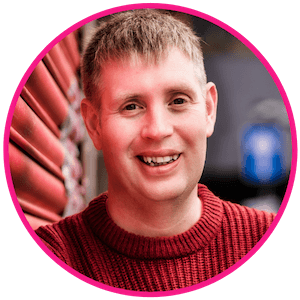
Podcast Producer Charles Commins
About this podcast episode…
PODCAST PRODUCER CHARLES COMMINS
Charles Commins handed his notice in at his pub management job with no plan and no business.
His partner gave him one month to figure it out. All he knew was that he wanted to love his job.
Seven and a half years later, he's an award-winning freelance podcast producer whose almost entire client chain traces back to one decision: making a football podcast about Northampton Town.
Along the way he's had a succession of word-of-mouth freelancing clients, realised his dream of appearing on BBC Radio, and made all of it work around being there for his family.
This episode of the Being Freelance podcast with Steve Folland covers:
Starting It's All Cobblers To Me as a portfolio piece, and how a Northampton Town fan indirectly led to a four-year retainer
Why and how 90% of his work comes through referrals
The "starting from…" pricing approach: why he won't publish fixed rates, and how he edges prices up with each new client
Work-life balance: from pub late nights to home office, to a new baby derailing everything, to finally getting it to 60/40
The never-ending circle of freelance guilt - working, not working, being with family… there's always something to feel bad about
Co-running MIC's Podcast Club with Vic Turnbull - 1,400 members, monthly virtual meetups, and why running a community full of "competitors" is actually brilliant
Launching The Warrington Scoop, a hyperlocal monthly podcast, as a low-lift way to generate local business leads
Co-mentoring with Amy: how a monthly accountability call became one of his most valuable freelance tools
The biggest challenge: not finding clients, but believing work will come when you're in a trough
Charles is part of the Being Freelance Community - come and hang out with Steve, Charles and plenty of friendly freelancers who get what it's like!
This episode is available to watch here on the site, on YouTube and Spotify.
Read a full transcript & get Links in the tabs.
More from CHARLES COMMINS

Transcript of the Being Freelance podcast with Steve Folland and Podcast Producer Charles Commins
Steve Folland:
As ever, how about we get started hearing how you got started being freelance?
Charles Commins:
I started mainly because of the fact that I had had enough of working in the pub industry. I'd done eight years of it and had got completely and utterly fed up with it and didn't wanna do it anymore, but didn't quite know how to get out of it. And one day handed my notice in without any plan, without any thought of what was gonna happen next. I nearly got killed by my partner when I did that and told her.
Charles Commins:
So I had a two-week notice period that I was serving, and I went to the pub one night, not the pub I was working in, with a couple of friends who are both older than me, and they basically said, "You're in a great position because you can literally do whatever you want to do. You have a clean slate. You do not need to think about just going and getting, you know, another job if you don't want to. You can actually go and get one that you want to do." So that rung a little bell in my head, and I'd always wanted to be on the radio. That had been my one thing when I was growing up all the time. And I tried to get into radio when I was sort of 16. I tried to do some work experience at my local station, which was Northants 96.6.
I didn't manage to get into the work experience for that unfortunately, but I did go to university, which is where I moved to Warrington, and I did radio production, well, media studies, open brackets, radio production, close brackets. And while I was there, I got to do student radio, found that I was actually quite good at it, and loved it even more than I thought I already could have done. Gave myself a couple of years to try and get into radio after I'd finished uni, and it just hadn't happened for me. So I ended up going and getting a job to pay the bills.And that's then a call centre that I did for six years. Then I went back to working in pubs, which I'd done when I was very young, and then, yes, I'd had enough of that.
So I decided to create my own podcast business after speaking to a friend of mine who I'd went to uni with, done the same course with. He'd created his own podcast production company about a year earlier to what I had done, and he literally said, "Look, trying to get into radio now is gonna be really, really, really difficult, but you could do this." And so I went, "Okay, I'll give it a try," and here we are seven and a half years later.
Steve Folland:
[laughs] Amazing. So you wanted to work in radio. You ended up working in call centre and in a pub.
Were you a landlord?!
Charles Commins:
A deputy manager essentially. So it was, it was the big, big chain that we all know that I refuse to mention these days. I went straight in at management level, like I never got to the point where I was an actual pub manager, and that was mainly because when I had my first child, I went... Not, I don't wanna say I went part-time, I just reduced my hours. So I worked three days a week, therefore doing 30 hours every week so that instead of putting her into nursery, on the days when I worked, my partner didn't, and on the days that she didn't work, I did. So we managed the childcare ourself up until the point that she went to, you know, school nursery, preschool.
Charles Commins:
And by that point, I think I just turned freelance. But I was just fed up with having to do things that I didn't want to do. Having to work really late into the night and then also having to sometimes get up really early in the morning as well. Not really ever feeling like I was having a, a balance. That work-life balance never felt like it was really anything close to 50/50 whatsoever. And I, I also remember at the time saying to myself, "Can I see myself still doing this or still working in this industry when I'm 70?" And I just thought, "Hell no. I don't wanna do this when I'm that age. No way."
Charles Commins:
That was what really helped me to just make the decision that enough was enough, and I don't wanna do that anymore. I wanna do something that I can see myself doing up until the age of retirement and enjoying working and doing it. And that's what was really important was enjoyment out of it. I didn't enjoy what I was doing anymore.
Steve Folland:
So you hand your notice in, not with a plan, but with two weeks to go.
Charles Commins:
Mm.
Steve Folland:
A couple of friends say, "You can do anything." Which sounds great, but we need some kind of skill surely.
Charles Commins:
Mm-hmm.
Steve Folland:
So another one thankfully comes in [laughs] and says, "But you trained in this. How about you set up a podcasting business?" Okay, we've got a two-week window here.
Charles Commins:
[laughs]
Steve Folland:
How on earth do you go from not having any freelance clients to then having something that is sustainable, and you don't have to go back to working in a pub?
Charles Commins:
Yeah. I... So first of all, I was quite lucky. So I had shares in that pub company that was going to be, and did give me, around about six months worth of wages when I cashed them out.
Steve Folland:
Oh, nice.
Charles Commins:
So I gave myself a decent buffer right at the very beginning. I worked my two weeks' notice without even thinking about really what I was gonna do next. I then knew I had... And I gave myself, or rather maybe my partner gave me, one month. [laughs] She was like, "You can have a month, and by the end of that month, you must have either a job or know what you're going to do and how you're going to do it." So I was like, "Okay, this is great."
Charles Commins:
I sat down and worked out how can I actually create a business making audio content. And spoke with my dad, who had run his own company when he was working. He was an accountant. So he helped me a lot with things like setting up on Companies House and that kind of thing. I then bought myself a microphone, first of all, just a USB plugging into my very old Dell laptop that I had at the time. I had used, um, Adobe Audition, or rather I'd used 'CoolEdit Pro' back in the day when I had first started learning all of this stuff. So I was like, how hard can it be to get back on that horse, if you like?
Charles Commins:
So bought the subscription to Adobe to have that and then went, right, if I'm gonna prove to people that I can do this, I should probably make my own first. So that's where It's All Cobblers To Me came from. So that's my podcast, which is a fans podcast for Northampton Town Football Club. So that is as old as my business is.
Steve Folland:
So rather than going out and approaching trying to get clients straight away, you think, "I will start my own podcast to prove that I can do it, and then I can show other people that I can do it."
Charles Commins:
Mm-hmm.
Steve Folland:
Love it.
Charles Commins:
Exactly that. I basically said to myself, "Right, what can I talk about until the cows come home? What can I just never have nothing to say about?" And, and I can also kind of make different types of content out of it as well. So although I enlisted the help of, well, initially, two online friends, we started off with the obvious stuff of just talking about what happened in the game, and then I went away and found I could actually go and speak to ex-players. And that first episode was a bit of a magazine 'cause it had the interview, it had us talking about the game, it had us talking about what was coming up later for the next game, et cetera, et cetera.
Charles Commins:
Obviously, you run out of people to be guests quite quickly when it comes to being a very niched down subject of professional footballers who played for Northampton Town that I can remember. Um. [laughs] So we did do... continue to do interviews but separate them into their own episodes after that. But I went ahead. I made a documentary which was about our win over Liverpool at Anfield, which I know you listened to, Steve, and you gave me the best feedback that I think I could ever have hoped for, which was that this sounds like it could've been made for the BBC. That was what you've said, and I've never forgotten it. It's always been there. It's almost just in my mind, Steve liked something I made.
Steve Folland:
[laughs]
Charles Commins:
This is brilliant. Um, so it was always meant to be a bit of an experiment. I can do different types of podcast content and show people that I can do it using this one show so that therefore I could then turn round to clients and say, "Hey, you want me to do a, a head-to-head?" You know, a bit like what we've got now with The Rest Is everything, where you've got two people talking to each other about a subject. A bit like Doing It For The Kids, Steve. You've got that kind of content. And I was like, "Right, I'll make an episode that is just like that so I can point people to it." I've done all of these different things to basically just turn round and show people I can do it, and I can do it really well. Please pay me to do it for you.
Steve Folland:
Wonderful. How then, 'cause remember... so we had the two weeks. Two weeks you didn't do anything. Month, you kick in. You reach out to [laughs] some people who like a football club, start a podcast. But how did you get those clients?
Charles Commins:
So the, the first client, I went back to my friend who had told me you could set up a podcast production company, and he said, "I've got somebody that you could make a podcast for." So it was somebody that he'd worked with previously that he knew really, really well, and he even offered to sort of coach me through it. So it's a chap called Patrick, who I still work with occasionally to this day. He'll sometimes come to me and say, "Have you got space to do a, a, a short podcast series for a client?" He works in a marketing agency, and he wanted to create a podcast to showcase the fact that his company knew what they were talking about with marketing.
Charles Commins:
And so I made a podcast that was called Tech Demand Weekly, which was an interview show, and each episode I would take a different content marketing genre, so it could've been case studies or video testimonials or LinkedIn, whatever it might be, and I would then go and find a guest who would fit that topic and basically interview them. And because the only bit of me that had really known anything about marketing was through putting posters up in a pub window marketing how much a pint was that week, I was learning along the way exactly what marketing actually was and how it worked. And we did this show for about six to eight months weekly.
Charles Commins:
I was charging a pittance. And I remember speaking to somebody that I had met through a podcasting community which I now co-run, and saying to this person, "Oh, yeah, I, so I get paid this much per episode, essentially, per week." And she went, "What? How are you doing all of that for just that amount of money?" It was under £100. So I was doing everything, research, scripting, finding the guests, arranging the recording time, doing the recording, being the interviewer, then editing it, putting it out online, creating a blog post for the website. I mean, I look back and I go, "Oh. [laughs] Probably needed at least two more zeros for this kind of work to be honest."
Charles Commins:
But hey, I learnt an awful lot doing that, and it really did set me up. And from there I then did a second podcast for the same person, which was called People in Tech. Exactly the same pretense. It was an interview, head-to-head interview, and I would speak to a lot of people in the C-suite, so chief marketing officers, chief financial officers, CEOs, that kind of person. Ended up basically through that work with Patrick meeting all these different people who would then say, "We'd love to do a podcast series, you know."
Steve Folland:
Ah. The dream.
Charles Commins:
And it just snowballed like that. And Patrick would come to me with different clients that he had actually gone and got. So we started off doing lots of cybersecurity stuff for lots of different people. We did a series for... Uh, I don't know if you remember, there was a, a software that I used to have on my PC when I was at university called Malwarebytes. They then became owned by a slightly bigger company I think called Proofpoint who are now quite big within Microsoft. So I did at first a podcast series with Malwarebytes, or for them. From that, their subsidiary company then wanted me to make a podcast series for them, and eventually I then made one for Microsoft, all through that one contact that I had from the very, very beginning. It was incredible.
Steve Folland:
Did you start to put your rates up?
Charles Commins:
I did. [laughs]
Steve Folland:
I love it. So it's proven now then, yes to your, to your partner, but to yourself-
Charles Commins:
Mm
Steve Folland:
... that you can do this. How has that evolved over time in terms of the way clients find you? Or are you still milking that one podcast?
Charles Commins:
[laughs] I would say that 90, a good 90% of my work comes through referrals. I, I have always felt very, very lucky. Now I know it's not luck, it is me being very good at what I do. I have to frame it that way because otherwise I get very down when we're in those troughs of freelance life that we all go through. I have to remind myself I'm very good at what I do, and people want to refer me to other people because I've done something good for them already.
Charles Commins:
I do get the occasional one that will come through my website, or they'll have seen me on, um, LinkedIn or Instagram and I'll get an inquiry, and sometimes that will end up going through to being a project I actually get paid to do. But yeah, a good 90% is through word of mouth, through those referrals.
Charles Commins:
My biggest client at the beginning, so within, I think this would've been the second year that I was going, it actually came through my It's All Cobblers To Me podcast. Another fan, a Cobblers fan, listened to the show, really likes it. His wife worked for a, a medical company which makes medical products for people. And, and in particular they worked for the stoma or ostomy section of this company. And they inquired about me making a podcast series for them, and essentially I had a retainer with them for four years. They were my biggest paying client.
Charles Commins:
And when, when they didn't renew a couple of years ago, I was like, "Oh, God, what, what am I gonna do now?" But even through them I have got more work. So again, although I wasn't presenting that podcast I would always be on the recording to make sure that everything went smoothly. I would meet lots of people from different organizations. And I mean, right now I'm working for a charity organization, and they met me because I worked on a podcast series that was for the Association of Stoma Care Nurses in the UK last year, and I got that job because I worked for this big client before that for four years.
Charles Commins:
So you can see, I can always go, "That came from that, that came from that." And I can go back and back and back until I can go, "Right, all of this money stems from me deciding to make a football podcast." [laughs]
Steve Folland:
And do you find that when a potential client comes your way via a referral, that it is more likely that you get the job?
Charles Commins:
Yes, absolutely. I, I have to always keep my feet on the ground. So when I do get somebody come to me who says, "Oh, um, such and such a person has told me that you could work for us, and we want to do this," my instant reaction is always to go, "Yes, got one!" [laughs]
Charles Commins:
And then I have to go, "Wait, there's no contract, there's no invoice been paid. Let's just slow down." I do feel more confident, I think from the start, that it will go ahead. They don't always. There are definitely ones that either... I mean, I've got one at the minute that is just sitting there. I, I keep chasing, they keep coming back and going, "Yeah, we still want to do it..." When? [laughs] Can we - You know, you've been asking about this for quite a long time now.
Charles Commins:
But they again came through a referral, so I will keep going. It's just not necessarily the right time for them yet. Those ones that come through, whether it's just, uh, you know, almost how have you known about me, where did you come from? I kind of treat with a little bit of, like, not suspicion as such, but I'm always just a little... I feel like I have to work 10 times harder to try and actually close that deal and to get them to be a client. And my experience is, is that quite often those people, unfortunately, in my past have... And, and, you know, I've learnt a lot through this. Have essentially wanted to take expertise and knowledge from me for nothing under the guise of, "We want to make a podcast with you."
Steve Folland:
As in they might get on a call, and you give them loads of...
Charles Commins:
Yeah. I did that a good number of times, especially in those first at least four years. I'm not gonna, you know, say, "Oh, I learnt my lesson after doing it once." I even... A couple of different people, I went to their offices. Now, one of them was just round the corner from my house, so that isn't that big of a deal, but there was another one that was literally a 40-minute car journey away, and not only did I go to his office once, I went a total of three times without any payment whatsoever from me going.
Charles Commins:
I remember going and having an initial chat with him. This is all pre-COVID. Um, having that initial chat, then him saying, "Brilliant. Could you come back and show us your proposal, please?" Yes, okay. Went back and presented a proposal. And then after I'd done that, they wanted me to go back for a third time to go and meet people and to do things. And then they started introducing me to people who were, I think one was a PR freelancer. There was another person that was a website agency. W- what this person wanted me to do was to then... He'd got prices from all three of us. He now wanted us to join up together and work out a price for all three of us to then present.
Charles Commins:
And I went, "You know what my price is. There you go. I'm not, I'm not working out another one. If you want me to work with these people, I'll happily do it, but here's my price. Done. I'm not teaming up as an agency to then work for less money. I'm sorry. Not doing it." That, that was, that was the strangest one that I ever had.
Steve Folland:
That's so weird.
Charles Commins:
And, and it's ridiculous that I look back and go, "What an idiot. Why did you go?" I mean, fine, the first time, not a problem. We live and we learn. But why did I go back three times? Why? He wasn't ever going to actually pay you. What are you doing? You're just taking time out of your day for no reason whatsoever.
Charles Commins:
And I'm, I'm still not at a point where I can definitely turn around and go, "I have streamlined it to the point where I don't even get on a call unless somebody is paying me." There are still bits that I'm working on to try and make those processes better. But I don't ever go somewhere without at least having my expenses paid for me. Um, you want me to come, that's fine. I'm gonna have to drive there, so therefore it's a day or a half day. This is what my half day rate is. You have to pay that if you want me to come. Alternatively, why don't we jump on a video call? And nine times out of 10 they'll jump on a call.
Steve Folland:
So word of mouth has been good for you. Do you do anything to oil the wheels of word of mouth?
Charles Commins:
That's a really good question. I think I, I am very customer service focused. So when I'm working with someone, the number one thing that I want to do is make sure that they have a good experience of working with me.
Charles Commins:
So I can obviously do that in a few ways. Make a brilliant podcast for them is the first one. But then second of all, it's about the communication and how all of that goes, and, and making sure that there is a good friendly relationship. I don't wanna be their friend, but I want to make sure that we have enough of a, a good relationship and communication that we get on while we're doing the project. And that enables me to then, especially towards the end, ask for a testimonial that they will normally just give to me. Sometimes I will say to them, "Look, and you've, you've already essentially given me a testimonial by saying something in an email like, 'This is fantastic. You've been such a pleasure to work with.'"
Steve Folland:
[laughs]
Charles Commins:
I'll just say, "Can I steal that?"For my website and my social media? Of course you can, absolutely fine.
Charles Commins:
And I think because I am, uh, uh, I'm likable, I like to think I am anyway, people will then remember me based on the fact that I was good to work with, I was nice, and I was good fun and, and importantly I, I did something that really, really made a difference to them and, and did it well. And I will tend to say to them, "If you know anybody that would... You know, even if you just hear somebody talking about it one day, just pop my name in. That would be lovely."
Charles Commins:
And that is literally all I do. I- it's just that little bit of sort of going, please remember me, and you know, just say my name to people if and when the opportunity arises. And I do tend to go back to the fact that if I'm nice to them and I do a good job, they will remember me for the right reasons, and therefore, if the opportunity comes up for them to refer me to somebody else, they will do that because I've done a good job for them, and we've enjoyed working together.
Steve Folland:
Nice. Now, you mentioned undercharging, which lots of us do, very early on. How's that side of it evolved? Have you, I don't know, developed packages? Are your prices on your website? Like, how's that bit of it working?
Charles Commins:
So there are kind of at least two, if not three, strings if you like to my podcasting bow. I can make your whole podcast from scratch. We will go through and work on that together. I can just be your editor. So if you wanna make the podcast yourself, go away, do it, and then throw me the audio to put together, I can do that. And then the third one includes things like presenting and little bits like that. That one doesn't happen so much.
Charles Commins:
But essentially, I have the most amount of different clients, if you like, just as editing people. So I tend to work with a good four or five different people on their different podcasts each month, not really on a retainer. I basically do the work, at the end of the month send them the invoice for the amount of work that I've done on a episode per episode basis, and they then pay me and I don't have issues. There are contracts in place as well, so that helps.
Charles Commins:
Therefore, when I take on a new client, when I do the, you know, give them the quote, I basically go, "Right, what's my current highest price that I'm charging someone at the minute?" And I'll go, "Let's add £25 to it and see if they say yes." And invariably they do. And then what I've got to do is the challenge, which I'm not very good at, is then getting those legacy clients up and moved up towards and match that top price. So that's how I tend always to have done it, and I do that with the full production as well. I've got on my website packages that you can look at and you can see, and they all say, "Starting from..." Because of the fact that I'm still not in a position I don't feel where I can go one size fits all for, for every client.
Charles Commins:
And I don't want to put out there in black and white this is how much it's gonna cost. And then, I dunno, Steve, you come to me and say, "Right, I wanna make a podcast." I go, "Yeah, brilliant." And you go, "Your package on that, on your site says that it's, you can make a 10 episode series for £6,000." And I go, "Yeah, brilliant. Let's do it." And then you turn round and go, "Right. So what I want you to do is I want you to basically come and follow me around for a year and make a documentary of my life in podcasting, please." And I go, "For, for £6,000?"
Steve Folland:
[laughs]
Charles Commins:
"Re- re- oh, shoot." So there is an... It's a, it's an irrational fear, but there is a, a genuine fear that if I put my prices there and say, "This is what it's gonna be," that I will be taken advantage of and not really have a place to stand in trying to rebuttal that. Um, so yeah, I, I, I have it on my website. It says, "From..." And then every so often I will go, "Let's just bump that up a little bit." Usually by, like, 100 pounds. It's not much. I am always scared, so scared to put my prices up.
Charles Commins:
I have literally been saying to myself, so we're recording this in the middle of March, so I take my year as starting in April with the financial year, and every year I go, "I should put my prices up in April." So therefore I need to send an email out at the beginning of March saying, "Your price is gonna go up and this is what it's gonna be." Have I sent that email, Steve? No.
Steve Folland:
[laughs] We can hit pause for a little bit while you send that email if you want.
Charles Commins:
[laughs] I've got a template as well.
Steve Folland:
Right. Okay.
Charles Commins:
And, and that's what's so annoying about this. I have a template. Uh, yeah.
Steve Folland:
I'll, I'll, I'll just take a moment to, speaking of email, the Being Freelance email. He's, he's still looking at me. Why are you not sending the email? Get your inbox full of Being Freelance. Just go to beingfreelance.com and fill in the thing and then I send you the thing all about freelancing. It's very simple. It's email marketing, isn't it? Right then, did you send it?
Charles Commins:
We'll say yes for the magic of podcasting.
Steve Folland:
Oh, for God's sake. Now [laughs] one of the things that you mentioned, you know, when you were working in the pub was about work-life balance.
Charles Commins:
Mm.
Steve Folland:
Late nights, early mornings. So how's that side of it gone for you?
Charles Commins:
I mean, it's better, but I wouldn't say that I've cracked it. [laughs] So initially it worked really, really well.My daughter started going to nursery, then went into school, same place, so it was nice and easy, and I would therefore basically work 9:00 till 3:00-ish while she was at nursery and school. I had a home office. It worked really, really well for a good number of years, up until the point where... we then started having another baby. With a huge age gap in between. That age gap meant that both of us had forgotten what it was like to have a baby.
Steve Folland:
[laughs]
Charles Commins:
Um, [laughs] that year that Nic was on, well, gearing up for birth and then maternity was my best year. My best year. Because I could work whenever I wanted to. I could work from 7:00 AM until I was basically like, "I've, I've done for the day. It's 3:00. It's nice. The sun's shining. I'm going home." I was so productive, and I had my best year. I got so close to that VAT threshold. I was, I was actually going to my accountant and saying, "How do we just, like, bring this down? Because I don't want to have to start paying VAT, thank you." [laughs] And, um, it was a brilliant, brilliant, brilliant year.
Charles Commins:
But then what followed the year after, when Nic had gone back to work, and now both of us, stupidly, and Nic will agree with me using that word, thinking we could just do it exactly the same way as we had done with Amelia eight years before, where I would work on the days when Nic didn't and vice versa, it didn't work. It just didn't work for us. It was so much different. By this time, Nic has got a promotion. She's now a manager, basically, where she is, which means she's doing a lot more work and is a lot more stressed about work. Does a great job at it, but I then would feel like I'm coming, having to go to work after I'd had a stressful day with a baby and a toddler.
Charles Commins:
And while I will always go, "I'm not trying to be oh, woe is me here," but a lot of people... Whenever I would say, "I'm just finding it really hard to get back into that mindset of going into the office at 4:00 in the afternoon to start work for the day," and people would turn around and go, "Charles, you've already done a day's work. I know you've not been paid for it. I know you've not, you know, done an awful lot, but you have already done a day's full work. Give yourself a break. Don't be so harsh on yourself."
Charles Commins:
So at this point, and basically for the last, you know, Rory is three now, and he's finally started nursery this year. I now come into the office after I've dropped him at nursery at half 12. I'm in the office by 1:00. I can then work for five or six hours, go home, have tea, have an evening. It's much better than it was, and I don't feel as guilty and as bad because I don't know where... I'm sure other people must get this. When you're not working, you feel guilty because you're not working. When you are working, you feel guilty that you're not spending time with your kids or your family or your friends. And then when you are spending time having fun with your family and your friends, you feel guilty because you're not doing work for a client or work on your business or whatever. Never-ending circle of guilt, and I never used to have that when I was employed.
Steve Folland:
[laughs]
Charles Commins:
That is something that has only come around since I've worked for myself. Because, you know, I used to finish my shift at the pub and go home, might have a whinge about a couple of customers that had been horrible, but after that, it was done until the next day I went in, and that was it. I didn't have to think about it in between my working hours. Whereas now, I think about my business 24/7. I can't let go of it.
Charles Commins:
I'm either thinking up ideas of things that I could do, side projects, or I'm thinking about, "I really need to do this to update my website. I need to think about my marketing strategy. I need to do X, Y, Z. Oh, I've just got four client episodes coming that need editing. When am I gonna get those done? I need to do this." There's always in my mind something about work that I'm thinking, "I need to do that."
Charles Commins:
And it has been at points where I've been out with the, the family at the park with the kids, and I've gone, "Stop thinking about work and be in the moment. S- stop it. You are literally letting your kids grow up, and you're not even thinking about it." So it's better than it was when I was at the pub because I'm not having those late nights and really early mornings, unless I want them to be, but there's now a different difficulty with it. So I'd probably say it's now closer to being 60/40 than it was before, which is a lot better, but it's 60/40 in terms of work. So I'd like to get it 50/50 if I can, and maybe when Rory goes to school full time, I'll get that again.
Steve Folland:
Yeah. Oh, wow. Um, brings back so many memories of doing that as well, of looking after a tiny person and then working.
Charles Commins:
Yeah.
Steve Folland:
Um, or in between. Oh my gosh. Another thing you mentioned earlier was the great advice that you got from somebody in the community, and then you said a community that I now help run... words to that effect. So tell me about that.
Charles Commins:
So it's called MIC's Podcast Club, so MIC as in a microphone. Uh, I co-run it with my, my wonderful, beautiful friend, and now fellow Being Freelance guest...
Steve Folland:
Ah, yes!
Charles Commins:
Vic Turnbull. I was so jealous when Vic got on the podcast before I did, you know, Steve. It, it, it drove a wedge between us for about all of three hours.
Steve Folland:
That was years ago.
Charles Commins:
It was years ago, I know.
Steve Folland:
Sorry.
Charles Commins:
Um, yeah, so Vic actually started Mike's Podcast Club back in 2017 in Manchester on the first floor of a pub. I didn't go to the first one, but I went to the second one. I did my usual thing of if I go anywhere, I have to be early. I hate being even just on time. And so I got there a good 45 minutes early. And Vic was there setting up. You know, putting chairs in the right place and stuff like that. And I just said, "Can I help?" I didn't wanna stand there and just be like, "Oh, I'm just gonna stand here and look like a dweeb. I'll help."
Charles Commins:
And so that kind of was where I met Vic, and after going a couple of times, I remember walking back to the train station in Manchester with Vic after we'd done an event, or she'd done an event, and, um, she will say stupidly, I said to her, "You know, if you need any help with this, I'll quite happily offer my, you know, my time and my services." And she basically went, "Uh, yes." [laughs]
Steve Folland:
[laughs]
Charles Commins:
And so we've been doing it together ever since. So I think I went to two as just a normal, I say normal, you know, just a, a member. And, uh, after that I, I became, you know, co-runner of it. So it's a, a monthly meetup. We now do it virtually, online because obviously when COVID hit, we couldn't go and meet in person. So we started, we took it online. And of course, what happened then was that we got loads more people coming from all sorts of different places. It was no longer just people from Manchester, it was people from around the UK. We even have Americans, Canadians, Australians if they can come at the time, uh, you know, with the time difference and everything.
Charles Commins:
We've got so many... I think at last count there's, like, 1,400 members. We get maybe 30 to 40 that will turn up on any particular meetup event. We still do in-person ones as well, where we will meet in Manchester. We've done, we've done meetups at things like The Podcast Show where we will basically just say on the end of day one of that conference, "We're gonna be in this place, this pub or whatever. Come along, talk to other podcasters. Have a chat."
Charles Commins:
It's pretty laid back. We, we tend to sort of do it as we'll think up of some starters for 10, if you like, and it'll be something like, tell us about how a particular marketing ploy or tactic has worked for you this month. And it's essentially about getting the community to help each other by sharing their own experiences. And then the second half of the two-hour event that we have is an open Q&A. So people will be putting questions into the chat online as we go, and it will be, you know, questions like, "Oh, I, I had a guest not turn up and they would, they told me that it was because they didn't get a reminder." Things like, things like that. How do I do that? What's the workflow for it? But it's not about me doing the helping, it's about the rest of the community doing the helping.
Charles Commins:
So that's, that's what I love about it, and we get all sorts of different experiences coming onto the event. So we get people that haven't started a podcast yet right up to people that are doing it for a living, and it's just a really nice, wonderful community of people, because podcasting can be quite lonely. When you're doing it as a, you know, independent, as a bedroom podcaster, it can be very lonely. Yes, you might get to do your interviews, if that's what you're doing, but you've still then got to sit there with headphones on to edit it. And as try as you might, it's really hard to edit, you know, people talking while somebody is trying to talk to you in the same room. [laughs] It doesn't work. You can't do it. So it becomes quite a lonely thing.
Charles Commins:
So having this community has been absolutely fab for bringing people together. I've met loads of great people. I've found out about loads of brilliant podcasts through it as well. It's, um, it, it's really, really good. It's hard work. There's a lot of time and energy that goes into it. But yeah, I love it, and I know Vic loves it.
Steve Folland:
It's interesting, isn't it? Because some people might sit there at the beginning of you talking about it and thinking, "Why would you run a community that is possibly gonna be full of your competition and spend your time and, and energy in that?" And yet by the end of you talking about it, hopefully they're then sitting there going, "Oh, okay. [laughs] I get it now. It doesn't matter that these people aren't gonna hire me, it's our shared love of this." And actually, you probably still learn, even though you do it for a living, from their experiences and stuff they're doing all the time.
Charles Commins:
Absolutely.
Steve Folland:
Just to rewind slightly, at the beginning of this you mentioned It's All Cobblers To Me, so that's your football fan podcast. But that's still going today. Like, well, how much of your week does that take up? And, and does it bring... I m- I know you mentioned the fact that, yes, you've had direct work off the back of it, but yeah, how does that fit into your busy schedule now?
Charles Commins:
To answer the first question of how much time does it take, too much. It does take too much time. Basically, we record on a Sunday night and then on a Wednesday night. So that's my two evenings a week definitely done, and I will then edit it straight after, get it scheduled and out. So that's two evenings a week definitely spent with it.I'm then constantly thinking about what can we do this week or, you know, what are we gonna do in the off-season, for example, when we've got no games to talk about. And we try and do as much as we can that is not about doing stuff for ourselves, if that makes sense. We sponsor one of the women's team, uh, Katie McLean, who is the goalkeeper. We try and do stuff for the community trust, which is the charity arm of the football club. Um, two of us now technically have jobs with the football club through doing the podcast. So Danny is...
Steve Folland:
Defender and you're up front. Is that it?
Charles Commins:
[laughs] I wish, I wish. Um, no, Danny works as, I think he's the events manager for the community trust, and I host hospitality at the football on the home match days at Sixfields Stadium, which is paid. So therefore, I'm getting something out of it that I could never have imagined that I ever would have done. And I, I guess loads of opportunities for me have come from doing the podcast. I do a national radio show called Total Sports Squad Goals on the BBC. Not every week, but when I'm invited, so it's usually twice a quarter that I'll go and get on that show. It's basically like, uh, Sky Sports Soccer Saturday, if anybody remembers that, but on the radio and with fans and one ex-pro footballer, which is great fun. So I've realised my dream of being on BBC Radio.
Steve Folland:
I love that. So good.
Charles Commins:
But that's brilliant. I love doing that. I love the work that I do for the football club. There are pros and cons to it. So all of those things are big, big, big pros. Um, the cons are, number one, it does take a bit too much time. I do have to rein myself in quite a bit with it, and the other con is, is that I never set this up to become a somebody. I did it, as I said right at the start, to showcase that I could do this as a, as a job for other people. I never expected it to become what it has done, which is just the number one podcast for Northampton Town fans. I mean, it is the only one, but we'll call it the number one.
Steve Folland:
[laughs]
Charles Commins:
[laughs] Um, we have a Patreon community that's got over 100 paying members in it. I've met so many people, so many friends that I now would call them friends through that community. We have done, you know, day trips. We've gone to away games together. We've met up before the football. We've done, you know, little meetups that aren't even around the football. We've gone bowling together. We've done all of these different things that have been so much fun, and that's been great, but it does mean that I now get recognised an awful lot when I go to the football.
Charles Commins:
And while that might sound like it's brilliant, and, "Oh, that must be great. You, you're a celebrity. How amazing is this?" It's nice, but at the same time, you do get some people who don't like you and tell you that they don't like you, and I'm not one of these people that can just let that, you know, water off a duck's back type thing. That stays in me for weeks and weeks and weeks. It doesn't happen very often, but as we all know, when something negative happens, it's much bigger than somebody coming up to you and going, "I love the podcast." You know, that happens so much more than anybody telling me that they don't like it.
Charles Commins:
But when it... when somebody does tell you that they don't like you or it in however they choose to do it, it really knocks you and it makes you go, "Oh, why? Why do I, why do I do this?" So there are pros which are... and the pros definitely do outweigh the cons.
Steve Folland:
Yeah.
Charles Commins:
But there are the cons which, uh, you know, make it sometimes quite hard.
Steve Folland:
Presumably that longevity and the way you've kind of like grown that podcast and all the different things you do with it though, does also still act as a showcase for your own business and as an experimental playground for what you can do for clients.
Charles Commins:
Definitely. I still, I still do experiment with it every now and again, um, especially if I get wind of an enquiry that might be slightly different to something that I've done before or, or the usual stuff. I will then sort of go, "Right, how can I do that for It's All Cobblers To Me?"
Charles Commins:
And I won't... it won't necessarily be something that I release, but it will be something that I do a little kind of pilot of, if you like, and I can then use that, and I've done it once where I have made it and sent it to the potential in- you know, cus- client to say, "It's not the topic obviously, but this is what I could do as an example." And that did work. They did go, "That's brilliant. I didn't think we could do something like that." "Just explain how we could transfer that from being about football to being about what we wanna do." And I was able to just go, "Well, very simple, blah, blah, blah, blah, blah."
Steve Folland:
And then recently you started another podcast of your own, right?
Charles Commins:
Yeah. Yeah, I did. [laughs] Uh, it's called The Warrington Scoop. So I had wanted to do a hyperlocal podcast for years. Before COVID, I had this idea I would go and interview local businesses, people that ran, you know, were either freelance or small business owners or whatever they would be, all in Warrington. That was my idea, but I'd always said to myself, "I cannot let this be just another side project that takes loads of time for nothing in return."
Charles Commins:
So for years, I pitched it to different people within the town-Um, networking groups I thought would be a really good one that potentially could then pay me to do it. All of these different people that I spoke to all thought it was a great idea, but weren't prepared to, to pay me or... You know, I was basically saying, "I'd love you to sponsor the episode or sponsor the whole series." But no one was basically prepared to match what I was hoping to get out of it financially. So it just didn't happen, didn't happen, didn't happen.
Charles Commins:
And then my friend, about 18 months ago now, he started a email newsletter. These are quite big apparently in the States, like hyperlocal, here's what's happening in your town newsletters that go out every week. No politics is in it. It's, it's all meant to be positive because it doesn't matter where we live, especially I know this in the UK, we always moan about the place we live. It isn't good enough. There's always something that's going wrong. The council are rubbish or whatever, blah, blah, blah, blah, blah. It's not good enough. Mike, my friend, wanted to showcase the really good stuff that does happen and change the narrative to be, "Look at all the great stuff that happens in our town."
Charles Commins:
And almost as soon as he'd started the newsletter, I said, "You know what would work really well with this? A podcast where you could go deeper into these actual events or the people that create them." And the idea is to try and get local businesses to sponsor the episodes, to have like a, a business of the month if you like. No one has taken us up on it yet, and I did think we'll give this a go for a year, and if we haven't got any money back from it, then we'll, we'll put a stop to it. April will be the 10th episode, so the 10th month. I'm enjoying making it, so, uh, don't tell Mike this, but I might just carry on regardless [laughs]
Steve Folland:
[laughs]
Charles Commins:
... of whether there's any money coming in. It's been really, really fun. It's really interesting. It does take a little bit of time out of my life each month, but that's why it's a monthly episode because I was like, I already do a show that doesn't bring in that much money, that I do two episodes, three episodes now a week. I need to just, yes, do it, but on a smaller scale, and it, and it works really, really well. I'm re- I'm really pleased with what it's doing. Yes, I'd like a little bit of ROI for it, but I'm happy that I'm meeting people in my community. And the aim is at the moment for me to say, "I do this for a living. If you ever want a podcast, here I am." So although I might not be getting cash money from it right now, I may well be able to attribute money to it.
Steve Folland:
Mm.
Charles Commins:
Just like I have done with It's All Cobblers To Me.
Steve Folland:
Brilliant. Now - You have a co-mentor, right?
Charles Commins:
Yes. Amy.
Steve Folland:
How did that come about, and how's that been?
Charles Commins:
So that came about because I heard the Friends With Business Benefits podcast, which is Franky and Charlie. And they do their co-mentoring as a podcast, which is brilliant. So they were the first people that kind of introduced me to co-mentoring and, and what it was, and I realized that you don't have to do the same, you know, job as each other to do this, to help each other out.
Charles Commins:
Then I knew you and Frankie were doing it, and I kind of just sort of went, "I want a bit of that." I'm trying to remember how I actually approached Amy with it. I, I think we'd met a few times through Being Freelance co-working, I think, and a couple of other online things. I think I just asked her outright. It was a bit like asking somebody out on a date. I just sort of went, "Hey, do you fancy being my co-mentor?" And she was like, "Well, what does that entail?" And [laughs] stuff like that.
Charles Commins:
And essentially we actually then, um, at the very beginning did work for each other, so a bit of quid pro quo. So Amy built my website for me, and in return, I made her podcast Help My Website Sucks for her, and we still do that. So she still helps me with my website. I still make her podcast for her. Uh, I think the new and final season is coming out in April. So do check that out. It's really good.
Charles Commins:
And yeah, we, we kind of did that and co-mentoring at the time, and essentially it's just a monthly video call chat. We ask about what's gone well this month, what hasn't gone so well. We set ourselves goals, which we then check in with each other about. It's really good. There's a little bit of accountability. We've become really good friends. It's really nice having somebody... you know, who is also a business owner, somebody running their own business to bounce things off of. We'll quite often sort of talk about, "What are you doing at the moment about your marketing?" Or, "What are you doing about this client that you've, um, you know, been working with for ages? Why haven't you managed to finish that project yet? What's stopping you?" And we will brainstorm, I guess, ways to sort of move on with different things that are happening.
Charles Commins:
I think the biggest benefit that we get from it is that we will talk about something, and it might be either a client project or a, a sales process that we're trying to work out of how to do, and the other person will go, "Well, this is what I do, and that works for me." And then the other person will go, "Oh, okay." And that helps, and we implement it, and it does work. So it's really good. We probably wang on far too much. We, we, we book in about two hours, I think, for our video chats, and five hours later are still there going, "I should really go and get some tea, Amy. I don't know about you, you must be hungry as well." Yeah, it's great. I love it, and I think that it's a really good, a really good thing for you to do.
Charles Commins:
And I would definitely say go and do it. If you've not got a co-mentor yet, make sure it's somebody that you seem to get along with. It doesn't have to be somebody that you know really well, but at least know that you get along with them. But don't think that if you're a copywriter it has to be another copywriter or a graphic designer, or it has to be- Again. It can be anyone. So Amy makes websites, I make podcasts. We're creatives, and therefore we have the same kind of understanding of where our brains work or how they work, but we're both basically rubbish at the business side of things. So that's where we help each other out.
Steve Folland:
What would you say you have found the most challenging thing about being freelance?
Charles Commins:
I've always struggled with finding new clients. Which is weird to say that because, uh, they always come. But my issue is, is that I will... we'll have those peaks and troughs, and the peaks are great. But when the troughs come, I'm always like, "What am I actually doing to try and get clients?" And because most of my work comes through referral, th- there isn't anything really I'm doing to make that happen. It just happens when it happens. And so every time I get to the point where I'm in a trough, I'm like, "I really should've done some marketing. I really should've got this done." So when I'm in those troughs, believing and having faith that I will get work is the worst... It's a, it's terrifying. It always comes good in the end, but there is always that fear of, well, what if it doesn't?
Charles Commins:
And that's the bit that is the biggest challenge, I suppose. So not really getting the clients, the challenge is, is believing that you will get work when you're not getting it. It is frightening. And even though it does always seem to work out in the end, oh, it, it, it literally makes my hair stand up on the back of my neck thinking about it.
Charles Commins:
I am very, very lucky, and I want to make sure that I say this. I was able to quit my job because Nicola had a very, very secure job herself that paid well. The money that I earn is subsidiary to that. But I understand my privilege in this situation. I was able to do it, and not everybody can. And so even when I'm worried about, is there going to be work coming through, I remember that if the worst comes to the worst, I pay for my, you know, my rent of my office, I pay for my subscriptions that I've got, and I just don't pay myself, I know that as a family we will still survive. We will still be able to pay the mortgage. We will still be able to pay for food. And that is a very privileged place to be.
Charles Commins:
But even so, and again, this is a traditional way of thinking, but as a man, I can't help myself feeling like I should be providing. And even though equality, you know, is getting better, it's nowhere near as good as it should be, of course, but I still always want to be the main breadwinner, despite the fact that I don't need to be, and despite the fact that I'm definitely not. [laughs]
Steve Folland:
Charles, it's been so good to talk to you. If you could tell your younger self one thing about being freelance, what would that be?
Charles Commins:
Oh, it's so much fun. Honestly. I mean, yes, there are times when it's hard. You are running a business. Like, regardless of the fact that you call yourself freelance, you are a business owner, and you are trying to do everything as best as you can for yourself. But I have never met such a beautiful bunch of people through being freelance, and I mean that as in me being freelance, but also what you've created, Steve. It's an absolute pleasure to have been able to make so many new friends. I would never have met those people had I not gone freelance.
Charles Commins:
And so the one thing that I would probably say is you're gonna have a great time meeting loads of brilliant, exceptional, wonderful people. There are too many to name. There are so many wonderful communities. Of course, there's Being Freelance, but there's Freelancer Magazine. There was Freelance Heroes, which was one of the first communities that I think I found. There's Doing It For The Kids. But there's so many more as well, and they're full of wonderful people that all understand what it's like to be self-employed. To steal your phrase, you're not alone being freelance. And just remember that and enjoy it, because it is so much fun.
Steve Folland:
Oh, how lovely a way to end. Go to beingfreelance.com. There will be links through so you can find Charles online. But Charles, thank you so much, and all the best being freelance!
Charles Commins:
Thank you, Steve. It's been a pleasure.