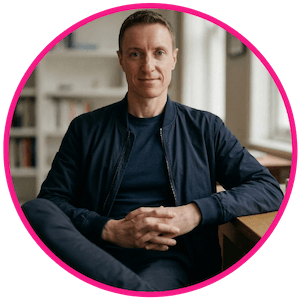
Graphic Designer David Airey
About this podcast episode…
GRAPHIC DESIGNER DAVID AIREY
David Airey is a freelance graphic designer based in Northern Ireland, self-employed since 2005.
He's the author of several best-selling design books including Logo Design Love and Identity Designed - both of which started life as blogs, before turning into books... before turning into a steady stream of client work.
In this episode of the Being Freelance podcast, David talks with us about:
Persuading his former employer to be his first freelance client
Why his early "business blog" flopped, and how switching to writing about design (not just his own) changed everything
Launching logodesignlove.com in 2008, and getting an out-of-the-blue email about a year later from a US publisher that led to his first book deal
How that one book grew into four published titles, translated into multiple languages
Sharing your passion and interest in your subject/industry through a side project will reflect well on you as a freelancer
Niching down into logo and identity design after realising it was the part of the job he loved most
The costly early lesson of doing design work before securing payment upfront - and how he gets paid now
Why he's deliberately kept his business to just himself for 21 years
How those same blogs, barely updated these days, still bring in client enquiries years later
What makes a good client relationship, and why he pushes back on purely subjective feedback
Why he doesn't set long-term goals and prefers to stay focused on the present
This episode is available to watch in video here on the site, on Apple Podcasts, YouTube and Spotify.
Read a full transcript & get Links in the tabs.
More from DAVID AIREY
David’s website
Logo Design Love
Identity Designed
More from Steve Folland

Transcript of the Being Freelance podcast with Steve Folland and Graphic Designer David Airey
Steve Folland:
As ever, how about we get started hearing how you got started being freelance?
David Airey:
Sure. I was living in Edinburgh at the time. I moved to Edinburgh when I was 19 to study, and I ended up working for a small cancer charity where I was responsible for their print and marketing and their website. After some time working for them, it was about 18 months, I left to go traveling. And when I returned, they hadn't filled my role, so I pitched the idea to them that they become my first client. And for three days a week for the next 18 months or so, I would work for them from home, invoicing at the end of each month. And in the other days of the week, I would spend that building my website a little more and searching for other clients. And thankfully, it just grew gradually over the years and 20 years on, still doing the same role, still loving it, and very grateful to be in the position that I am, able to have a small family. My two kids, they're off school for summer now, so they're in the house, which is just a few metres away from my garden office here. And yeah, it's great to be closer to them whenever I'm not working. Sometimes when I'm working too because we need breaks and I can get out into the garden, play football with my son, and my daughter joins in, and yeah. It's great. So that's kind of how I started. I took my previous employer on as my first client, and the rest of the time, I tried to learn about how to best market myself and find new clients.
Steve Folland:
So where did those other clients, those early other clients, come from? Were they finding you online or?
David Airey:
Yes, it was mostly online. I tried the cold outreach, which was very unsuccessful. Clients were usually finding me through the blog posts that I was publishing. The blog posts were initially targeted at potential clients describing what I did and how I might be able to help them, but that didn't get much traction. And I knew of other designers who had their own blogs, and they were publishing blog posts about what they liked and various design work and what they did. And so I tried to emulate that. I made my blog posts more focused toward designers because we were each commenting on our blog posts and linking back to each other, so that helped boost the search engine rankings. So it became more of a design blog rather than a business blog, and I said yes to as many things, as many potential clients, the inquiries that came my way. I tried things that I ultimately didn't enjoy, and it led me to focus then on the logo work and the visual identity side of a brand because that's what I love the most.
David Airey:
So thankfully, over the years, as a result of my books and my portfolio, the inquiries are very specific. Usually, people get in touch with me, they want a logo or a logo as part of a broader identity. And so long story short, yes, things are going great. And finding clients can be difficult, and I often wonder where the next one is coming from because as any independent designer can relate. There's peaks and troughs. You're not always flat out, and you're not always in the middle. You're not always quiet. It goes ups and downs. So despite having been in this role for more than 20 years now, there'll be quiet times and I still think to myself, "Okay, I need to be doing more now. Where is the next project coming from? Am I going to be able to afford the bills looking further down the line?" So it's a strange headspace where despite the years and despite knowing about those ups and downs, they still have a little impact in there to some extent. I just try to enjoy it as much as I can because nothing's forever, so just take each project as it comes, really.
Steve Folland:
I think it's really interesting that it was when you switched your blog to writing about design. So you were sharing other people's designs, not just your own?
David Airey:
Yes, that's right. I started with davidairey.com, which is my personal domain name, and I had a blog there that was on a lot of different topics, just really anything creative-related that interested me, really broad, from things like poster design to book covers, to architecture, to music videos. So when I realized that it was the logo aspect of a design project that I loved the most, I thought it made sense to start a new blog, which is where logodesignlove.com came in, and I launched that in 2008. And it was only online for about a year of me publishing maybe two or three posts per week when I got an email out of the blue from a publisher in the States asking if I would write a logo book with them, which I said yes to, and that book is now in three editions in multiple languages, and that's another stream of potential clients. They pick up my book in foreign bookstores in different languages, and they send me an email. So it's funny how these things come about.
Steve Folland:
I love this story so much. I'm just imagining you getting the email from a publisher in the States.
David Airey:
Unexpected, very unexpected. It was from Nikki McDonald. She was the senior acquisitions editor at Peachpit, which is a subdivision of Pearson. So I spent about eight months coming up with the content. I would send the files, the Word documents first to my copy editor. It would come back torn to shreds because I was crap at writing. And then I would set the design. I designed my books, too, so I set them in InDesign, and I send the PDFs, and then the final tweaks come back, and that's how the first book came around. And I've gone on to write another few, so I've got four books and, yeah, I would recommend that to anyone. Everyone's got a book in them. I didn't have a clue at the start, really, but you learn over time, and you just enjoy the process.
Steve Folland:
And so that book, which it seems, I'm not a designer, but it seems like this is a go-to book for designers around the world, which must be so exciting. But that book that came from the blog, the blog is still sharing your views on someone else's work, as in this is why it works or this is why I love it, that kind of thing. If somebody hadn't seen your blog, and it's that kind of writing. It's not just here's an image. It's you explaining it?
David Airey:
To a certain extent, yes. Over the years, it has changed, and the past couple of years, I've not been updating it regularly, which I've toyed with the idea of doing that more, but at the same time, I have the client work on the go, and that's my focus. So the blog in the early days was, I say regrettably, but I'm not sure if I... Well, yeah, it was more negative. There were some blog posts that I published that were more clickbaity. There was one that I remember about the London 2012 Olympics logo where I called it a disaster, and it got a few hundred comments on it, and it was viewed hundreds of thousands of times. And looking back, that's not the type of content that reflects what I want to do today. I want things to be a lot more positive.
David Airey:
So if there's a logo or a series of logos, or a studio that I admire, or an independent designer and I want to share their work, then I'll pick out my favourite projects, write a little bit about them, and then share that on the social media accounts for the website. And I have a newsletter on Substack that I publish maybe every month or two that goes out to a few thousand people.
David Airey:
So the Logo Design Love blog, it helped a great deal. That's a side project of mine that grew into a book and then helped attract clients. And then there was a second design website that I launched in 2010, I think. So a couple of years after I started Logo Design Love, then I went on to identitydesigned.com, which was a little bit broader than Logo Design Love, and the fact that it shared not just the logo, but the art direction, the web design, the print marketing, so more of a complete project. But each post would be a single project from a studio that would contribute their work. So I got a lot of contributions from studios around the world because they wanted me to feature their work, and I wanted to feature their work, too, because I thought it was great. It helped me as well as them. So there was a mutual benefit there. So those side projects have kept me going over the years, and I know that clients that I've had over the years have found me through those websites. They've told me that. So it's worked out really nicely.
Steve Folland:
At what point then was it literally as you started the first blog that you niched into logo and brand identity yourself as a designer?
David Airey:
Yeah, it was very much around that time, and that wasn't too far after I became self-employed. I had the job with Myeloma UK, the cancer charity, and I started with them in 2003. It was 2005 whenever I started working for myself with them as my first client, and then it was 2008 when I launched the Logo Design Love website. And in those three years, between the time I'd started and then the Logo Design Love website, I was taking on a broader range of work. So there was web programming in there as well, which looking back, I didn't really enjoy. But yeah, it was definitely those three years made me realize more that it was the logo aspect of a design project that I really loved the fact that you have about four weeks or eight weeks or so, give or take, to spend learning about a client's business and then distilling that into the smallest possible distinctive emblem or mark. I loved the sketching, I loved the learning from new people every so often, and I loved whenever I could see that logo appear in real life after me just sitting at home on my own with a pen and some paper. There's a satisfaction there that's difficult to describe.
David Airey:
But over the years, it's still there because I'm still working at home alone to the large degree. I have my family and I have my friends and I have a lot of designers that I've met online that I've yet to meet in person, but hopefully. And then it can be isolating to an extent, and I think there's a drive toward that isolation in broader society where you think about 15-minute cities and everyone more work from home. So I'm not really sure where I was going with that, Steve.
Steve Folland:
Well, no, that sounds like that all stemmed from you picking a niche, like the snowball effect into the success that it then brought.
David Airey:
Yeah. Design was always something that I really enjoyed. It's why I moved to Edinburgh to do a design degree, which turned out not to be so much about design and more about managing the print process and managing people. But that's another story. Yeah. A lot of the design that I learned was self-taught and learning from others after my formal studies.
Steve Folland:
So self-taught with design to a large extent. And how about to the business side of it? Was that also something you were figuring out?
David Airey:
Yeah, very much. Yeah, I made a lot of mistakes. One of the biggest mistakes that I made would've been doing the design work before getting paid a percentage of the fee. Even though at the start of a project, I would say to a client, "It's going to cost this much," and they'd say, "Yes, let's go ahead with it." And I was just so keen to have the job and to do the work that I would share my ideas, and that's essentially what a designer's being paid for, their ideas. So if you share this before any payment takes place, you're leaving yourself open, and I can remember more than a few times when I would do the work and the client would disappear. So my terms changed over the years where I don't begin the design work before receiving a 50% payment. It's usually 50%. It depends on the size of the total project fee, and sometimes it could be a little less than that, but it's usually 50% before the work begins and then 50% on completion, but before I send any of the files. So that helps speed things up at the end as well. And I say 50% at the start before the design work begins, but there is work that takes place before that. There's the back and forth with the client. There's learning a little bit about their business before you get to the research phase of your paid engagement. So there's always time involved before any money exchanges hands, but to a large extent it's 50% upfront and 50% at the end. And yeah, nobody told me that that's what you needed to do at the outset, so I lost some money there, but it was a valuable lesson, and we learn the fastest from our own mistakes.
Steve Folland:
Yeah. What else would you say were key things that you figured out along the way?
David Airey:
Well, it was taking on the work that I most enjoyed, learning to say no to people because I was so keen to please that that's one of the reasons why I said yes to a lot. I wasn't as critical about the right fit with potential clients. Over your time in the profession, you can pick up little red flags that make it more obvious that it's not going to work out, so it's best just to politely decline. Saying no to the wrong projects just means you're much more available when the right one comes along, even though there's a gamble there. But there's a gamble in taking on the wrong project whenever you do have a gut feeling. You've got to trust your instinct about--
David Airey:
Most of the inquiries that I get are emails first, and sometimes people will call me directly or they'll set up a video call through my website, but Mostly it's emails, and there are just little cues that you can pick up about whether someone is really trusting of your ability to do what they're looking for, or are they just looking for a price that they can send to a committee that means that they can sign off with somebody else better?
David Airey:
The business side of things was something that I had to learn more so than the design side of things, because I had a little experience with design before that, but when I look back to my earliest projects, there's a cringe-worthiness there that I think a lot of designers would go through as you gradually, over the years, you get better and better. And when you look at your earliest work, it's not something that you would do, but that's just a part of the process. That's why you can afford to charge more as you go through the years, because your output is better, and you can see that physically from looking back at your past case studies.
David Airey:
So I had to do a lot of learning on the job, and I'm still learning. I would never say that... I know I'm not the best designer out there by a long stretch, but I'm good enough to do the job that my clients want me to do, and that makes them happy at the end of the day, satisfied, and more than satisfied. My aim is to delight my clients, and they often give me some really nice testimonials. So although there are studios and designers who are at a level above what I'm at, there are studios and designers who charge a lot more than what I do too. I think I'm in a good spot where I charge what the clients think my work is worth and what I am happy to accept to work for four weeks or eight weeks or, I think the longest project I've worked on was maybe about six months. And a lot of that depends on how fast the client is at getting back to me.
Steve Folland:
I'm glad you mentioned your case studies and testimonials because your website has some amazing case studies on it. Although, I'm also thinking you've been doing this for 21 years, so there must be a filtering process. But I'm wondering how much time you set aside. What's your thinking, your process behind putting your work online, your portfolio, your case studies?
David Airey:
Well, I want it to reflect the work that I'm happiest with and the work that I want more of. So the logo is an important part of all my case studies. Some of the projects on there might be 10 years old, some might be six months old. I couldn't tell you the amount of total logos that I've designed over the years, but my portfolio has perhaps 10 or 15 in total because there's only so many that a client needs to see before they get in touch with you. I can understand why large studios and agencies will have a lot of work on their websites. They have a much bigger capacity, so it's expected that they have this huge body of work. My portfolio reflects the fact that I know what my potential clients need to see in order to make a decision, and I don't want to put on too much. I want to give them a snapshot, something that says to somebody, "This guy focuses on this, and his work is good." A body of work that includes books and speaking engagements and testimonials and has social profiles that are followed, so there's a bit of a social trust there.
David Airey:
Yeah, I only put on as much as what I think is necessary for me to get new clients. I don't want to overload, and I don't want to show work that I know I could improve on, which is often the case when I look back at my old projects. And like I said, that's the way it should be. Your portfolio is never finished. It's always a work in progress, so you've got to balance that with the fact that you can't spend all day looking at it. There'll be months that go by, and I don't really make much of a change to my portfolio because it's at a stage where it's good enough to attract new business, then the client work becomes my focus. So whenever there's a bit of a downtime, that's when I'll put a new project on my portfolio.
Steve Folland:
Yeah, I like that. In terms of your marketing, because you mentioned social profile, but you're not on Instagram, are you?
David Airey:
I'm not, no. I'm on LinkedIn, X. I think I'm on Facebook. I don't spend a lot of time on social media, really. That was different in the past. I'm conflicted about social media because I know that a lot of people use it as a beneficial tool to bring in new business and to earn that way. But I don't like how the algorithms are geared to addict you, and we spend enough time looking at screens. My opinion is that if I have the clients, if I have the business that I can just do the design work and then leave my office and spend time with my family and my kids and my friends and just time for myself, then I don't want to be continually scrolling on my phone again. I can see the importance, and I've come to know a lot of people through there that I value those relationships, too.
David Airey:
But there's a downside to it that you need to weigh that up. It's called social media, but essentially, you're sitting in a room by yourself looking at a phone. It's not really social. The social aspect is the thing that I love that you do, where there's the in real life meetings, and you get out and you bring people together. Or even you have the calls where you bring everyone together on the video calls, don't you? That is something that, for me, has a lot more value than the social media profiles, I think. Don't get me wrong, I know that a lot of people make social media work for them, and they don't go overboard, and they do have a good balance. For me, yeah, I share my work on social media once in a while, and I like to see what other people are putting on there from time to time, but it's not really a big part of my business at this stage.
Steve Folland:
On the plus side, you built your profile through your blogs, and then that led to your writing. And that has managed to sustain that profile?
David Airey:
Yes, I would say that. Just a few months ago, a client found me. He was searching for logo design of a particular kind, and he did, I think it was a Google image search. One of the images was hosted on my Logo Design Love website, so he clicked on it. And you know when you see a Google image search, then there's the link at the bottom to visit the original source. So then he went through to the website, and he thought to himself, "Well, who's hosting this website?" And he went on the About page. There was my details. He went to my portfolio. So yes, while I don't update those side projects, the Logo Design Love and the Identity Design as much as I did, they're still bringing in inquiries. And so that is a huge value and if somebody asked me, "What should I do to attract new clients?" Yeah, a side project like that is ideal because not only does it attract visitors to your website, it also gives potential clients a clue into how much you are invested in the work that you do. If the side project is related to what the service or product you sell, then it just shows your enjoyment and your interest in what you do, and that's why clients hire us because we are the ones who are most interested in doing the job right and crafting it in a way that a client doesn't have the time to invest for themselves to be able to do that.
Steve Folland:
Isn't he great? Back with David's story in a moment. Just want to let you know that if you are new to freelancing, maybe you're thinking about getting started, you've just got started, maybe you're in your first year, I have created a course to help you. It's the course I wish I had had when I started out. It's not just my own experience, but also that of my guests of the podcast from over the years. So it's a real deep look into finding clients, working with them, getting paid, but also getting into that business mindset and figuring out work-life balance, much as it may be to you and how that might feel. It's all at beingfreelance.com. Click Course, and it also comes with six months membership of the Being Freelance Community, so you can get started surrounded by others who are already doing it. Don't do it alone. Come find us. The course is at beingfreelance.com. And if you've got any questions about whether it's right for you, feel free to drop me a line. Always happy to answer. Beingfreelance.com. Right. Back to David's story.
Steve Folland:
How much time would you say you spend not working? As in, there's the client work, but when you first started, you were doing three days for a client, two days figuring stuff out, trying to find other clients. How does that look for you now? And whilst I don't normally like to do extra long-winded, hyphenated questions, because I'm sitting there thinking, sometimes you're writing books as well, so this is like a whole big chunk of time. How do you manage your time? How does that break down?
David Airey:
Well, when I started out, there was the three days of the week for the cancer charity, my first client, and then it was more like three or four days that I would work on my website because I loved it so much that I would put all my time into it. But ultimately, I know that there's got to be more of a balance, especially when families are involved and kids come along.
David Airey:
So nowadays, I would still do usually a Monday to Friday, especially when the children are at school. When they have school holidays, it might be four days of the week that I would work, and it depends on the client projects I have. If there's nothing active that I'm doing for a client, then the focus for me is on my own work, updating my websites, marketing myself, and that can just be put to the side for weeks at a time if I wanted, but it always kind of draws me back, and I've got the office sitting in the garden here that I paid quite a lot of money for, so I think to myself, "Right, I've got to do something." It's hard to switch off, even though my office is separate from my house. It's always been hard to switch off. I'm always thinking about design work of some kind. But there'll be weeks whenever I'm working maybe 25 hours. There'll be other weeks when I'm working maybe 40 hours, and then there'll be weeks when I just go abroad with the family. I always try just to remember that there needs to be a balance because my best work comes whenever I'm refreshed, when I've not been staring at a screen for hours on end. So I'll always be taking regular breaks. And I'm fortunate in that I think I've got a good balance at the minute, and it's been like that for a few years now.
David Airey:
Now, you mentioned about writing the books. For those four book projects that I've had- What I wanted to do was avoid the client work on top of that. So if I had inquiries coming in, I would pass them off to somebody who I thought might need the work, or I would just say no, and I would focus solely on the book, because they can be hefty projects for eight months or a year or.. yeah you need to be pretty invested in order to make it as good as you want it to be.
David Airey:
And thankfully, working with a publisher, there's an advantage there because they pay you an advance of the royalties, which covered a few bills, and then once the book starts selling, you get royalties after they've recovered the advance. So yeah, I've got a really nice balance at the minute. What about yourself? How many hours a week would you say you're working at the minute?
Steve Folland:
Do you know, it is so hard to nail down, especially because I chop and change between client work and doing Being Freelance stuff, i.e., the podcast, the community and so on and so forth. So it's almost like I'm constantly thinking about things, but in reality, so much of my day is spent taking the kids or thinking about the kids or doing house stuff, the dog, which is perfect for me. And now they're getting a bit older, and they need me less.
David Airey:
Uh-huh.
Steve Folland:
It means more time that I can work how I want to work, I guess, on these things. But yeah, it's that never-ending, the fact that it never ends in my head as to what I could be doing. "Oh, I could be doing that. I could be doing that. I know I should do that." Those sort of jobs.
David Airey:
We're hardest on ourselves, I think, especially when we've been self-employed for so long. I think I picked up some of my-- well, I wouldn't call myself an entrepreneur, but my business ethic from my dad, who owned a tire business in Belfast. He retired some years back, but for 45-odd years, he worked in Belfast for himself, and he would hire a small team, so that rubbed off on me. He was a really hard worker, and he never switched off, so I'm sure a bit of that rubbed off on me.
Steve Folland:
You say he hired a team, but have you hired anybody to work with you?
David Airey:
I haven't. I've had opportunities to over the years, and I've purposely kept it to just me because some of the people that I talk to, they love design, and then they went on to hire teams. As the companies grew and grew, they did less and less of the design work, and it was more about managing people and profits and margins. And I want to keep it just me because I like dealing with the clients, and I like saying to a client that, "Look, when you hire me, I'm doing the work." So I think that makes it a little bit easier for the client to trust that they're going to get the outcome that they see in my portfolio, and also because I don't want to stop designing. I still love it, and I also don't want the added stress of managing a team and being more responsible for people's income. If it's just me, I like to keep my business as small as possible and as easy to manage. I'll never work with more than two or three clients at once. Because of that, my taxes are easy to file. I do my own tax returns on the HMRC website. There have been a couple of years when I've hired an accountant just when book royalties caused a bit of a headache, but some people might think that I have a difficult time passing off responsibility if I'm not even hiring an accountant. But at the same time, I have the time to do it. It doesn't take long. My accounts are really easy, and that's the way I like it.
Steve Folland:
Yes. And also, there is something to be said for being closer to your numbers.
David Airey:
Yeah, I think so. I know exactly what's coming in and what's going out, and fortunately, if I didn't have a client for the next year or so, I still wouldn't be too worried about paying the bills. So I've got that buffer, and I'm really fortunate in that I've had my mortgage paid off. I've been able to do that, and the children have everything they need, and I always bring it back to the fact that we've got warmth in the winter. We've got food on the table, and keeping it as simple as possible is what I purposefully do because I want to lead a relatively simple life where I just enjoy the good times while I can.
Steve Folland:
Now, David, I always do this thing where I ask for three facts about yourself to make two true and one a lie, and let me figure out the lie. What do you have for me?
David Airey:
Okay. My domain name was stolen once, which ruined a holiday, but it got me featured in "The New York Times." An agency I did subcontract work for once threatened legal action when I used a project in my own portfolio. And a client disappeared, owed me thousands, and then came back a year later and paid in full. So that's what I came up with. What do you reckon?
Steve Folland:
Three legal nightmares. I don't understand that. How could someone steal your URL?
David Airey:
My Gmail account was hacked, and because of that, a hacker was able to send an email from my account to my web host, where my domain name was held, asking for a code to let them release it. But there was a filter put into my Gmail account that meant that I didn't get to see the reply. As soon as the reply came in, they saw it, it was deleted. They stole my domain.
Steve Folland:
Oh my God. That's terrifying if that's true. When the client disappeared and they came back and they paid in full, did they give you any explanation?
David Airey:
They told me that they were going through a hard time. He said that his wife, she had a bad illness, and his focus was not on the work. But this came at a point where we'd been working together for about four or five months, and I'd done quite a lot of asks for him. The project wasn't going in a direction where I wanted it to. It was more a case of him micromanaging me. So, I sent him everything he'd worked on, and he just wouldn't reply to my messages. And it got to the point where I got an email from a print provider who was working with him, and they asked, "Have you heard from this person?" And I said, "No, they disappeared on me." And they said, "Well, we've hired this debt collection agency. Here are the details if you want to do that, too." So, I got debt collectors involved. It's the only time in my 20-odd years where I've done that. I didn't hear from the client until a year later. Yeah. And then I got all my money, but I had to pay about 30% or 40% to the debt collection agency. I don't know what role they had in that, but- ... it's the one and only time. I don't want to do that again.
Steve Folland:
Oh my gosh. And then the agency didn't like the fact that you shared your work. So had you credited them at all on your portfolio?
David Airey:
Yes, there was a credit there that I did the job while I was working with them. But it seems that it's a case with a lot of studios or agencies, whenever you take employment with them, they want to reserve the right that you can't use it for your own self-promotion. Now, I've seen that in quite a few employment contracts. Now, I wasn't employed by them. I was a subcontractor, so it was more like we were working together, and I don't take on any work unless I can use it in my portfolio. That's one of my terms.
Steve Folland:
Hmm.
David Airey:
Because there'll be NDAs involved with some past clients that meant that I couldn't, and I just thought to myself, "What's the point?" I need to use my work to help attract future work. If I can't do that, then my portfolio's going to be stuck in the past. And yeah, they weren't happy. They wanted me to take it down, and I was saying, "I did the work." So that was one where I just ceded in the end, and yeah, I haven't shown that since.
Steve Folland:
Oh my gosh. Okay, these all sound true. So which is the lie? Do you know, this is really based, as you said earlier, trust your gut. These all sound utterly plausible, so I'm going to say the portfolio one, number two, is the lie.
David Airey:
And Steve, your gut is correct. Well done.
Steve Folland:
Come on. Which does mean that the two where you had the most nightmare with were absolutely true.
David Airey:
Yeah, the domain name, I was on holiday in India with my partner Catherine. This was before we had kids, and we'd been checking email, and someone had sent me an email saying, "Just in case you're unaware, I don't know what's going on with your website." It was pointing to a completely different domain. So someone was looking for davidairey.com, but it was just redirected somewhere else. I then contacted my web host who said, "Yes, you requested this, that we gave you the code." And then I got an email from the hacker asking for money. I put up a temporary website on davidairey.co.uk because I had that domain, and I explained what had happened. I wrote a post about my holiday, and this is what's happened. There's been a Gmail filter involved here that meant that I didn't see this email come in, and that's when I got on the first-- Do you remember digg.com? D-I-G-G.
Steve Folland:
No.
David Airey:
It was kind of like the precursor to Reddit, where people would up vote various stories. It was a wildly popular website at the time, and my temporary website was then, somebody put that on there, and it was put at the top. And then I think that's where "The New York Times" saw it from. So the story was put into "The New York Times," the Gmail hack, and to check your filters. Thankfully, after about a week, as a result of the publicity, I was in touch then with Matt Cutts, who worked in Google's web spam team, and through him, contacted the CEO of GoDaddy. My domain was transferred to GoDaddy. And yeah, they gave me it back. GoDaddy transferred it back into my hands. So yeah, that was a bit of a stressful-
Steve Folland:
Wow
David Airey:
... one, and the holiday wasn't so great after that, but it all worked out in the end.
Steve Folland:
Wow. What a reminder. So is everything two-factor authenticated up to the max at your end now?
David Airey:
Yeah, the security was upped after that. Yeah. And I think that I had said before going on holiday, said on social media that I was going on holiday, and it was the day after I left when the request was put through, so they were probably thinking- ... "This is less likely he'll be checking his email now." So they were cunning. Yeah, it's very cunning.
Steve Folland:
Oh my God. It's not often this part of the podcast ends up with a real learning thing. Like a takeaway where you're like, "Okay, really must secure everything."
Steve Folland:
David mentioned how good it is to have other people around you. You can come join us in the Being Freelance Community. Loads of it is online. It's our own private space where you can ask questions, celebrate wins, show your work, and be inspired by others' work as well, and just have a laugh to boot. Not everything has to be serious. So beingfreelance.com. Don't go asking potentially things you wish you would say in private on LinkedIn. I see this sometimes. Come do it in the community instead. Plus, we do hang out online and in real life. So, we do live Q&As. We do regular co-working social calls as well, but then sometimes we meet in person. Just last week, we headed to the new Quentin Blake Centre for Illustration. It's the world's largest place devoted to illustration. It's newly opened in London. Highly recommend it. We went for a little field trip, just hung out there in the beautiful air con and amazing place. Honestly, it's just so nice to go and have lunch with some freelance friends and then hang out and be inspired at a creative space. So yeah, come join us at beingfreelance.com has all the information, and you can join up there, beingfreelance.com. I'll see you in the community. Right. Let's get back to David's story.
Steve Folland:
So 21 years, amazing, in business. What do you think makes a good client relationship?
David Airey:
A good client will treat you more like a trustworthy doctor and defer to your expertise throughout the project, whereas a bad client just wants to micromanage the work that you do and tell you to put this here and change that to that. So, the most beneficial projects that I take on are those where the client knows that I can do what they are wanting me to do, and they don't feel the need to get involved to that extent. There's always a back and forth. There needs to be in a design project. They can make a choice on the ideas that I present them, but I don't want them going to the extent where, "I don't like this colour. Can you make it that?" Or, "Can you change this font to that one?" If it gets to that point, then I would-- Well, it's rare when it does, but if it did, I would guide them back to saying, "What is the reason why this one isn't working? And what benefit will this change make?" So there needs to be a rationale behind all design decisions, and if a client is just subjectively saying, "I prefer this to that," then it's too surface level. It needs to be deeper than that and related to their business in a way that makes me happy to make the change, and then we're all more confident in it strengthening the outcome.
Steve Folland:
So there's a confidence in being able to push back, but not to say no, but to question, help them question it.
David Airey:
Yeah. Whenever I present work, it'll generally be one, two, or three different design options, and on each page of the presentation, there'll be a description about why something is a certain way, and that explanation needs to relate to the business goals that they set out at the beginning. And when it does relate, the more it relates, the easier it is to reach consensus, and the smoother a project tends to flow.
Steve Folland:
Now, David, if you could tell your younger self one thing about being freelance, what would that be?
David Airey:
Well, I wouldn't advertise that I was going on holiday before. But what else? Just enjoy it as much as possible, and don't look too far ahead. There's a lot of gazing into the future and what that might be like for designers, and not just designers, but a lot of different professions are wondering if there's going to be a role down the line. But I like to enjoy it while I can and focus on the project that I'm doing right now, make that the best that it can be, and then once it's finished, share it, which will hopefully lead to more. Don't stress yourself about thinking a year or five years in advance because things change fast. You don't know what's going to happen. Just enjoy it while you can.
Steve Folland:
So you're not someone who sets longer term goals.
David Airey:
I don't. I like to keep it a lot more present.
Steve Folland:
All right. Interesting. Yeah, me too, I think. Go to beingfreelance.com. There will be links through so that you can find David and his work and check out his books. Just find him online. Hopefully, the website hasn't been nicked. So that's beingfreelance.com. Go through, find him, and say hello. And of course, while you're there, check out all of the other guests as well. It's not about the specific skill, it's all about the being freelance. Do take a look there. But for now, David, thanks so much, and all the best being freelance.
David Airey:
Steve, thank you for having me. It's been a pleasure.