Illustrator Jessica Hartshorn
About this podcast episode…
ILLUSTRATOR JESSICA HARTSHORN
Jessica trained as an illustrator, but unable to find work, she went in another direction.
Jess spent the next 16 years working in museums and galleries.
But the itch to illustrate never went away.
So she set up a secret Instagram account and started painting again without telling a soul.
Seven years on, she's a successful illustrator, freelancing with museums, galleries, heritage sites and parks across the UK. And her 16 years behind the scenes at the museum? Turned out to be her biggest selling point.
Hear Jessica, AKA Jessi Illustrates, chat with Steve Folland in the episode of the Being Freelance podcast which covers:
Going from a secret Instagram to an being known as the go-to specialist
How 16 years working inside museums became her unique selling point as a freelance illustrator
COVID as an unexpected turning point: when museums couldn't open
Why she goes to museum conferences and networking events (and is often the only illustrator in the room)
Using a printed pricing list not just to give costs, but to give inspiration as to what she could be hired for
Investing £500 a year in her business - and what that's bought over the years, from a videographer to a badge-making machine
Working with a creative mentor to cut out the work that looked good but wasn't worth the time
Co-mentoring with Jo (a graphic designer from the BF community)
Saying no with a standard copy-paste email - and why taking the emotion out of it makes all the difference
Jessica is part of the Being Freelance Community - come and hang out with Steve, Jessica and plenty of friendly freelancers who get what it's like!
This episode is available to watch here on the site, on YouTube and Spotify.
Read a full transcript & get Links in the tabs.
More from JESSICA HARTSHORN
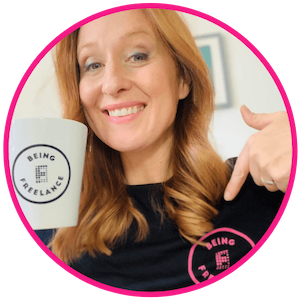
Jessi Illustrates website
Jessi Illustrates on Instagram
More from Steve Folland

Transcript of the Being Freelance podcast with Steve Folland and Illustrator Jessica Hartshorn
Jessica Hartshorn: Hi, I'm Jessica Hartshorn. I'm a freelance illustrator working with galleries and museums, and I'm based in Rugby.
A great position. I was really busy, but I just couldn't do everything and I was still trying to do everything.
So because my niche is museums and galleries, I put myself where those people are, and I think that's really important whatever sort of niche you're working in.
It's quite easy to just go, oh, I'll do it next year, and put things off. Where it's a conscious thing to think about what can I add to my business?
Steve Folland: Yes! Excited for this one because Jessica is a member of the Being Freelance Community. We've got to know each other very well over the years.
She's been along to like our Christmas dinners, to our golf days when we play mini golf in person and many more things besides. We've even had her on coworking painting murals in the background while the rest of us are at the laptops. She's great fun, but I've never heard her whole story.
So looking forward to this. Let's head to Rugby, which is in the Midlands here in the UK, and chat to freelance illustrator Jessica Hartshorn. Hey Jess!
Jessica Hartshorn: Hi. Hello,
Steve Folland: As ever. How about we get started hearing how you got started being freelance?
Jessica Hartshorn: Yeah, so I've always loved art. I'm a freelance illustrator and I studied illustration at Loughborough University, and when I graduated, I was freelance then.
But like a lot of people, I had about a million other jobs. I was a lifeguard. I worked in a health shop. I tried to be a freelance illustrator and went into London a lot. And I had, like a lovely portfolio, a physical one back then that I'd taken to publishers. But I really struggled... such a saturated industry. I really struggled when I graduated.
So I ended up falling into the world of museums and galleries and ended up staying there for 16 years and fell in love with heritage and art, in public settings and started to do a lot of education with art. But after 16 years, I was really craving to get back to making and creating myself.
In my job at the art gallery I really loved helping other people be creative. But I really wanted to start to illustrate myself. So I created a secret Instagram account and didn't tell anybody about it, and just started painting again. And it was really cathartic to just put art into the world without anyone knowing it was me and start to find my style.
From that I realised I might wanna go back into doing freelance. So I was part-time at the time, so I started doing two days a week freelance just to dip my toe in the water. And as I was working in museums at the time, I tried to do more work in that sector, so niching down a little bit with my illustration style.
And I also got a really big mural commission, which I'd never done before. And it was absolutely huge for a big gallery in Birmingham. And that was, like a lot of people saw that it had a lot of press and all of a sudden were like, oh, we didn't know you could illustrate. And it started from there, really that little seed of, maybe I could do this.
So that's seven years ago.
Steve Folland: Wow. So what were you doing? So you peddle your portfolio around knocking on publishers? No, nobody is biting. So you got a job in the museum and art gallery, but what were you doing there?
Jessica Hartshorn: So I was an education officer, so that meant that art in the galleries and museums, I would interpret the collections in interesting ways.
So often using art. So it might be we take a Roman pot and we make it out of clay and think about the stories behind it, who might have owned it and where, what was it used for, those sorts of things. With school groups and older groups, anyone visiting really. But actually I'm a perfectionist and I throw myself in sort of full hog.
So by the time I left that job, I'd done some mad crazy things like closing the Rugby town centre down to run a land train around it. And we had a huge Godiva puppet from Coventry at the Olympics, and that came to Rugby first. And I coordinated that big event and the puppet was as big as houses. It was huge.
So I did some really mad stuff and I loved that job, but I just really wanted to illustrate myself really.
Steve Folland: Yeah. So you create a secret Instagram, but... you also got some work. So how was that people approaching you via your Instagram because you end up doing this big mural? Like how did that...?
Jessica Hartshorn: So I started creating some work and I think that was about six months after I'd created this Instagram account that I started to feel more confident in what my, like new style was going to be.
And I just saw, like a tender application for this particular mural. And a friend of mine had just started working there and just sent it my way 'cause she by then had seen my Instagram account. but she was one of very few people and yeah, I applied and got it. And absolutely was terrified 'cause I'd never done anything so big.
And it was really quick as well, a really quick turnaround. It was a theatre production that they had at Christmas and they wanted me to paint a big Christmas mural leading up to where their sort of show was, it was gonna be painted over anyway in January. So that was my sort of, oh, if it's rubbish then no one will see it after that.
But it wasn't, and I actually got asked back for two more times after that to do the Christmas mural each year.
Steve Folland: So by then word gets out to the people you work with, I'm assuming?
Jessica Hartshorn: Yeah, absolutely. And there was a lot of, oh my God I didn't know you could do this. And yeah, just started to sow the seed, but I was still working, sort of part-time at the art gallery and museum.
Steve Folland: How did you step it forward? You, stopped being anonymous?
Jessica Hartshorn: Yeah, stopped being anonymous. So people started to find out, it was actually me and I just started looking for more freelance work in that area. I was actually looking at more of what I was doing at the gallery, which was project management in the arts.
And I used to do a lot of teacher's packs where I'd actually create the text content, not the illustration at the time. So I was looking for those sorts of jobs as a freelancer. And the kind of thing that made me leave was I got two big contracts, one for the Historic England and one for the Paralympic Heritage Trust, which obviously quite big names.
And they were both to create sort of teacher resources, but it was just the text. It wasn't illustration at the time. And when I got those, I decided to leave my job. And it was only then the next job after that, which was for a museum to do the text again. And I said, I can do a bit of illustration, I won't charge you anything extra, but do you mind if I just give it a go see what you think?
So it was a bit trying it out and it was really successful with the matching sort of the illustrations together with the text I'd created and then I could use that in my portfolio moving forward to obviously get paid work in that area.
Steve Folland: So actually you... even though you hadn't intended to go into museum and heritage and the arts to begin with, you had ended up with this kind of secret skills that made you extra... I don't know, what's the word? Employable? Hireable. Wantable. Buyable! as a, freelance illustrator. Like you understood the behind the scenes at the museum.
Jessica Hartshorn: Yeah, that's totally what my selling point is now, and I really go to town on that really. One, I'd got a network after 16 years of people who knew me so they could spread the word a little bit.
So what I mostly do now are working with museums and galleries and parks and heritage sites to create illustrations for things like trails and maps. Interpretation for exhibitions. I've done window vinyls and floor vinyls through to murals in museums. And my selling point is that I understand how museums work.
I understand the language they use for their collections. I understand the practicalities of what it's like to work in those spaces when you've not got much money and if you've got a trail, like who's physically gonna hand those out, and the practicalities of that. So I do, understand how that world works, and that's definitely been a big selling point for me.
And lots of clients in the past have been on my website and read that about me and said that was the kind of... the thing that pushed them over the edge to choose me if it was a tender, for example.
Steve Folland: Yeah. Oh, what a... what a bonus. Okay. So you quit your job which was part-time because you feel like actually no, yeah, I can do this.
How did it develop from there? You've got a network, but you've gotta make that work for you.
Jessica Hartshorn: Yeah, I think initially, like lots of people, I took anything at first and not all of it was what I necessarily wanted to do. So I did still take a bit of project management. there was a little bit of illustration here and there.
I did a lot of running and delivering workshops, art workshops when I was at the museum and gallery. So I still got asked to do that sort of thing in schools and things. And it was just a bit of everything. So a little bit of here, there and everywhere. And if I'm honest, I struggled a little bit to have an identity because the project management and the kind of text content creation was very different from my illustration and my murals and that side.
So I remember when I started out and I created my website, I really struggled to work out, do I have two websites? Do I like split them? Split off? They seemed very different. And it was actually COVID that changed everything for me. I was meant to be doing a lot of workshops during that time, and some of those went online, but the biggest change was, or a lot of museums I'd worked with, maybe in person, just couldn't open.
Everywhere was shut. So they contacted me to illustrate resources for them that people could download at home and print out. So things like colouring sheets, activity sheets, I did some like constructables where you actually build your own museum and things like that. And I started to do a lot more illustration all of a sudden, specifically with museums.
And that was the turning point where I actually just then dropped all the sort of project management and all that side of it and really focused in on the illustration and workshops as well.
Steve Folland: Now your website, and this is also your company name is Jessi Illustrates. Yeah.
Jessica Hartshorn: Yeah.
Steve Folland: Love it.
Jessica Hartshorn: Thank you.
Steve Folland: When did Jessi illustrates coming to being? Was it then at COVID time?
Jessica Hartshorn: No, so it actually started right back at the beginning with my secret Instagram account. So most people used to call me Jess. Apart from my husband. My husband was the only one that called me Jessi. And when I set up my secret Instagram account, Jess wasn't available. Jess Illustrates or Jessica Illustrates. 'Jessi' was.
And that's how that name was born really. And it still felt a bit relevant because like I say, my husband called me Jessi and a couple of like family members called me Jessi. So as a result of that, the name stuck.
Steve Folland: So many times I've heard it's the Instagram handle that was available. But it makes sense in a way because that often means that, the URL should be available. Like it...
Jessica Hartshorn: Yeah.
Steve Folland: If a company already exists then the Instagram is probably gone. Ah, nice. So Jessi... So then you get the website. How's that evolved over time?
Jessica Hartshorn: So each year I try and put a little bit of money aside to spend on my business. So the first year was building my website and I did build it myself.
And like I say, it has changed quite a bit over the time. One of the biggest things is I invested a couple of years ago and working with a videographer and she spent the day with me filming me running draw alongs and workshops and illustrating. So on my website, I now have a little video of each of those things that I specialise in.
And that's really helped give a feel for what I do because my illustrations are really colourful. I work with acrylic paint, so that sense of vibrancy and fun. And similarly with my workshops, I'm quite joyful in my sessions. So I wanted that to come across and I think the videos really helped to sell that.
But I've also now got a dedicated section for museums and galleries and all the different things that I offer for museums and galleries on my website. I have done things like children's books and I say murals, so I've just divided my website up into the different things that I do, but it just makes it easier for people at museums that can go straight to that section when they arrive and there's a nice little video to show what it's like to work with me. And that's really helped as well.
Steve Folland: Have people commented on the video? 'cause it is brilliant.
Jessica Hartshorn: Yeah. Yeah, they have. And the lady did some fabulous Instagram little reels I could put on from the video, so yeah, they definitely do. And like I say, it gives that vibe of what it's like to work with me and hopefully it makes me look a bit more professional, know what I'm doing, so...
Steve Folland: For sure yeah.
Jessica Hartshorn: That helps.
Steve Folland: Yeah. Oh, it honestly, you have to check out the video and I'm assuming, maybe I'm wrong that because there's various bits to it and also, there's children of course in those videos. So was these events you were already hosting or did you like almost stage it so you hosted your own events and got the parents to sign off that you could use them and...
Jessica Hartshorn: Yes. So there are some adults in some adult workshops and they were actually part of a project. So we'd already videoed that in the project and I went back to the organisation and the parents to get permission to use it on my website. So we actually mashed up the two videos and then we staged one.
I've got lots of connections with art venues. So we went to an art venue and I asked just regular kind of workshop kids that come to my workshops, do you wanna be part of a video? And they're like, yay! So they came along and I literally just ran a session, so they got a free session. I think I gave them all some chocolate and... and like a free notebook or something and, yeah, they videoed it and filmed it. So yeah, it was really fun. It was in the summer, so it was in a garden, like of an art centre and it was a really nice day.
Steve Folland: Makes such a difference. I love the fact that you put, so you, put money aside what, from every invoice that comes in towards... How... Do you break each invoice up? Or do you just thinking?
Jessica Hartshorn: No, I just, as long as I'm getting roughly what I'm hoping to get each year I put, it's not a huge amount. It's about 500 pounds a year I put to one side to do whatever I feel I need at that time. So I don't specifically say, I'm gonna do this year. So last year or the last two years, I've actually worked with someone from the Being Freelance Community, Sophie.
And we've had a creative mentor session. So I've used that money for that. Previous years I've maybe bought something. So last year I also bought a badge making machine with that money. It was a little bit of an investment. So sometimes it's not marketing, sometimes it's a bit of kit. I think one year I bought a nice pop-up banner.
So I think it's just it's quite easy to just go, oh, I'll do it next year, or I'll, do this next year and put things off where having that money aside, if I get to the end of the year and I've not spent it, I'll go, what do I actually need? Do I spend it or do I save it? And it just makes it a little bit more of a conscious thing to think about what can I add to my business?
Steve Folland: You know you're doing something right in life when an investment of a badge making machine is on the list.
Jessica Hartshorn: Who doesn't need a badge making machine in their life?
Steve Folland: No, I think that's brilliant. But you mentioned mentorship there though, so have you done much coaching or mentorship and things like that?
Jessica Hartshorn: So through the Being Freelance Community, I've got a co-mentor, Jo, who's a graphic designer, and we've been, I think it's about three, at least three years. We meet regularly. And in fact we've just worked on a really nice book project together where I illustrated a book for a publisher and she did the graphic design layout.
So as a result of that, we actually have been like having lunchtime meetings online where we just sit and chat really. But that's been really nice to just have someone to run ideas past or check over something or, sometimes just moan to. Just a bit like a coworker I suppose.
So that's been great. Where Sophie's very much a more structured session where we literally looked at everything that I did and... I was struggling, it was probably two or three years ago I was, still feeling like I was actually a great position. I was really busy, but I just couldn't do everything and I was still trying to do everything.
So she helped me to filter out what I really wanted to do and focus on. And it's really helped with, particularly this year has been my best year in terms of working with museums.
Steve Folland: Is this Sophie Greenwood?
Jessica Hartshorn: Yes, it is. Yeah.
Steve Folland: So you were too busy?
Jessica Hartshorn: Yeah. But not necessarily doing all the right things or maybe not always charging in the best way. So I found that with all my bigger projects and, like illustration clients and things like that, I was charging properly, but I was still hanging on to maybe working with certain schools and maybe some workshops that I was arranging myself and merch that I was doing for myself.
And it was still taking a lot of time, but especially the merch where I get it printed and sell it to like fairs and things. Sophie was saying, how much do you actually make when you do those sorts of things and how much time? And I started to realise that it was taking a lot of time away from the things I really wanted to do and therefore I wasn't always enjoying the things I really wanted to do as much 'cause the time was so pinched.
So it... I binned some of that things. Like I used to do a calendar and I've binned that. Even though they'd sell out, they just would take so long and, I really wouldn't make much money by the time they've been printed. So I really looked hard at the things that I wanted to focus on and put to one side things that I could always go back to if I wanted to.
But, just not, I'm not at the... it's not on the right path for me at the moment. And perhaps financially it wasn't the best thing to do.
Steve Folland: Yeah. How... so you mentioned Instagram earlier. I'm just wondering how you market yourself. Obviously people are being led towards your website, which we know is working and the awesome video, but yeah, how do you put yourself out there?
Jessica Hartshorn: Because my niche is museums and galleries, I put myself where those people are and I think that's really important, whatever sort of niche you're working in. So I go to things like museum conferences and have a little stall there. So like hitting like pretty much all the museums in the UK in two days.
I go to museum networking events. I'm part of some like groups of for museums and I'm often the only illustrator there. But I suppose I do feel comfortable because I understand the language and all that sort of thing. So I feel quite safe in those spaces. But I am often the only illustrator there, so I'm I'm becoming that specialist person and the go-to person for that sector. There are lots of other illustrators that work with museums, but, there's not that many comparatively to other things like children's books for example.
So with those sorts of things I do things like postcards where you can colour in at the back and I leave them on the tables for... or sort of speak to the organisers and say, can I do this so it gets to everybody? I've done a lot of training sessions at museum events where I'll run a workshop. And again, it just really embeds in the minds of the clients that oh, that's a good person I could work with.
And they definitely remembered me more whenever in a workshop, regardless of what they want me for, whether it's to do an illustration or a workshop. So I do that sort of thing. I am very active on social media, but particularly Instagram with my stories. Doing lots of, because I actually paint, I'm not a digital artist. I do a lot of time lapses of my artwork, from start to finish. So yeah, I think they are the key things.
Steve Folland: Do you actively follow up with the people you're meeting at those conferences or you're like, be, because it's, it's amazing, like you've got a stall, maybe you're running a workshop.
Jessica Hartshorn: Yeah.
Steve Folland: Are you waiting for them to come to you?
Jessica Hartshorn: Mostly, I think. Last year for a big museum conference for the first time, I actually created a product brochure, which I'd never done before. And it actually had all the different things that I do in it, and a rough estimate of cost. And it was really interesting having a conversation with people about that because museum people don't necessarily know how much it cost to commission an illustrator.
So to have a little ballpark figure ish was really, helpful for them. 'cause they weren't sure if it was like 10 pounds to like, I dunno, 10 grand. They had no idea. And therefore that sometimes was a barrier for commissioning because they just didn't wanna embarrass themselves by putting themselves in an awkward position.
So just having a bit of an idea within this brochure of, oh, I could, we could afford that, or we could apply for a grant for that. It was just more of a starting point for people, I think, to have a conversation. So that was also a really big thing.
But, I don't... it depends, sometimes I'm able to gather their information so I can follow it up or if I, try and get their name and where they're from, so then I can like maybe start following them on Instagram or, have some sort of connection.
But it is a bit trickier to, it is not I don't know, a book publisher where they're more actively giving out their details as an editor or something. They're probably doing a million other jobs working in the museum, so it's not always top of their list. So yeah, it's tricky one.
Steve Folland: But that is really interesting. The... 'cause often I end up having some sort of conversation around putting prices on your website, for example, but you are actually printing and illustrating maybe the a brochure.
Jessica Hartshorn: Yeah, it's a lovely brochure. I'll send you one Steve. It's, it's got lots of photos of what I've done and again, it's also given them ideas because I've done things like brass rubbings where I've illustrated the, the outline and then that's been made into brush rubbing.
I've painted marble runs, I've painted, I've just done some lovely magnet magnetic boards of a doll. So sometimes they don't even think of what could be done. So the brochure does give them lots of ideas and often if they commission the illustration with me, then it can be put onto lots of different things. So it's giving them ideas of how we can work together to do other things as well.
It does always have the caveat of 'approximately' because obviously you just don't know what they're gonna come with. But a bit of a starting point I think really helps them just to have a bit of an idea of if it's possible.
Steve Folland: How do you manage your day and your weeks?
Jessica Hartshorn: Every week is literally totally different. It's very rare that I'll have more than one week the same.
So next week I was meant to be doing a mural, but it's being moved now to the following week. So now I'm rejigging my work week. But I do try and have some sort of home-based illustration in the mix if I can. So I'm at home some days and then maybe do workshops or murals on the other. But it is quite hard to... to get it exactly how you want it 'cause you've gotta do it, went to their deadlines, haven't you?
So I, I do book in scheduled blocks. I'm doing... I've just been asked to do another children's book with the publisher I've just finished and I'm booked till August, so I've been able to luckily say, can we start in September?
So I do try and push things to my schedule if, they've got flexibility and that helps to manage my timetable. But like a lot of creative things, it is quite tricky because it is down to them proofing things on time and getting back to me on time and it's that kind of constant juggle of, if I'm got a lot of clients, I'm trying to squeeze them in at different points and make sure they come back to me quickly.
Steve Folland: How do you deal with when you have to say no?
Jessica Hartshorn: Again a lot better. I think it depends on what it is. So in terms of things like, I get a lot of requests from parents to do one-to-one, like art sessions through my website. and now I've got just a standard sort of bit of text that I copy and paste in, which sort of says, thank you for your interest, you're welcome to come to my other workshops in the holidays I'm running. But unfortunately I'm not available for this sort of work at the moment.
And similarly for certain school workshops, I've, that's another area that I've stopped, doing just because, schools have got very limited budgets, which I do some, but I do find they're the ones that unfortunately take the advantage quite a lot, and are quite draining on my time. I, limit, I'm really careful of which schools I work with. So similar, quite a standard, email that I send out if I think it's not quite the right match.
And then I get a lot of community groups asking for freebies all the time. which I always feel horrible saying no. And I don't always say no. There are the odd one that I will do, but again, it's a standard bit of text I send out, so I just find that takes the emotion out of it a little bit if I've just got that... that bit of text I can copy and paste in.
Steve Folland: And do you like leave breathing room within your week or your month for unexpected things that might come in or are you just every day is full?
Jessica Hartshorn: I do a session on a Monday where it is just two hours in the morning with an art dementia group. And I often leave that as like my breathing day in the sense that's, I think it's nine till half past 11. But then I never book anything in the afternoon. 'cause I'm out and about it means I can't do a workshop or anything, so I leave the afternoon free.
It's normally filled with stuff, but it's just, it means that if something you know, arrives in my inbox or a client says, oh actually can you do this? I've always got the afternoon to sort that out. That's probably the main one.
Sometimes Fridays, 'cause I, most people don't tend to do workshops generally on a Friday, so that's normally a working from home day. So I try and go to the gym on a Friday in the day. So either in the morning or lunchtime ish. So that's my bit of my head clear and make sure I've got a bit of time for me.
Steve Folland: Yeah. How do you find the work life balance of it? And maybe it's changed over the past seven years?
Jessica Hartshorn: Yeah, I think this year I feel I've had a better balance, even though I've been busier. I've managed it a little bit better.
And I've tried to go to the gym a bit more this year as I'm getting older I need to keep fit. If I'm doing the murals and things. Also my children are teenagers now, so that's obviously made things a little bit easier and sometimes they'll help me with cutting things out or prepping for workshops. So, that's been quite a nice bonding experience. and obviously as they get older that does naturally change.
But it is tricky. It is tricky 'cause sometimes. I think when I choose jobs. And so sometimes I do turn down illustration jobs if it's not the right fit for me or like ethically, I don't, it doesn't feel quite right. But if... I'm quite lucky with a lot of the things that I do. Either there's a bit of flexibility for really for me to bring myself to it and put in my ideas, working with museums, but also there can be really exciting things.
And that's what I struggle with in terms of turning things down when I'm busy, is that I really wanna do it. So I just make it work. So it's a bit of a sort of curse and a blessing I suppose, of I, I'm quite good at managing my time, but then that means I'm quite worn out by the end of it.
Steve Folland: And you mentioned, obviously you mentioned your co-mentor and the Being Freelance Community, but do you know other freelance illustrators or other freelancers in your local area or..?
Jessica Hartshorn: Yeah, 'cause I did study illustration, there are a few other illustrators from my degree course that we keep in touch. I'm also part of the Association of Illustrators and we do like regional meetups, so that's quite good to just chat and see how people are getting on. So Birmingham is the nearest one for me, which is called Picnic I think.
So I've been to a few of those meetups and that's really helpful. It is definitely worth trying to connect, I think with other people that are in the similar industry. But even like Jo with my co-mentor even though it's graphic design, it's quite similar in terms of sort of contracts and issues that you might hit. So we do talk about that sort of thing and that's been really helpful.
Steve Folland: And you guys meet every month, did you say?
Jessica Hartshorn: Every month, but more recently 'cause we've been doing this book it has been a few times like daily. But not every day.
Steve Folland: But that's 'cause you're collaborating on a project together.
Yeah, But you have like time set aside in your diary? Yeah. Every month to
Steve Folland: get online and chat about your businesses.
Jessica Hartshorn: Yeah. Yeah. And we have met... so when we don't live close together, so we meet in London for the day sometimes to, or at least once a year just to have a bit of a social.
Steve Folland: So what would you say has been the most challenging bit of being freelance?
Jessica Hartshorn: I think initially it was that division of when I did lots of different things. Yeah. And trying to really slim it down. I think I've got over that now. I think sometimes it is time actually because there's sometimes is lots of things that I want to do or I wanna spend more time on something than I've got.
And I think I get asked that question by students quite a lot actually. I work very fast when I do things like murals and they're always really shocked at how quickly I work. and it is an experience thing, but also you have got a deadline and you've got to get it done. So you do become a little bit focused and honed in on what you've got to achieve.
And there are some times, where I'm like, oh, I wish I just had a little bit more time to work that out a bit more or maybe redo that or, and, obviously being a traditional illustrator, so painting it does take longer anyway. I can't just press a button and it, bring something back or deletes it.
There, there's time I think is sometimes quite challenging. but less, like I said earlier, I'm getting better at that. And with experience I go wrong less or put the tools in place to go wrong less. If that makes sense. So with murals, I paint a mini version before I go in and I'll project that on the wall and then sketch it out.
Which means that I've, especially on the mini painted version, I've made all the mistakes. I'm on that version. So when I go into paint it, it's quite rare that I'll make a mistake. I'll just go in and do it. So it's through experience, you find the tools to help you be quicker and help you not make the mistakes.
Steve Folland: Yeah. Because you are, always creating content. I notice of showing what, it is. Both the behind the scenes, the final product, where it is in place, people using or seeing, being around it.
Jessica Hartshorn: I love that painting that, having that texture, having this sort of pour the paint out. And it's that whole process for me that is so enjoyable.
And I see that when I do my workshops, that people might come into the workshops being really stressed and by the end of the session have calmed right down the whole process for them, whether it's amazing or not, has had a really impactful effect on them. And for me that is part of artwork.
We are as humans are meant to create. And it still blows my mind when you look at a piece of white paper and then I've painted something and I'm like, that wasn't there before. Like, how did that actually happen? That's that and that craziness. Even though I'm an illustrator, my husband doesn't get it.
He's yeah, but that's what you do. And I'm like, yeah, but that wasn't there and it's there now. And look how good, like we are there to make and create. Yeah,
Steve Folland: I do. I do feel like behind the scenes, no matter what you do, like when I show behind the scenes of me editing podcasts and stuff, it's like people like seeing that.
So what's been the high... so you were getting so lit up when you were describing that. What's been the high, what's been the highlight of being freelance?
Jessica Hartshorn: So I did a huge mural last year, which, was at a museum and I had to do a scissor lift training course. So it goes up and down on the scissor lift.
And it was amazing. I had a whole team of volunteers helping me 'cause it was so big. And they were mostly art students, so that was really nice to do a bit of that mentoring with them. So they asked me questions as I was going along. And again, it's that using the paint, pouring the paint, getting messy, painting on the walls and huge strokes to create beautiful paintings and artwork and patterns.
And, it was a play exhibition, so it was all about dinosaurs and meteorites and there was lighting effects in there and sound, in the final thing. So it was just an experience rather than just, a bit of artwork on the wall. You walked in there at the end and it was yeah, a captivating experience for people.
So it was a really amazing thing to be part of. And I've been asked back this year, which is really exciting. So yeah, I think the murals. I normally only do a few murals a year. It's not the main thing that I do, but I've been really lucky to do exciting ones when I have done them.
Steve Folland: Brilliant. Now if you could tell your younger self one thing about being freelance, what would that be?
Jessica Hartshorn: I think take your time, because you're not gonna stick with what you're doing necessarily, forever. It's gonna change. The world's gonna change. For me, COVID did change everything really of my direction of where I was going. So you don't know what's gonna happen. Just do what you can in the moment maybe?
And I think also when I speak to younger people, I always tell them to look at people that you admire and see what they're doing and is there anything that sort of resonates with you that you can emulate in your own way? And I think that's really helpful as well.
Steve Folland: Nice. Jess, it's been so good to hear your story. Thanks so much and all the best being freelance!
Jessica Hartshorn: Thank you.