Designer & Illustrator Doaly
About this podcast episode…
DESIGNER & ILLUSTRATOR DOALY
How does a creative side project turn into a decade long freelancing business working with the biggest names in pop culture, like Disney, Pixar, Marvel, DC Comics, Lucasfilm, Warner Bros and Sony Pictures?
All good super-heroes have an origin story. And this interview tells the series of events that took Doaly from working for a company in Birmingham, England, to the front page of comic covers seen all over the world. Signing at Comic-con events. It's quite the transformation.
Tarlochan Doal, AKA Doaly, spent 15 years as a full time in-house web and UX designer. Illustration was the side hustle he did to scratch a creative itch, designing movie posters for films he loved.
Then one Saturday morning, Doaly woke to an email from a movie studio. And his whole script changed.
This episode of the Being Freelance podcast with Steve Folland covers:
- Why he filled his portfolio with the work he wanted to be hired for, and how design blogs and social media got it in front of the right people
- The passion projects that catapulted his career — including a Wonder Woman piece that sold 1,500 posters in a weekend and let him quit his day job
- Using UX contracting to bridge the financial gap in his first year of full-time freelancing
- Building a garden office to separate work from home - because when you love what you do, you'll work all day and night if you let yourself
- How a random 45-minute conversation at a New York convention led to his first Marvel Comics cover
- Multiple income streams across movies, comics, book covers and advertising - so no single client base can sink you
- The weekly phone calls with a fellow designer that serve as his informal co-mentoring
It's one hell of a story. And you might think - well, I'm not trying to work with Marvel, how will this freelancer's story relate to me? But there's so much relatable freelance advice and business tips to be drawn from his experiences.
This episode is available to watch in video here on the site, on YouTube and Spotify.
Read a full transcript & get Links in the tabs.
More from DOALY
Doaly’s website
Doaly on LinkedIn
Doaly on Instagram
More from Steve Folland

Transcript of the Being Freelance podcast with Steve Folland and Designer & Illustrator Doaly
Doaly: Hi, I'm Doaly. I'm a freelance designer and illustrator based in Birmingham.
It was a Saturday morning. I woke up to an email, and it was from a movie studio. "Hey, we've been following your work. Would you like to do a poster?" Pinch yourself moment. It's like, oh, this is the dream. This is what I'd love to do.
The problem is we enjoy our work so much, we could be doing it all day and every day. But I needed to balance it out, it's like this is not like a sprint, this is a marathon, and let's pace ourselves a bit more.
There's an element of luck, in a sense of the right people need to see your work, but you need to put your work where they will see it.
Steve Folland: Oh, it's a good one. We're heading to Birmingham in the UK to chat to freelance designer and illustrator, Doaly. Hey, Doaly.
Doaly: Hey, Steve. How's it going?
Steve Folland: As ever, how about we get started hearing how you got started being freelance?
Doaly: Right. Didn't mean for it to happen. Studied graphic design at university, majored in multimedia. Got out of university. The first career was web design and UX. So that was about 15 years of doing that. Towards the last, I'd say, last couple of years of that career, I found myself, okay, I'm comfortable in my position. I'm a team lead and all that sort of stuff, got to a senior position. Very happy what I was doing, still enjoying the day job. But then I was like, okay, I need something for myself, something that the client briefs aren't necessarily answering. So loved illustrating, drawing as a child. It's why I got into design in the first place. So I was like, let's pick this back up. It can be something you do on weekends, something you do after work, and it's going to give you that, scratch that creative itch, and it will balance the day job nicely.
So the first year was just like, okay, I haven't drawn in so long. Let's just start getting good again. Like any other skill, if you don't use it, you end up losing it. So it was just like, let's start drawing again. Coming back to it so long, it's like, oh, also, there's graphic tablets and stuff like that. So let me buy a very cheap one of those. I think it was 50 pounds. Bought that, started to learn digital illustration, illustration in total, just like pens. Any point I got a chance to draw, I would do. My Post-it notes at work, on the train, anything else. It was just about let's start getting to a level that I'm happy in what I'm doing.
So after the first year or so, I was like, okay, I'm getting better. The designer in me set myself a brief, because we all always love doing that. Love movies, grew up with cinema in the home. So I was like, let's design a movie poster for the films you love. So my very first project was like, let's design a minimalist movie poster. I picked three films, did the posters, put them on social. I think they got all probably five to six likes, something around that. But those five to six likes and a couple of comments were enough for me to say, one, I was enjoying what I was doing, but also people are liking what I'm doing. Let me share this, and let me do more of this. So over that next year was just me, I guess, reacting to the latest trailer, creating artworks based on movies I love. And it very much was like, this is how I see it. This is my lens or my voice in storytelling. Also, trying to get good at drawing. Also, not great at drawing people. So couldn't rely on, let's just do loads of people. Let's do portraiture. No, let's find a different way to tell that story. There's definitely different mechanics that I can use that the designer in me will find my place.
So that kind of got my work noticed because it was different from everyone else's. I wasn't just trying to draw a Tom Cruise, because as wonderful a Tom Cruise is, I wanted to find a different way of telling that story. So my work started getting re-blogged, re-shared, different things like that.
One, it was a Saturday morning. I woke up to an email, and it's from a movie studio saying, "Hey, we've been following your work. Would you like to do an alternative poster for a film that's about to come out?" And I was like, pinch yourself moment. It's like unknowingly, it was like, oh, this is the dream. This is what I'd love to do. So yeah, double-checked the person was who they were, jumped on LinkedIn, did all that sort of stuff. And then over a two-week period, like any standard sort of brief, it was like sketch, develop sketch, final piece of art. Within two weeks, we had my first official movie poster. They advertised it, and it was on IMDb, and it was the headline, "Doaly designs a movie poster for X film". So it wasn't just a case of, oh, the studio's made the film. No. They've hired this artist and everything else.
So that was the first foray into it. And I showed people at work because I was very proud of it. My director pulled me aside in the hallway, and it was like, I thought this was going to be the, don't do any moonlighting and all that sort of conversation. But the conversation was, "Oh, what are you doing here when you could be doing stuff like this?" So wonderful guy that he was, one of my best managers that I've had over the years. So I was like, I still enjoy the day job. I love having these two things that are counters to each other. At that point, I was very much doing UX, so it's a different side of using your brain. I was like, this was the yin to the yang. So I was like, great. I still love what I do. And the work's not suffering here, so I'll carry on as I was.
Left that job a year or so later. Went for the money sort of role. Didn't like that position. In a sense, the money was great, the team was great. It was just like, this is not fulfilling anymore, or I'm clock-watching at 10:00. And I was very much a UX designer, and I was like, this role is not me doing the best for the end user. I'm doing the best for my upper management for them to get the bonus they wanted that year, but not for, like, oh, this is going to set us up for success two, five, six years down the line. So it was a Sunday night. I was speaking to my wife, and my wife had noticed this already because I used to come home with great stories to tell. Oh, I did this today. It was this achievement, and so on. I was like, those very quickly stopped happening. So she very much noticed the change in me. And then she said, "You should just quit your day job. You've been building this side career, this side hustle, for the last few years now, and you find yourself split between the day job and then working pretty much every evening or weekends. So there's got to be some give," you know what I mean? From family and balance from that point of view. And I was like, I could do it. It's something I knew that was possible, I just very much stopped myself doing it because it's like, if I do this, all the chips I'm putting into this.
Even though that's not really the case, because it's like, hey, I've got 15 years of experience. If this doesn't work out, I can still go back to the day job at any point. But I thought about it as like, okay, for all those people that, this is probably partly in my head, it's like who are waiting for me to fail or whatever, this is I give them that moment. I put everything in. I quit the day job, quit the stability, go freelance full-time, and say, "If it doesn't work." So that held me back. But then it was like, no, we're doing this. So the next day, I went in with this letter. I was like, "Yeah, handing in my resignation." And that was, yeah, pretty much 10 years ago. And I haven't looked back since. So that's how I became freelance.
Steve Folland: I love the fact that you created your own thing, and that brought attention. The movie studio calling is just insane, isn't it?
Doaly: Yeah.
Steve Folland: That must have felt amazing. I know you said you didn't get many likes right at the beginning. Did you have an online presence at the time? Or you're fairly anonymous, you're working as a designer with a job. Why do I need it online kind of thing?
Doaly: Had the website. It was one of those things, I think, I came in when you had 56K dial-up modems when it came to web design. So one of the first things that we ever did at university was create your own website. So over the years, I'd created my website, I'd maintained it, and it evolved over the years of what it was. Had a blog section of my website. So initially, the website was all web design. And I used to blog about stuff. I used to, oh, created this bit of UI, created these icon packs, all those sort of things, because that was part of just the conversation about design. Design, illustration, art was very much, I'm geared towards that. That wasn't just a career. It was everything. So had the blog, so I could talk about the work that I was doing.
And over the years, I was putting less and less web on there, and more illustration started to take over. So it's like, once again, happened very organically, but it is like you should fill your portfolio with the work you want to be hired for. So that kind of happened. So the website started becoming more geared towards illustration. So that presence was there, and hence why submitting my work to Motivation Mondays, all those sort of things. The design blogs that I was reading, I started to share my work with them, and then my work started getting picked up as like, "Oh, I'm reading this week's Monday motivational. Here's inspiration for you." And my work started to crop up in those things. So it was about putting your work where it would be seen and being seen by the people that can hire you. You know what I mean? So we consciously do that now. I was doing it semi-organically and not really having that, I'm planning a career move. But it's exactly what I did if I look back.
Steve Folland: Yeah, that's interesting. So you were being proactive about approaching the design blogs you read yourself-
Doaly: Yeah
Steve Folland: ... to get your work out there, not just assuming people might see something you've posted online.
Doaly: Yeah. There's an element of luck in a sense of the right people need to see your work, but you need to put your work where they will see it. So it was putting my work in the right places. Definitely social media did help, even though the likes were 10, 20 at the time, and they mounted up over time as I was sharing more official work. More people coming, more followers are coming. It's also great when movie stars share your work and tag you in it, and studios are starting to share your work. So even though you'd say my endpoint of my work is the social post or the poster that ends up in the cinema, it's great that the studio started actually giving you credit for the work you were doing. It wasn't just like, "Oh, this has come from the movie poster house." No, no. This artist created this piece of work for our film. So that very quickly got my work seen by more people. The right people in a sense. Yes, general public, which is great to have that. Also, people that can hire me in the job. It's like, "Oh, this person made this. We want to hire him for our thing."
Steve Folland: And did you position yourself as 'the movie poster guy'? Illustration could appear on lots of different things.
Doaly: Yeah.
Steve Folland: But was it, no, I'm focused on movie posters?
Doaly: Not so much because I enjoyed having different things to work on. Even now, not everything is necessarily movie poster-led. It's the large part of what I do, but I like having different things to work on. It keeps my brain active, and I'm thinking in different ways. So my role has changed over the years, and it's evolved, like what do I call myself? Am I the graphic designer? Am I the web designer? Am I an illustrator? I guess I've found myself just saying I'm a story-led designer or illustrator now because I'm telling different people's stories, and the medium might be comic books, it might be movies, might be book covers. It might be an ad campaign, but it's very much about the narrative. I guess the majority of my work was definitely pop culture. And for a long time, I would say I'm a pop culture designer or pop culture illustrator because that's what I love doing. But it wasn't like I was pushing for it. It just happened to be what my feed was full of at the time.
Steve Folland: So that first studio comes to you. How did you capitalize on that? Just the same as you were approaching design blogs, did you start approaching other studios or-
Doaly: No. Once again, even at that point, having that first official gig, it wasn't like, okay, this is the point where I want to jump ship, and let's put all our eggs into this. No, it was just like, oh, great, this is a nice perk, a cherry on top of me still fulfilling the scratching that creative itch.
Steve Folland: Mm.
Doaly: So still at this point, it was not like I need a second career.It wasn't that.
After that, got approached by agencies, an agent, but it was more about finding community, other people that were doing what I was doing. So through that, I found a community of alternative movie poster designers. We're all coming up at the same point. There was people that were way ahead of us, of course, but it was like community was the biggest thing that kept me going in what I was doing, because there was people doing what I was doing. Also, we're learning off the back of each other. There's stories to be shared. So I think one of the key things why I'm still in the industry is the friends that I've made along the way. You can do this in a silo, and a lot of us work in silos most of the time. It can only take you so far, I think. You need people to bounce those things off, ideas off other people that have learnt in areas that you haven't. Even today, it's like, "Oh, I got hired for this gig. I got hired for X amount." I'll tell my friend, so when he gets hired, he gets to charge 500 or 1,000 more, and then he's like, "Yeah, that's the new ceiling," or, "That's the new floor for that thing." And then I know when I'm charging next year, that that's the-- So we're all learning off different things that we do.
So community was great from that point of view. Also just like, "Oh, I'm working on this today. Can I have a critique?" And just those small sort of things, so I'm not just trying to like, "Is this good enough?" And I'm just talking to myself. I can actually talk to other people like I would do in the studio. You know what I mean? When you're working as part of a design team, it's solely are you working by yourself. There's the copywriter, there's different project leads. So you have all that sort of collaboration. So we created that online.
Steve Folland: And that community that you mentioned, you sort of said that at the same time as you said agents came looking for you. So was it the illustrators who were also signed to the same agency-
Doaly: Yeah
Steve Folland: ... that were the community?
Doaly: Yeah. Because pop culture, everyone loves movies, everyone loves storytelling. So it's a kind of a cheat sheet because you're creative with something that people just love to do in their spare time anyway. So there's people that run blogs and everything else, and there was Don Thompson. He was running a blog at the time, which was basically about movies, movie posters, all that sort of world. And he basically wanted like, "I can set up an agency that connects illustrators to the studios." Which was, in a sense, that wasn't something that was specific. There's illustration agencies, but they don't work specifically in the movie industry or in pop culture. So he's like, "Let's set this up." So very much early days, it was just people like he'd set a brief, like, "Hey, here's a movie coming out. Let's design a series of posters, a passion project." No one's getting paid here by the time. It was just like, "Hey, let's just do this, and this might get us the connection to the studio." And it worked.
Steve Folland: Oh, nice.
Doaly: It was very much we'd create our own marketing campaign. Here's 10 different artists for one film, very different voices, very different lenses, and approaches to that film. We'd put out the campaign, in a sense, on that release week. So we'd be getting traction online, and other people would be talking about it, and the movie studios notices that this is a legit way of advertising our film, and finding a very either guerrilla or very organic way that people are talking about it. And we started then on a regular basis getting hired for that. So that, in a sense, that collective artists then very quickly became an agency. Everything that needs to be set up for an agency was in place, so I still work with them today. That's one of the places where work comes in from.
Steve Folland: So how did things evolve once you decided to actually hand in, quit, let's go full in on this. How did that grow or change?
Doaly: So I'd love to say soon as I quit, all the work was there. So quit the day job and I was like, "Okay, there's a good amount of work there, and I can now talk to the clients that I already do and say, 'I've got more time.' Because I'm not just fitting you in the weekends, and I've quit the day job. Seven days a week, five days a week, I could take on more work." So that was the first step.
Also, young family, so I was like, "Okay, I've still got UX, so let me take on a couple of contracting jobs." They pay better than just having the normal salary, and I can fit that into a smaller time period, and still do all the illustration side. So that first year, I had two contracting positions. One was, I think, about four weeks. The second one was six weeks. By the time the third opportunity came along, I was like, "No, I don't need it anymore." There's enough work coming in through the pipeline where I don't necessarily need this facet of work, I guess the stability that that brought in. There's enough that I feel secure that I can just say no to that. That was also the point was like, "Okay, I'm saying goodbye to web, in a sense." And it was like the first dawning was like, I'm very much, that's the end of that career, and this is the beginning of the new. Even though I was still signed up to all the newsletters and weekly UX newsletters, and I was like, "I've stopped reading them. It's been a while." It was like, okay, this is where the change is happening, but it wasn't like I'm never going back to it. After a certain point, I realized I'm not going back to it. But it was a transitional point. So yeah, it wasn't as easy as from one day to the next, everything had opened up for me. It was a slower transition. I very much was conscious of like, I need to pay the bills on a monthly basis, so I need X amount of work. So those first few months really did set me up for success. It was like that contractor wage, which is a good chunk of money, kept the bank balance where it needed to be.
Steve Folland: I love that. The fact that you could do freelancing of both things effectively, not just abandoning the thing that you've become an expert in over so many years.
How did life change in the way that you worked? Because it sounded like you were going into an office, into a studio, being surrounded by people. Did you start working from home, or did you get a joint studio with other artists, or what happened?
Doaly: So I always worked from the spare room, I guess. So that just carried on as well. Because I would guess during when I had the day job, a way of learning more was having freelance gigs. So it was like in web, I always had probably one or two freelance projects going on. Design me a website, design me a logo. Can you build me a website? So those sort of things. They were always there, useful in the sense of learning the craft even more. So the space was already set up. The year that I also quit the day job was the year we were getting an extension to the house. So the office moved from the upstairs spare bedroom to a new room in the house, which was allocated a bit more room for everything else. Since then, I've built the office in the garden, so it's a very separate space from home. So that was set up. There was always an office space.
The hours changed, of course, because rather than being very much a night owl and working until 2:00 or 3:00 in the morning, now it's like, okay, I don't need to do that. I can do the school run, then jump into the office, try and treat it as 9:00 to 5:00 as possible. One of the reasons for building the office in the garden was I very fastly found out I needed separation from work and home. Because of what would happen is I'd have dinner and then I was like, I'd stroll in the next room and start working again because it's a comfy space, had a large TV, had everything else. So it was work and comfort at the same time, and I needed that separation. I was like, I can't carry on.
The problem is we enjoy our work so much, we could be doing it all day, every day, but I needed to balance it out. It's like this is not like a sprint, this is a marathon. I'm planning on doing this for the rest of... So let's pace ourselves a bit more. Hence the reason during COVID was build this garden office. So when I lock it up at night, even though it's not a long walk, but I'm less likely to go back out into the garden and walk back into the office and stumble upon bad habits from that point of view. If I've locked it up for the night, it's locked up. So I needed that just to have a bit more, I guess, a foundation, more constraints on how I work, so I'm working better in the time that I am, rather than stretching it out to the entire day.
Steve Folland: Now, you work with some extraordinarily high-profile clients, and it would be very easy to look at your website and see that list or hear me read it out and for others to think, "Well, how'd you get there?" Now, I know movie studios were on the horizon, but was there ever a point, was there something you did? Can you piece that together now after 10 years further down?
Doaly: There's definitely been certain projects which then elevate you in a sense. You start getting more work or bigger work because of it. So there's been a few, I guess they've all been movie-related. They've all been, in a sense, self-initiated projects. It wasn't like I got a brief. It was like, I want to draw something exactly how I want to draw it, and it just happened to resonate with a large audience.
One of the first ones was "Guardians of the Galaxy." Did this poster. It's a very graphic design led. Shared it online. James Gunn, the director, he's retweeted the piece and said, "You nailed exactly what I was going for," something of that ilk. And I was like, that's the biggest, the director himself said that sort of thing. So, once again, that started off as a passion project, some fan art. Within a couple of weeks, that became the limited edition poster that came along with the deluxe LP. So that very quickly became official art. And then that was my first MCU official piece of art. I've worked on so many MCU films. So that was a big one.
Also did something similar in a sense for "Deadpool." made a piece about it, had an idea. Ryan Reynolds and Hugh Jackman re-shared it on there. So that was one. It was like over a week, I got 10,000 new followers on socials because of that one. And then there was another one, the first "Wonder Woman" film. Did a bit of fan art, shared it, and it's probably the one that just off a single post, not that I'm doing anything, I've just shared it. It got re-shared so many times. It was that perfect storm in a teacup of one. It was the first female-led superhero film. So many things at that point where that piece of art answered. I was getting follows from museums and historian and PhD students because it was based on Greek mythology, but I chose to do a piece that was based on Greek art. So what was the method of storytelling back in ancient Greece? It was pottery. Stories were told on vases and plates and everything else. That's what my piece was based on.
Once again, within a week, that fan art became official art. Then I'd sold it in a sense via a gallery, and it became over a weekend, you're allowed to buy it. I work in limited edition world where it's like there's 100 posters of that, and that's all there's going to be. This was like it's a timed edition, so you can be able to buy as many as you want over this one weekend period. So we sold basically 1,500 posters over that weekend. Also a reason why I could quit the day job was the pay from that one gig allowed me to do that. And once again, so many more followers, so many different outlets had seen my work because of that. So it's been always passion projects, I guess, that have catapulted my career to the next level.
There has been, of course, the direct studio-led stuff of which when your work is being shared on profiles that have 50, 60 million followers, you're going to be seen. But it's always been, I guess, the passion projects that have really had that massive catapult, which very organically happens. You can't guarantee that's going to happen.You can guarantee it more when it's being shared on a profile with so many followers. But the other way, when you've only got an average amount of followers, you can't guarantee that.
Steve Folland: Did you know what you were doing business-wise when dealing with these kind of situations?
Doaly: Yeah, to a degree. It was like, okay, you can very easily get a big head from, oh, this many likes and tweets and everything else. But I was like, okay, those likes are great, but I've also come from having only 10 likes, and that was enough.
So I was like, okay, who's liking my work? Who's following me in that moment? So I would go through those lists. Who's an art director? Who's in a position that can hire me? I'm going to re-follow these people. Boom, boom, boom, boom, boom. Go through that sort of thing. And then it's like over a period of time, if a conversation organically happens, "Oh, you followed me back." Then it's like making those connections. Get the likes, that's fine, but see who's following you, who's in a position that can then hire you. Making those connections.
I would be doing that if I was in a room of designers. Not in a sense-- I want to have a great conversation with my fellow designers, but if we can help each other out in some sort of fashion, that's great. And same thing if an art director can hire me because they feel like I can fulfill the brief. I want to try and make that as easy as possible for them. So from a business point of view, that's definitely something I still do today. If someone hires me after I see a big campaign going out, it's like, who is it? Let me follow you back. Let me champion your work as well.
So that definitely from a business point of view, is something you need to do. You need to be aware. Don't just rely on the good times. The good times, in a sense, never last. You need to set yourself up for success for the next three to five projects down the line.
Steve Folland: Yeah. And as you get those bigger projects, do you find that people don't approach you for smaller projects that maybe you would've been happy to do?
Doaly: Yeah, there's definitely that. I was definitely doing my early years, it was like people, independent film directors and so on, would follow me and ask for, "Would you design a poster for my thing? I can't pay a lot." But it's like, hey, at that point, I was happy because I might not be able to charge as much, but you're going to give me a lot more creative freedom. So that Venn diagram of what you want each project to be was like, that's the right connection.
Nowadays, it's like, oh, he works for X studio. There's no chance in hell he'll work for us. And it's like, it's not always the case. The business side of me is like, I need to earn a certain amount every year, or amount that pays the bills, and I can still save what I want. But outside of that, I can work on whatever I want. So one project might pay X, and that's going to allow me to do this very independent film because that's going to pay for this in theory. So I'm always happy to take those on. I say to people, send me the story. If it's already filmed, send me the short, whatever it is. Let me watch it. If it resonates with me and I want to tell that story, the pay doesn't really factor into it. Please do pay me enough so it doesn't feel like I'm doing it for free because that's a different sort of thing. But yeah, I need to still, at this point, still work on stuff that I have a passion for. Not everything is about the money. Luckily, touch wood, I'm earning enough where I'm not necessarily worrying about the money coming in. I'm more worried about can I still create consistently good work every year? Because that work is going to get me my next five projects.
Steve Folland: And you mentioned comic book covers as well.
Doaly: Yeah.
Steve Folland: Is that Marvel as in are they all related? Or-
Doaly: Yeah, they're all owned by Disney in a sense, but they are separate businesses at the same time. So when COVID hit, I think it was like the week COVID really hit, had a brief come in like I normally do, and I started on the sketching phase. I think a week and a half after that, it was like, "Hey, we're no longer-- That film's not happening." And it was happening, like every email, every contact was like, "Okay, I get it." Cinemas are shut down. Streaming wasn't-
Steve Folland: Mm.
Doaly: ... is coming in, but it wasn't a thing yet. So very quickly, films had stopped happening as a avenue of work. Still had book covers, still had other projects coming in, but a large part of that wasn't there. So it was a gift and a curse in a sense. It allowed me some time to put some energy towards comic books. I hadn't done a comic book before that. I'd done work which was adjacent to that because in a sense, in the gallery world, I'd been doing superhero stuff.
This was in mind, so I'd done a few pieces of work which were very much geared towards redesigning comic book covers, but as posters. So it was like the full building blocks. It was the title, written by, art by. So I was like, this is my take on a preexisting story from a comic, but this is my take of the cover. So I'd done about three of those, and because everyone kind of knows everyone with the art. Everyone knows your art to a degree. They had already known my movie poster work, but they had then said, "Oh, he likes comics as well. It's not just movies."
So I was at a convention, and I got talking to someone because I was there doing a signing for an hour, and then I was just hanging out, enjoying the convention in New York. Started talking to an individual, and we were just chewing the fat, talking. We spoke for about 45 minutes, and towards the end of that conversation, we were just like, "Oh, we might as well introduce ourselves." So I'm like, "I'm Doaly." Individual introduces, I was like-- They work for Marvel, and they work for Marvel Comics. I was like, "Oh, that's you." Because I was standing beside the booth that I was doing a signing at. I was like, "That's your work, isn't it?" He's like, "Yes, it is."
And very quickly, that person championed me to get my first gig. They was like, "I'll introduce you to who's the head of talent." But it wasn't just that. It was like, okay, that intro email had gone out, and this was around October. But that person internally that I had this very organic, natural conversation with, kept patting that person on the shoulder saying, "You need to give him a gig." So it took me about eight months to get my first comic book gig, but it very much was due to that individual that I had a very organic, natural conversation with, wanting to champion me internally to get my first gig. So if I hadn't been just a person just speaking about the thing I love, that probably wouldn't have happened.
So I got my first gig. Over the first year and a half, I did one and a half comic covers. On my second year, I did about 10. And then I think about year three or year four, I've done about 60 to 70 now. So very quickly, if I'm just doing one, one and a half, it's gone to double-digit figures, and I'm coming close to 100 about now. So it was one, it was like, okay, he can do it once. Can he do it twice? And can he consistently produce good work over time? And as you start working with different people, they're like, "Okay, we'll pass you on to another editor because they like your work." And then it was from working with Marvel, it's like working with DC, working with different publishers to Boom and so on. So I think I've got six or seven that I work with now on a semi-regular basis. So very much it's become another avenue of work that comes in. So book covers, comic covers, movies, advertising. There's multiple streams of work, so if one ever dries up, there's the others I can then push more energy into. So I'm never reliant on just one client base.
Steve Folland: I love-- it can be easy to think, oh, well, I'm not working with Marvel, I'm not working with Disney, or whatever, listening to this. But equally, it's still coming back to being in a place and making conversations and chatting to people, and then having them champion you and staying in contact with different people and building those... Relationships still seem really key, whatever stage the business might be.
Doaly: Yeah. I speak to people now, and it's like a lot of these things have happened organically, like that conversation.
Steve Folland: Mm.
Doaly: Pure luck, speaking to who I was. Now, I could've gone... definitely, I was at that convention. I was in New York, so I was like, okay, I'm going to have fun. It's going to be a bit of work. But also, I'm in a room full of people that could hire me. Now, I didn't go in there with this cutthroat attitude of like, I'm just there to make these connections that are going to get me value. No, I want to really meet people that inspire me. I hopefully can inspire them.
So even though there's an element of business in it, but it's not at the forefront of my mind where I don't care about the person that I'm talking to, or I just see them as a pay-cheque, because I think that would very quickly come across that this person is just very much there to, what can I do for them? And the industry's not going to last if that's the only type of people that are in it. So we all need to champion and help each other and raise in tides.
So I try to be me as much as possible, have the conversation, talk to people how I would want to be spoken to. Once again, it's storytelling. I'm hoping that resonates with someone, that they see you for who you are, as well as the work you can do. I guess the people that... returning clients are there because they enjoy working with me. Outside of the work that I produce, but they enjoy the process of working with me. And yeah, I don't think you can really manufacture that. You are who you are, and you are the methodology of how you work.
So being in the room with people is still very valuable. So any opportunity I get is like when I can be with fellow designers. I'll try and do that because the dream was always to work for yourself and have your own studio space. That's wonderful. But I know I'm a people person at the same time, so I need to get out of this cave and actually have a conversation with people. So even when it's a podcast like this, speaking about the industry that I love, I love to be able to do that and give back, and hopefully there's some insight there for future artists and designers as well.
Steve Folland: Yeah. How often do you manage to get out of the cave?
Doaly: It's going to be probably about definite four to five times a year. That's definite because those are conventions that I'm booked to go into. And then it is like, oh, so I might go down to London and see some friends there, might have that as an excuse just for hanging out. But I would say it's probably once every two months. I'm definitely going somewhere. And then it depends how the workload is. But otherwise, I have phone conversations and Zoom weekly or daily. Even two hours before this call, I was having a conversation with a friend, another fellow designer and artist, and we do that on a weekly basis. You need to have something, some sort of touchpoints with other people. Otherwise, you can go a bit stir crazy in here.
Steve Folland: Yeah. Is that weekly thing an appointment? Because we've spoken before on the podcast about maybe having a co-mentor relationship, where you both get to chat about your business, and how things are going and work through. Is it that kind of thing?
Doaly: Yeah.
Steve Folland: If it's that regular.
Doaly: Yeah. Sometimes it's multiple times a week, but it's not like we've got a set time. It's like, we'll start messaging and we know we're bad at messaging, let's just jump on the phone. Put my headphones in so we can both carry on drawing or we're doing what we are while we speak, and we'll talk about whatever project we're working on currently, and try and resolve... Sometimes you always have issues of should I be working with this client? And there's so many different things to have conversations about, or just trying to get to the end of a project is... sometimes like I'm missing something on this project. Can you be my second pair of eyes? Like I would get a senior or a junior in any sort of studio to have a look at something. They'll be those second pair of eyes.
So find your safe space. There's also WhatsApp groups that I'm in with fellow designers, which is like, "Hey, I'm drawing this. Either this is hitting or not hitting. Can I just get your advice on something?" So there's a lot of that going around. But there is very co-mentorship. Even though we're all at different points in our career, different age brackets as well, I learn as much from them as they do from me.
Steve Folland: What would you say has been the most challenging part of being freelance?
Doaly: The initial bit was having that mindset of being a full-time employee, and it very much was like, if I'm not at the day job, I'm not earning, of course. So having that mentality necessarily when you're a freelancer isn't the same thing, because you could be doing stuff like looking after yourself is a big part of it, so you can carry on having that much energy day after day when it's your own business.
Work is not just letting me be, being at this desk and drawing. That's not the only work of it. So it is me networking. It is me going to events. It is also me being my own marketing team. It is the admin side, all those different things that I wear the hats for now. That's also work. It's not just me doing the work, in a sense, the final output. So that was a big thing. I don't need to feel guilty for not being in the office, and I can move my day around quite easily, for the most part.
If there is a family emergency, or if I was like, yesterday, I wasn't feeling it at all. I got to about 1:00, and I was like, "I'm not feeling too well, and I'm not going to produce anything of value right now. Let me go inside, put my feet up, play some video games. Let me rest for a few hours so today I can actually produce, rather than trying to hit my head against a brick wall and having two days on the trot, which I'm not producing great work." So things like that. It is very much like-
Steve Folland: Mm
Doaly: ... I don't need to be a slave to 9:00 to 5:00 to be able to produce work. I think that's the biggest thing. It's like get that mindset of you being an employee. No, you're a business owner. It's very much a different sort of way of working a business. You just don't need to be at the mill the whole time.
Steve Folland: Yeah. All those hats. And you've got a lovely hat on, by the way. Is this your new brand?
Doaly: Yes.
Steve Folland: You've-
Doaly: Yeah. So I was like, also 10 years, I was like, when I first did my first logo 12 years ago from now, just did the logo, and it was like, it worked for what it was. I still like it for what it was. But over the last few years, I've wanted to redesign, finding the right reasoning for it, and it was like the evolution of what I do. It's like I'm very much happy in what I do, and I know what I do. There'll be evolutions of that, but it's like I said, I'm very much a narrative or story-driven designer. And I was like, the logo and everything needs to, and the brand, in a sense, the branding needs to reflect who I am.
I also outsource certain parts of my work as well now, or hire people to do stuff. So it's not just me always as a solo designer. So it needs to have that, not necessarily gravitas, but it's like it's a studio. It's not just a singular designer. It is still me coming up with the ideas and stuff, but there's certain bits where I might hire someone else to do something. When it's 3D or stuff that my skill set just isn't there. So I was like, it needs to be bigger than just one person, and also it needs to be designed in a modular fashion. So it's like, it is the hat, it is the letterhead, it is how my table looks at a convention. It's all those stuff which, following so many logo designers, your brand is not just your logo, it's everything else that's around it. It's your tone of voice. And that's definitely evolved and matured along the years. So I was like, "This is who I am now." And I can confidently say that, I guess, after 10 plus years of doing this.
Steve Folland: Amazing. Now, Doaly, if you could tell your younger self one thing about being freelance, what would that be?
Doaly: It's everything you wanted it to be. But... Is there a but? No. This is everything I wanted it to be. I wanted to be my own boss. I wanted to have these amazing projects or just projects to come in. The dream was always to call this the day job. Not necessarily who I was working with, but it was just like, I get to work by myself and create something new every day, every week. Something didn't exist, and now it does. That was always the dream. The big studio gigs and everything else was not the dream. I think you can't really dream for that or expect it to come to fruition, but you can dream for making being a creative your day job. That was always the thing.
So I have to remind myself that because when some projects go awry or you don't always get the biggest project you wanted, that's the cherry on top. You still get to do this, and I'm 10 years down the line of doing this full-time freelance, and I'm still getting to do this. So yeah, keep dreaming, because from that point of view, the dreams do come true. You have to put in the work, but yeah, keep doing it.
Steve Folland: Love it. Doaly, thank you so much. Go to beingfreelance.com as are for all of our guests. You can link through, find Doaly online, reach out, say hi. Doaly, thank you so much, and all the best being freelance!
Doaly: Yeah, thank you so much. No, it's been wonderful.
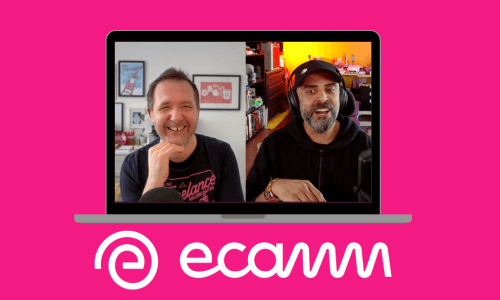
EPISODE SPONSORED BY ECAMM
For years people have asked how Being Freelance live shows look so good. Well, this is the secret.
Ecamm is a video studio for your Mac.
Give anything you do with video, a pro look in real time.
Presentations, screen shares, webinars, video calls, demos. Plus livestream/record in landscape & vertical at the same time, perfectly designed for both formats.
Try Ecamm for free.
Use code BEINGFREELANCE to save 15% on your first payment.