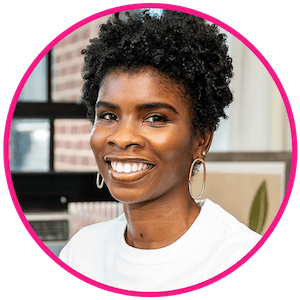
Ilustrator Perryn Ryan
About this podcast episode…
ILLUStrator Perryn ryan
Perryn didn't set out to become a freelance illustrator.
After a degree in computer information systems (to keep her parents happy), years in tech,, and a long stint in the fashion industry, she eventually gave herself permission to just... draw stuff she liked. Nothing serious.
Then a stranger with a million followers re-shared her work, the enquiries started flooding in, and a freelance illustration career was born almost overnight.
In this episode of the Being Freelance podcast, Perryn talks about:
How a career in fashion taught her to cost properly - including the "invisible costs" most freelancers miss
What happened when she dived into her first illustration brief without a contract, and what she learned from it
Why she approaches every client relationship as a partnership - but with clear limits on revisions, timelines, and communication
Her surcharge system for clients who insist on net 30 or longer payment terms
How her niche grew organically by simply making what she loved - flowing line art, wellness themes, women-focused brands
Why she's stepped back from Instagram and leans on direct outreach to art directors instead
The Illustrator's Business Journal; her writing project sharing business lessons through storytelling rather than how-to lists
Her four-bank-account system for managing freelance finances without the end-of-year panic
Protecting her creativity with time blocks, no weekends, and Field Trip Fridays
Enjoy a story with a few twists, a couple of false starts, and the reminder that every weird job you've ever had is probably preparing you for something.
Read a full transcript & get Links in the tabs.
More from perryn ryan
Perryn’s website
The Illustrator’s Business Journal
More from Steve Folland

Transcript of the Being Freelance podcast with Steve Folland and illustrtaor Perryn Ryan
Steve Folland
Hey, how you doing? I'm Steve Folland. Welcome to another one. This time let's find out what it's like being freelance for illustrator Perryn Ryan.
Perryn Ryan
Hi, Steve. Welcome to New York. [laughs]
Steve Folland
[laughs] How about we get started hearing how you got started being freelance?
Perryn Ryan
Yes. So my journey is very long and windy with lots of twists and turns. So I'd gotten a bachelor's degree in computer information systems. Was not what I wanted to do at all. I knew from a very young age that I always wanted to be some sort of artist. I didn't know ... Well, I was really into fashion design, which shows up later, but I went to undergrad for computer information systems because my parents were afraid that I'd be a poor, destitute artist begging for money on the streets and exchanging drawings for, like, sandwiches or something. So I'm like-
Steve Folland
[laughs]
Perryn Ryan
... "Fine. I'll major in something that is, you know, guaranteed career, guaranteed money." So I did that, and then when I finished, I worked in IT for a few years in the financial industry. This was way before Fintech became popular. This was in, like, the 2007s, 2008s. Um, and then after that I realized I hated it, so-
Steve Folland
[laughs]
Perryn Ryan
[laughs] I, I decided to go back to school and I ended up going to Parsons The New School, which is a pretty prestigious art school here in New York, and I went for fashion design because things always come back around. It was a two-year, like, continuing ed program kind of for people who already had bachelor's degrees. So I did that, finished in, uh, a year and a half instead of the two because I was determined to, like, make the most of it, do all the internships and stuff like that. And then once I finished,
Perryn Ryan
I got a job in fashion and I worked in fashion for about 15 years. But I realized maybe, like, five years in that I would rather freelance because I didn't have to deal with the bureaucracy of, like, being a full-time employee. So my first foray into freelancing was probably 2014 in the fashion industry as a technical designer. So that was fun. I got to work with a variety of companies, build my experience, use all sorts of different programs, learn different aspects of running a business from financials to costing. And then from there, I just got pretty burnt out working in fashion. It seems like a glamorous industry and, you know, it's like, oh, the clothes, the fashion shows, the celebrities, but it's, it's not that.
Steve Folland
Yeah. This is why I gave up modeling, Perryn.
Perryn Ryan
[laughs]
Steve Folland
This is, um-
Perryn Ryan
Good on you
Steve Folland
... yeah.
Perryn Ryan
We had the same, uh, the same train-
Steve Folland
[laughs]
Perryn Ryan
... of thought there. Um, so
Perryn Ryan
I quit fashion and I just kinda wanted to give myself a break. Since I had all this free time now, I spent a few months just sort of, like, getting back into, like, a, my regular art practice of drawing and doing watercolor paintings. I was doing these fun little, like, uh, produce cartoons that had puns, and they were very silly, but they brought me joy and I would share them online.
Perryn Ryan
And then that sort of kicked off a freelance career as an illustrator by itself because then someone who I guess was a pretty well-known figure online, I'd never heard of this person before, but they happened to re-share my artwork. They literally had like a million followers. So from there it was just like an overnight swarm, and then brands were reaching out and, you know, wanting to collaborate, wanting to license my work. And so from there, this freelance illustration career that I had no idea
Perryn Ryan
that I could do just happened to me, so I just rolled with it, and it's been six years now and I'm still doing it. And so now I license my work, I do commissions, I am signed with an agency, so it's just ... I don't know. I was just like, "You know, let me just say yes until I have to say no," and I've been saying yes ever since.
Steve Folland
There's lots of chapters in here already.
Perryn Ryan
Yeah.
Steve Folland
Just to wind back to ... Because, I, obviously you're an illustrator now, but you were a technical illustrator in fashion. So back then, how were you getting your clients? 'Cause it seemed to go pretty well for you.
Perryn Ryan
So freelancing in the fashion industry is a little bit different from being, like, a freelance illustrator or graphic designer, where being a freelance illustrator, you've really gotta be, like, intentional about making connections, reaching out to art directors, constantly updating people on the work you make.Being a freelancer in the fashion industry, there are a ton of recruiting agencies here. So you just submit yourself and say, "I'm available for this type of freelance work." They'll say like, "Oh, I have this company with... Or this job with, I don't know, Kate Spade, or this job with Michael Kors," whatever brand. They're looking for someone freelance. The recruiter will send you, you'll go for an interview, and if the company likes you, they hire you.
But you're not, um, you're not looped into the full-time life of being a full-time employee at the companies. They don't even pay you. The recruiters pay you. So you really have to, like, manage your money. You're not getting taxes taken out. Um, so I learned a lot about just how to, like, schedule my work so that I could have time if I wanted to go on vacation, but, like, also I'm doing enough freelance jobs to make sure that I can, like, sustain myself. So some freelance jobs in fashion, they, they would range. So, like, I'd do one for maybe like three months, and then once I'm done, I'd go back to the recruiter and say, "If, if you have anything else that comes up that's in my wheelhouse, my expertise, send me out." Um, and then I might get a new freelance job and I might be there for a year. So it really just kind of, like, varies on, like, the company and what they need. Maybe you're just covering someone's maternity leave, so you're there for six months.
Steve Folland
Mm.
Perryn Ryan
And then after that, you go freelance at another company. So I've worked with tons of companies as far as, like, fashion goes, and some of them coincidentally have overlapped with my illustration career. So I freelanced with Kate Spade as a technical designer, and then I collaborated with them twice as an illustrator, like 10 years later. So it was... There's a lot of full circle moments. It's very fun. [laughs]
Steve Folland
Nice.
What would you say was the main thing or things that you took away from that first freelance part of your life?
Perryn Ryan
Well, I would say the most important things that I took were, one, managing my money, which is super, super important as a freelancer, just because you don't always know how long the gap will be between your last check and the next one. So I definitely was prioritizing and paying attention to how I'm spending my money, making sure that I'm doing the right amount of jobs at that time to make sure that I, I was earning the amount of money that I wanted to be able to, you know, buy myself nice things, 'cause I like nice stuff. I like bags and things. [laughs]
Um, or take myself on a vacation, or maybe if I just wanted to, like, not work for a month, that meant that I needed to, like, really make sure I was, like, getting the hours the months prior so that I could take a month off. Um, so that's probably the biggest one, was managing my money. There... One in particular that to this day I still use what I learned, um, and I worked at a company where I did kind of everything from, like, technical design to, like, production, which involved having to cost for garments. And so that knowledge has been so valuable in helping me figure out how to cost my services.
And I think that a lot of illustrators, like, you know, you see online, or you see in conversations, or have conversations with people where their pricing is kind of focused on, like, "Oh, my materials and my time." But I'm like, "No, there's invisible costs." Like, my studio is my apartment, but what's the square footage of my studio, and what is the cost of that if I was paying for it in rent? Like, that has to be factored into what I charge for illustra- for commission services. Or, you know, how much am I paying to have to host my website where people find me, or even my cell phone bill because I condu- I conduct business on my cell phone. So it was just kind of all of those, like, invisible costs that-
Steve Folland
Mm
Perryn Ryan
... I learned about the importance of, like, accurate costing and figuring out what are your, like, invisible costs versus, like, your tangible ones, and making sure that the work that I do covers that, so I'm not in the hole at the end of the year or anything like that. I think those are probably the two most valuable lessons that I learned from freelancing in fashion that have transitioned over to what I do now as an illustrator.
Steve Folland
Yeah. I like that. Sort of flagging up the fact that, yes, okay, I, I work from my apartment, but what if I didn't work from my apartment, and how much would that cost me?
Perryn Ryan
Mm-hmm.
Steve Folland
Um, it's the same as, you know, you could be like, "Well, yes, I take care of my own bookkeeping," but what if I didn't and I hired a bookkeeper? You know, all of those kind of job roles that we take on. What if I was paying somebody to do that? What is the actual value?
Perryn Ryan
Exactly.
Steve Folland
But then you come back reborn as an illustrator in 2020. So how was that different that time around?
Perryn Ryan
That was different because I started to realize that there were no rules. I think before, as a freelancer in the fashion industry, there's certain rules, and you freelance in a role. Like, you know that as a technical designer, this is what you're responsible for. But as a freelance illustrator, companies are like, "Oh, we wanna use that design for our bottle," or, "We wanna reuse this design for our social media posts, and we'll, like, pay you for it." So I had to learn a lot on the fly. Um, one of my first and biggest lessons, and I have not made this mistake again-
Steve Folland
[laughs]
Perryn Ryan
Like, I was so eager whenever someone would be like, "Oh, we wanna hire you. Do this, do that." One of the first brands that reached out, they wanted me to-- It was the height of, like, the George Floyd, so they wanted something that kind of spoke to what was happening in the moment with that. And I'm so excited, I'm like, "Yeah, I'll do it." And they send me a brief. It never occurred to me that I should probably ask for a contract, that we should talk about how much this pays [chuckles] and get all of that figured out before I start working. So I st- I just, I'm like, "Oh, send me the brief," and I just start working. I'm staying up late. I'm having multiple email conversations back and forth, hopping on phone calls, and then they just decided after, like, a week or so that they were gonna go in a different direction, and I felt so deflated because I was like, you know, I put so much time, so much energy into this, and I don't really have anything to show for it. And so that's when I realized that, you know, I don't have a buffer. I have to really advocate for myself. And when I freelanced in fashion, like, I had a recruiter, so I kinda had somebody that was, like, the buffer with the companies.
But now feel like it was the Wild Wild West and, like, anything goes. I can say no if I wanted to, but I just was trying to take in every opportunity and just ride the wave. So I don't know. I think that just having so much freedom, it kind of reminds me of, like, being in high school here in the States. Like, it's very regimented. You go to the same class every day. You see the same teachers every day. But then when you graduate, graduate from high school in the US and you go to college, there's no bell ringing to tell you to go to the next class, or [chuckles] there's no teacher in the hall saying, "Why are you in the hallway?" Like, it's just kind of your responsibility to make sure you get to class on time, make sure you turn in your assignments on time. So I really felt like this is all me and I just have to figure it out. But it's been exciting, but I think that was probably, like, the biggest shift of like, okay, so I've gotta kinda play it by ear, really pay attention, look for the opportunities where I can learn from the mistake I made so that I know how to approach the s- if the same situation reoccurs, I know the best way to approach it so that I'm not getting the short end of the stick.
Steve Folland
Yeah. Yeah. So what have you learned in terms of, like, those client relationships?
Perryn Ryan
Mm-hmm.
Steve Folland
Client-- You know, like, 'cause as you say, the buffer's gone. You're dealing with clients one-on-one. What, what do you think makes a good client relationship?
Perryn Ryan
So whenever I work with clients, I try to always approach it from a place of partnership. I think that's been the biggest shift since doing freelance illustration versus the type of freelance work I was doing before. Before it was you guys hired me to do this thing, so I was almost like, a just a service provider. Like, I'm not really offering any input or insight. I'm just here to do what you ask me to do. But now, as a freelance illustrator, it's more about, like, partnerships. So I don't want this to feel like you're not getting the best outcome possible. So if I'm working with a client who feels like, you know, oh, I don't really know, maybe they're wavering on the colors we've decided or something like that, like, I w- I like being able to offer sort of creative direction. I don't want them to feel like... You know, I want them to feel comfortable that I'm the expert and I know what I'm doing, so I try to always approach it from a place of let's collaborate together, as opposed to... You know, I don't want them to feel like, "Well, you're the expert. I hired you, so, like, why am I making all of the decisions here? Like, guide me."
This is probably a territory that they're not used to being in, in terms of creating a visual story around, uh, a campaign or a product, um, and, and that includes, like, illustration. So partnership is a huge thing for me. I think it's always partnership, but not to the point of being taken advantage of, because that's also something that I've experienced as a, as a freelance illustrator, so I'm also really cognitive of it. So I always try to make my clients feel comfortable that we are in a partnership, but I wanna be clear that there are still boundaries here, so it's not gonna be, like, an endless amount of revisions because you can't make up your mind, or poor communication, where you're taking days to respond with feedback that ultimately drags out the timeline of the project.
So I think contracts are really important. They have helped me tremendously in building fortified relationships with clients, and I think it's worked out. I've had clients come back to me because they wanted to work with me, because I try to make it as seamless as possible. I don't wanna complain about the project. I wanna have a good time. I wanna enjoy what I'm making. I want you to enjoy the process, too, so you know, it can be fun and, like, lighthearted. It doesn't have to be super serious and, like, corporate. [chuckles] You know, I just try to be more personable and just leave room for, I don't know, humanness, as opposed to, like, "Do this, do that," and we just keep it corporate and by the book, and there's no room for exploration. I feel like I just said, like, a word salad. I hope that made sense. [laughs]I'm like listening, I'm like, "Wait, what are you saying?"
Steve Folland
It's funny, there's like that, uh, fine balance almost e- within that word salad of flexibility-
Perryn Ryan
Yes
Steve Folland
... and being human, uh, but also not being taken advantage of and having boundaries as well.
Perryn Ryan
Yeah. For me, one of the big boundaries is net terms. I absolutely hate them. So I've, I've instituted a boundary around that. So when I work with clients now, y- you can do net terms if you want, but there will be a surcharge, so I'm letting you know upfront. Like, I'm being clear with you about I want this to be a working relationship, but I want it to be an equitable one. Like, it's not fair for me if I do all the work and then you get to pay me in 90 days, because I have to go buy groceries before 90 days gets here, [laughs] so I need money. Um, so that's one of the boundaries, and so far I haven't really had any pushback on it. I think what it does is it encourages clients to pay earlier as opposed to waiting later, because they get a benefit too. So it's like you get to save some money if you pay. So that is flexible, but with boundaries. Like, I-
Steve Folland
Mm
Perryn Ryan
... you know, I can acquiesce to net 30 terms, but there's going to be a benefit to me if I have to. But if you don't do it, there's a benefit to you. So it's really like a give and take is how I try to approach my relationships with clients.
Steve Folland
I like that. Yes, I can go to 30 days, but it'll cost you extra.
Perryn Ryan
Yeah.
Steve Folland
How about, uh, the type of work you do? Like, do you have a niche? A niche?
Perryn Ryan
[laughs] I know, that's a tricky word. Yes. So I predominantly do flowing line art, and I've just started to branch into hand lettering. All of my work is woman-focused or with women-founded brands. So every brand that I've typically collaborated with, they've either created a product that was targeted towards women, so like journals and purses and Good Housekeeping magazine. Like, they had like a whole anti-diet series that I worked on. Um, so it's very figurative, um, with some hand lettering, but I do a lot of, like, flowing line art. So it's, like, fluid and delicate and feminine.
Steve Folland
So it's kind of like the niche of your own style, but then also of working in women-led products or areas.
Perryn Ryan
Yeah. So it's very, like, wellness-focused, and I think that was kind of intentional. I really just drew what I liked and what I'm interested in. So, like, yoga poses and, like, mantra quotes and those sort of things. And it's attracted brands that really want to elevate, like, healthy living or mental health or mindset or alternative lifestyles. So yeah, it's very women and wellness-focused
Perryn Ryan
with a target towards women-owned brands or women-focused products.
Steve Folland
Yes, because y- you're saying about how, like, the, your niche, if anything, came out of what you just enjoyed doing or, like, your own interest or, or the, you know, what you believe in. And I think on your website you describe yourself as being woo, woo woo, or something like-
Perryn Ryan
Yes. [laughs]
Steve Folland
[laughs]
Perryn Ryan
Yeah, I am pretty woo woo. I like astrology. I know that's a hot topic. Some people think it's not real, but I like astrology. Um, so yeah, I am very woo woo. Some of my more personal work, um ... So right now, one of the personal projects that I'm working on, which I hope for it to become a public project at some point, is a, is an action-based affirmation deck. So I like mantras and affirmations and, like, positive thinking and positive reinforcement, so a lot of that is ingrained in my work. Even if there's no, like, literal text or words in the work, there's still that subtext of it in the-
Steve Folland
Mm
Perryn Ryan
... in the design.
Steve Folland
And putting yourself out there, your woo self out there-
Perryn Ryan
Mm-hmm
Steve Folland
... and, and that work presumably draws people in who align with that.
Perryn Ryan
Yes. I think that's why I've, I've had the bigger projects that I've had where I'm, like, designing murals that are about, like, mental health or, um, murals that are focused on, like, healthy eating or positive body image. So it's like the ... I think the people who see my work are like, "Oh, yeah, she perfectly encapsulates this idea of wellness without it being generic in a way." Like, it's, it doesn't look like what everybody else is making. It's got some depth and dimension to it. It looks like it has movement. Like, it's expressive. I think that's a great word. It's expressive.
Steve Folland
Mm.
Perryn Ryan
Um, and so it's worked out for me, and so I've just been leaning into making what I like, 'cause I've, over the last six years I've had the experience of kinda making what I think other people like, and I don't end up liking the work as much. And then it doesn't really resonate as much as the work that I make that I enjoy. So that's where I'm just like, let me focus on what I like to make, because then it becomes fun for everybody s- and that's, that's what I want. Fun.
Steve Folland
Back with Perryn in a moment. I just wanna remind you that I do a newsletter for freelancers. You can get it by going to beingfreelance.com. It lets you know everything that I'm up to with Being Freelance, but it's full of advice for freelancers. So, you know, if that sounds like your sort of thing, it's very easy. Just fill in the form. I send you an email. Beingfreelance.com. Okay. Back to Perryn's story.You mentioned side projects or, uh, passion projects?
Perryn Ryan
Yes.
Steve Folland
Personal projects.
Perryn Ryan
Yes.
Steve Folland
So personal projects, do you find, you know, as you get busier, do, do you have to make time for them? Are they important to you?
Perryn Ryan
They are because I've found that the personal projects are usually the projects that attract new clients, new commissions. And so I, I definitely... I would say I probably spend most of my time on those. If I don't have, like, an active commission, I'm just constantly, like, making stuff that I want to make and then sharing it in my newsletter or sending, like, update emails to art directors or licensing agents that I wanna work with just to let them know, like, "Hey, this is what's new that I've been working with," just so that they're aware of, of where I am in my creative practice. But yeah, for me, it's, I have to be having fun in the work that I do, which is why I quit fashion, 'cause I wasn't having fun. And so I found fun doing this, and the most fun is making what I like. Um, so most of my work is a personal project or side project. The great thing is that some of those projects become big main projects because someone wants to use the artwork, somebody wants me to recreate it for something that they have coming out that's new, or they wanna use it as inspiration for something new. So yeah, that's a big part of my,
Perryn Ryan
I think, success as a illustrator, is just, like, really making the stuff that I like and not so much what's trending on social media or what people are expecting me to make, 'cause that never turns out well for me.
Steve Folland
How about the way you put yourself out there then? You mentioned social media. Are you very active on there?
Perryn Ryan
No. So [laughs] me and Instagram have a very complicated, torrid relationship. Um, [laughs] sometimes I love it and sometimes I hate it. And I think the p- the, the thing for me is that
Perryn Ryan
Instagram was the catalyst for all of this, so I have, like, a deep, like, "Oh, I love you because, you know, you were just this channel that I, I was just sharing for fun, and it brought all these people to me." But then sometimes I get caught in my head and I'm like, "Oh, I've gotta post, you know, X amount of times. I've gotta be consistent, consistent, consistent, and I've gotta feed the algorithm." And so I go through these periods where I'll just, like,
Perryn Ryan
deactivate my Instagram for, like, months 'cause I need a break. So Instagram, I would say, like, in the last couple years, it's kind of just been a, just a in and out relationship, so I really rely heavily on my newsletter. I have, like, a few hundred people on it, um, so I'm, like, constantly in conversation with them. And then I think what's really helped me recently is being more consistent about intentional outreach. So one of the main things that I got really serious about last year was reaching out to art directors who are in charge of projects or products that I would like to work with. So what I usually do is send out an email quarterly-ish just kind of updating them on, "Oh, I'm learning animation, and this is some of my s- motion graphics that I've created. So, like, if you're, if you have any, like, simple animation projects that are, um, aligned with, like, my style of artwork, I'm available."
So I've really been leaning into direct outreach to art directors, to licensing agents, to my own agent. I'm signed to an agency, so I'm constantly keeping them aware and updating them on what I'm creating so that they can keep my book fresh on their website so that new clients can see, like, you know, she's not just, like, hanging out on your roster collecting dust over there. Like, she's actually doing new stuff, and this is what's new. Um, so those are probably my main three points of outreach. I am considering getting back on Instagram. I just have to figure out how I wanna use it in the way that feels the most fun, 'cause it, right now it doesn't feel fun. It kinda feels stressful, and I wanna find-
Steve Folland
Mm-hmm
Perryn Ryan
... the fun in it. So once I figure that out, that'll be number four on the list of things I do for outreach.
Steve Folland
So there's the artistic side projects, the personal projects-
Perryn Ryan
Mm-hmm
Steve Folland
... uh, that we talked about. But you v- have also launched a writing side project.
Perryn Ryan
Yes. So it's called The Illustrator's Business Journal, and I'm not sure if I refer to it as a newsletter or blog. I think it's kind of in between. But I just thought, I have... So I have so many friends who are also creative entrepreneurs, not all illustrators. Some are photographers, some are jewelry designers, some are illustrators.
And I find I'm always having conversations with them, and we're always talking about what we're doing in our business, how we're strategizing, different ideas. We're always throwing stuff out. And I had a conversation back in, like, November. I don't remember the exact conversation, but on that conversation, I was just thinking to myself, like, "I feel like I have so much valuable information as a illustrator that surely I could share it," because when I talk to my friends who have been doing their businesses just as long as I have, you know, some of the insights that I share with them, they're, they're always astounded. So I'm like, "Maybe I should just write about my own experiences and offer any insights that, um, I might have, and maybe someone else can learn from them." The last three years, I've been freelance teaching artAnd design classes around New York City, in and out of high schools, and with different art programs.
And I think that experience of teaching to students, it, it kind of made me feel like I like doing this, and maybe I can teach through writing. So I started it back in November, and I post to it twice a month, so biweekly. And I generally talk about topics from, like, having a contract, communicating with clients, how to price your illustration services, the type... like, how to manage your money, like the four bank accounts I use to manage my money as a freelance illustrator. There's a lot of topics. Those are, like, just the ones off the top of my head. But I enjoy writing it, and I've gotten really good feedback, and it's just fun to kind of
Perryn Ryan
document my process and journey as well. Some of the stories that I tell in it are things that happened to me, you know, a couple years ago, and then there's things that have happened to me now. And I really like to speak from a place of storytelling as opposed to... I'm not a big fan of how-to lists and how-to guides. You know how you go online and everything's like, you know, how to make a million dollars, how to do this, how to be your best self? I just... I get so crazy when I feel like people are just constantly like, "Be this, be that," and, and, you know, it's like all this instruction on how to be everything but yourself. So when I decided to write, I wanted to come from a place of, this is what I did, this was my mistake, this was the lesson that I learned, and here are the things that I learned that if you find them useful, go ahead and implement them for yourself. So it's, it's very much, uh, not coming from a place of I'm the expert. But I have experience, and we all learn from each other's experiences, so I just do that through writing now.
Steve Folland
Now, your parents were worried that you'd be an artist just getting paid to draw in sandwiches.
Perryn Ryan
Mm-hmm. [laughs]
Steve Folland
But you mentioned having f- not one, but four bank accounts.
Perryn Ryan
Mm-hmm.
Steve Folland
So tell me, h- what's your system of your four bank accounts?
Perryn Ryan
So they all have nicknames. So I have a owner's pay account, I have a tax account, I have a business expenses account, and then I have a account that all of the money comes into. So every time I get paid from a project, any mon- like, licensing money, like today I just got, like, a licensing deposit from a website where I license... uh, they make, um, temporary tattoos, so some of my artwork is on there. Um, so every time money comes in, I
Perryn Ryan
s- separate it into these accounts because, I don't know, I, I, I guess for me, like, if you want your money to go far, you have to give it jobs. You have to tell it what you want it to do. It's just like an energy thing. So 30% of everything that comes in automatically goes into my tax account, because I do not want to be in the situation when... I don't know how taxes are done there, but here it's very complicated for no reason.
Steve Folland
[laughs] That sounds about right.
Perryn Ryan
Absolutely no reason. [laughs] No reason whatsoever.
Steve Folland
[laughs]
Perryn Ryan
And I've had conversations with other business owners who don't save their money for tax time, and then when you file your taxes and you owe the federal government in the US
Perryn Ryan
$3,000 and you don't have it, you're f- you're, like, freaking out. So I always put 30% of whatever comes in into a high-yield savings account for my taxes, and it stays in there the whole year until April 15th when we file our taxes. It's the same day every year. Um, so that's one. Well, that's two, because the incoming account. That's two. Then my owner's pay account, I usually pay out myself. I've broken everything down into percentages. So 30% goes into taxes. I usually pay myself between 40 and 50% of whatever comes in, so that's, like, the money that I live on. I use it to pay my rent, to buy my groceries, to get my nails done, to go out to dinner with friends, all of the life stuff.
And then I have a business expense account. So that, whatever's left over, so it's usually 10 to 20% that's left over, goes into that account. And so that's what I use to pay all of my subscriptions, like my Adobe, my Squarespace website, buy supplies if I need to, um, like if I need to buy more paper to print prints or something like that.
And that's kind of how I've organized it. It's low-stress. Um, it makes sense for me, and it gives me kind of a, like, a map, so I know what I'm working with each month. I know what's there. I'm not guessing. And then it helps me to figure out and plan for the year, like how many projects do I wanna do this year? Or how many commissions do I need to say yes to? Or should I launch a print drop on my website so that I can balance out whatever income? So it kind of gives me the roadmap that I need to plan financially and to know what I always have. So yeah, four accounts. I highly recommend it. It's great. [laughs]
Steve Folland
So that's the bank balance. How about the work/life balance?
Perryn Ryan
Um, it's not great. So my problem is-I am a bit of a perfectionist, so the intent is always, I'm gonna have fun and I'm gonna draw this thing. But then like six hours later [laughs] still sitting in the same spot and I'm like, "I've gotta figure it out." And so I do have a hard time once I start working on something, pulling myself away. And so what I've started to do now is be more intentional about setting like work blocks so that I'm not like working from 9:00 AM to 9:00 PM, because otherwise I'll do it. If there's nothing to stop me, I will sit at this desk that I'm talking to you on and I will draw from 9:00 AM to 9:00 PM.
So now I allow myself like three-hour blocks, so it's three hours of like deep creative work and then, you know, I stop, I take a break, you know, maybe I'll go eat lunch, I'll go for a walk or whatever, and then I come back and I'll let myself do like one hour of deep work. That's usually when I do like emails and stuff. Um, so I have to be really intentional about it because otherwise I will just go, go, go, go, go and work, work, work, work, work and then feel burnt out.
Um, I don't allow myself to do work on the weekends. I used to work Saturdays, Sundays, every day, but I started to realize that when I did that, I just wasn't having fun with the work and I was not enjoying it, and it made me feel, um, like claustrophobic. So I have to really be intentional about block times and then saying no on the weekends. And then I take myself on artist dates on Fridays. I like to go to museums on Fridays. I call it Field Trip Fridays.
Steve Folland
Field Trip Fridays.
Perryn Ryan
Yeah.
Steve Folland
Come on.
Perryn Ryan
I go on a field trip.
Steve Folland
So will you do any work on a Friday or you just, that's it, I'm off?
Perryn Ryan
If I do on a Friday it'll be very light, like, oh, let me check my email or maybe like little website stuff, like, oh, if I wanna update something or if I wanna add something, like something that... It's usually work that like, oh, I can get it done in 15 minutes. It doesn't require this deep concentration. Um-
Steve Folland
Yeah
Perryn Ryan
... it's something that I can get done in like a hour and then I can just go enjoy my day.
Steve Folland
Wow.
Perryn Ryan
Yeah. Field Trip Fridays.
Steve Folland
Perryn, if you could tell your younger self one thing about being freelance, what would that be?
Perryn Ryan
I would tell her two things. I would tell her to be patient.
Perryn Ryan
Be patient. It's gonna take you a little while. You'll deviate. You'll try this, you'll try that, but you'll find your way back to yourself. And then the second thing I would tell my younger self is
Perryn Ryan
to do everything that you, that you've already done because it's gonna help you once you become a freelancer. So everything you've learned at every past job at, you know, going to France for a summer to teach English, like, all of those experiences are gonna serve you well in your role as an illustrator. It's going to give you inspiration to draw on. It's gonna give you a framework for how to structure your finances, how to structure your time, how to engage with people. Like, all of these experiences, it might not seem like it now, it might seem random, but it's given you a point of view about the world that you didn't have before that is going to help you be more creative and have a wider bank of inspiration to pull from, so.
Steve Folland
Nice. Make sure you go to beingfreelance.com. There are links through so you can find Perryn online, uh, whether or not she gets back together with Instagram-
Perryn Ryan
[chuckles]
Steve Folland
... of course. For now, though, thank you so much, Perryn, and all the best being freelance!
Perryn Ryan
Thank you so much. Thank you for having me, and I had a great time.